For a shared household food shop, first work out how much space you need for fresh and frozen food, then choose a format that suits that split and the space available. A fridge-freezer is a good fit if you regularly use both compartments. A fridge without a freezer prioritises fresh food, while a separate freezer makes sense if you have a long-term need for frozen storage, enough room and are happy to run a second appliance continuously.
Who is this choice for?
Housemates who shop together
You need to store fresh food for several people as well as frozen food, but the right capacity depends on more than just the number of people in your household. How often you shop and how much room your supplies take up matter too.
Households that prioritise fresh food
You mainly cook with fresh ingredients and rarely freeze food. In that case, space on the shelves and in the drawers may matter more than a large freezer compartment.
Households that stock up on frozen food
You regularly freeze portions or buy a lot of frozen food. Compare the space in a fridge-freezer with what a separate freezer would need, taking its location into account.
What should you consider?
Fridge-freezer
Consider this if: your household regularly stores fresh and frozen food and wants both compartments in one appliance.
Bear in mind: the total capacity doesn’t guarantee that both compartments will be large enough for your food shop.
Fridge without a freezer
Consider this if: you mainly buy fresh food and rarely freeze anything.
Bear in mind: this format won’t suit you if you regularly need to store frozen food.
Separate freezer
Consider this if: your long-term frozen food storage needs exceed the suitable capacity of a fridge-freezer.
Bear in mind: you’ll need space for a second appliance that runs continuously, as ADEME advises for refrigeration appliances.
If you shop together and need food to last several days, work out your storage needs before comparing the installation options and annual energy consumption of the formats you’re considering.
| Factor | What to check | Who is it for? |
|---|
| Usable capacity |
Compare the usable litres with the space your food shop actually takes up over several days. The per-person guide from UFC-Que Choisir should be adjusted to suit your household’s habits. |
If food shops for several people quickly fill the shelves, I want enough space without reserving capacity that will go unused; around 31% of consumers would prioritise this need. |
| Fresh and frozen food storage |
Check the fridge and freezer capacities separately, then see how they compare with the food you usually buy. |
When my frozen supplies and fresh food are competing for space, the size of each compartment matters more than the total capacity; this would be the priority for around 25% of consumers. |
| Space and installation |
Measure the space where the appliance will go and the delivery route, then check door clearance and the gaps specified in the model’s manual. |
In a narrow kitchen, I need to be able to open the doors and pull out the drawers once the appliance is installed; around 25% of consumers would put this constraint first. |
| Annual energy consumption |
Compare the kWh/year figures on the energy labels of appliances with similar types and capacities, rather than looking at their energy rating alone. |
If my appliance runs all year round, I want to avoid running a capacity I don’t need; around 19% of consumers would put this need first. |
Mistakes to avoid
-
Choosing based on total capacity alone
Two appliances with similar capacities can have very different amounts of space for fresh and frozen food. The compartment you use most could end up being too small.
Make a note of the food you store during a week of shopping, then compare the available litres in each compartment separately.
-
Measuring the space without allowing for the doors or ventilation
An appliance may fit in its allotted space but still leave you unable to remove the drawers. The ventilation clearance required also varies by model and the manufacturer’s instructions.
Before ordering, check the delivery route, the space needed to open the doors and the installation instructions in the manual.
-
Comparing energy ratings alone
The energy rating on its own won’t tell you the annual consumption to expect from two appliances with different capacities. ADEME points out that the size and number of refrigeration appliances affect a household’s energy consumption.
Check the kWh/year figure on the energy label and compare appliances with similar types and capacities, then take your electricity tariff into account.
-
Adding a freezer for occasional storage
A separate freezer takes up extra space and runs continuously, even when you only need extra storage from time to time.
First check whether the freezer compartment in a fridge-freezer that suits your food shop will be enough. If you still need a separate appliance, check its installation requirements.
Brands to explore
There are no brands to feature in this section.
Appliances for keeping fresh and frozen food together on Joybuy
These appliances combine refrigeration and freezing for shared food shops. Compare their capacity with the amount you usually store, then check that your chosen format can be installed in your home.
 Image unavailable
Haier HTW5618ENMG, 3-door fridge-freezer, 360 L
Worth considering if your household wants to keep fresh and frozen food in one appliance. The model name lists a 360 L capacity, Total No Frost, an E energy rating, Wi-Fi and My Zone. Check the manual for the clearance and door-opening space required in your chosen location.
View on Joybuy
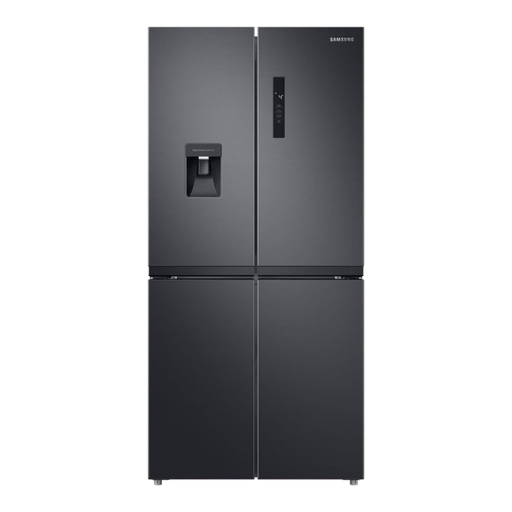 Image unavailable
Samsung RF48A401EB4, American-style fridge, 488 L
Worth considering if your shared food shops call for plenty of capacity and your kitchen can accommodate this format. The model name lists a 488 L capacity and an E energy rating. Before choosing this capacity, check the dimensions, door-opening space and clearance requirements in the model documentation.
View on Joybuy
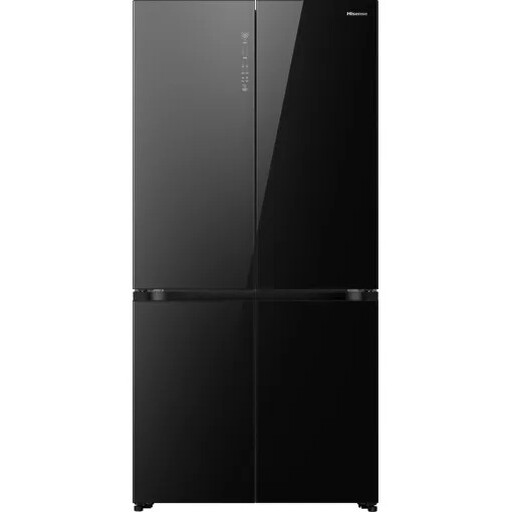 Image unavailable
Hisense RQ768N4GBE, American-style fridge, 591 L
Worth considering for a household whose storage needs justify a large appliance, provided you have enough space. The model name lists a 591 L capacity and an E energy rating. Before choosing this format, check how the capacity is divided between fresh and frozen food, as well as the delivery route and installation instructions.
View on Joybuy
 Image unavailable
Candy CFQQ5T817EPS, 4-door fridge-freezer, 467 L
Compare this model if your household wants to divide shared food shops between fridge and freezer compartments in a four-door appliance. The model name lists a 467 L capacity, Total No Frost and an E energy rating. Check the space needed with the doors open and the clearances specified in the manual.
View on Joybuy
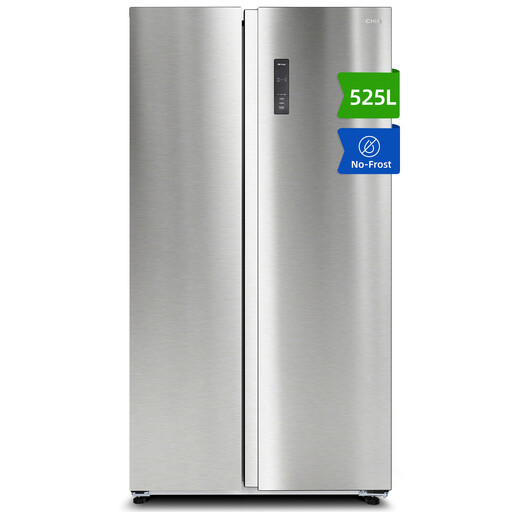 Image unavailable
CHiQ JR525WSE, side-by-side fridge-freezer, 525 L
Worth considering if your household regularly fills both compartments in a large appliance. The model name lists 333 L for the fridge, 192 L for the freezer, No Frost and an E energy rating. Before deciding whether it suits your kitchen, check its dimensions, energy consumption in kWh/year and installation instructions.
View on Joybuy
Frequently asked questions
Is an energy label required for a new fridge bought online in France?
Yes. The French Ministry of the Economy says that new fridges covered by the rules must display an energy label, including when sold online. Check the model reference, energy rating and annual consumption in kWh in particular when comparing the appliances you’re considering.
How much space should you leave around a fridge-freezer?
Follow the clearance requirements in the installation instructions for your chosen model: there’s no single distance that suits every appliance. As examples specific to their own recommendations, Beko advises leaving 5 cm at the sides and rear, while LG recommends at least 10 cm around the appliance.
How can you check which way the doors open before ordering?
Check the product details and manual for the door-opening direction, whether the doors can be reversed and the space needed to access the bins and drawers. Also measure the free space in front of the appliance and beside the wall: the clearance needed depends on the door design.
Does a separate freezer always use less energy than a fridge-freezer?
No. Added to a fridge, it becomes a second appliance that runs continuously. ADEME gives average figures of 315 kWh/year for a fridge-freezer and 300 kWh/year for a freezer, but these don’t determine the energy consumption of your setup. Compare the kWh/year figures for the specific models and only add a separate appliance if you have a long-term need for extra freezer space.


