What should you compare before replacing your appliance?
First, decide whether you need a fridge, a fridge-freezer or a separate freezer. Then choose a capacity that suits your food and the space available. If your current appliance is still working, also check its condition and whether it could be repaired.
| What matters |
What to check |
Who cares most about it? |
| Energy use |
Compare the kWh/year figures for models that meet the same needs and, if possible, record the energy use of your current appliance. |
I want to reduce energy use without giving up the capacity I need. Around 33% of consumers prioritise energy use. |
| Freezer capacity |
Check the freezer and fridge capacities separately, then compare them with your storage habits. |
If I regularly store frozen food, I want to know whether an integrated compartment will be enough. Around 27% of consumers prioritise freezer capacity. |
| Size and usable capacity |
Measure the space and access route; also check the model’s dimensions and installation requirements. |
When space is limited, I’m looking for enough capacity for my shopping without exceeding the available dimensions. Around 27% of consumers put size and format first. |
| Condition of the current appliance |
Assess its actual energy use and arrange a diagnosis if a repair may be possible. |
If my appliance is still working, I want to check whether it can be repaired before replacing it. Around 13% of consumers prioritise the appliance’s condition and the option of repair. |
Related Joybuy products
The products featured include a separate freezer, fridge-freezers and compact fridges. Check the usable capacity, dimensions and kWh/year figures in relation to the appliance you’re replacing and the space available.
 Image unavailable
Heinrich´s 161 L freezer, rating C
Worth considering if you already have refrigeration covered and need a separate space for frozen food.
Stated capacity: 161 L. Stated energy rating C; No Frost system and reversible door hinge.
Freezer only: it doesn’t have a fridge compartment.
View on Joybuy
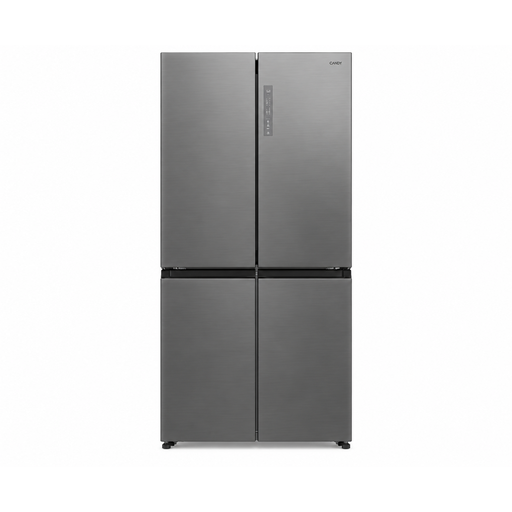 Image unavailable
Candy CFQQ5T817EPS fridge-freezer, 467 L
Compare this model if you’d like fresh and frozen food compartments in the same appliance.
Stated capacities: 311 L for refrigeration and 156 L for freezing. Stated energy use: 290 kWh/year; energy rating E.
Stated dimensions: 83,3 × 65 × 181,5 cm. Total No Frost technology.
View on Joybuy
 Image unavailable
Sonlu CC-520WE fridge-freezer, 444 L
Compare this model if you need both refrigeration and freezer space in a side-by-side appliance.
Stated total capacity: 444 L. Stated energy use: 289 kWh/year; energy rating E.
Stated climate class SN-T. Check the dimensions and installation requirements for your intended location.
View on Joybuy
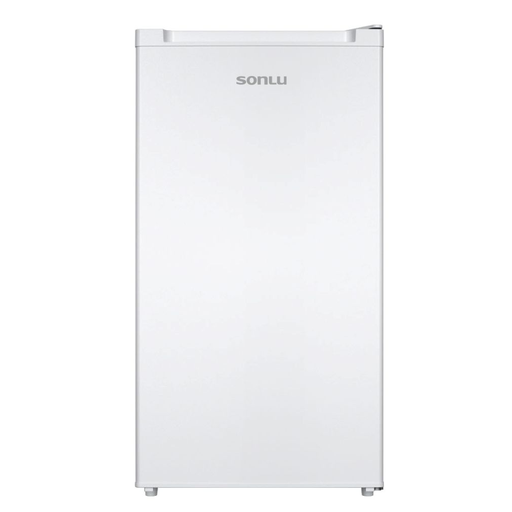 Image unavailable
Sonlu CS-100L fridge, 82 L
Worth comparing if you need a modest amount of fridge space without a freezer compartment.
Stated capacity: 82 L. Stated energy use: 84 kWh/year; energy rating E.
No freezer compartment is listed.
View on Joybuy
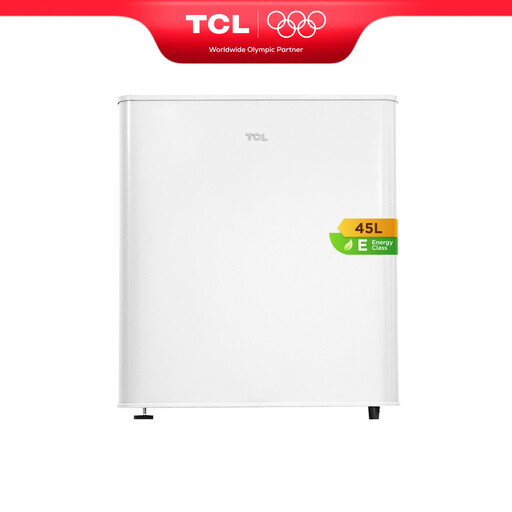 Image unavailable
TCL RF60DWE0FR mini fridge, 45 L
Worth comparing if you have limited space and only need to store a small amount of food.
Stated capacity: 45 L, including 42 L of fridge space and 3 L of freezer space. Energy rating E.
The stated freezer compartment capacity is 3 L.
View on Joybuy
Frequently asked questions
Should you replace an old fridge that still works because a new one would use less energy?
No, not for that reason alone. Category averages don’t tell you how much energy your appliance uses or what condition it’s in. Compare its actual energy use, arrange a diagnosis if necessary and consider whether it could be repaired; ADEME points out that a fault can sometimes be caused by a part that can be repaired.
What information should you check on the label of a fridge, fridge-freezer or freezer?
The applicable European label includes the energy rating from A to G, kWh/year, the volumes of the fresh and frozen food compartments, and the noise level. The European Commission recommends using these details to compare appliances: match the annual energy use to the capacity you actually need.
How can you check whether an appliance will fit in its intended space?
Measure the space and access route, then check the model’s dimensions and installation requirements in the instructions. The recommended ambient temperature range may also matter, especially in an unheated room. For chilled food, Anses recommends a temperature of 0 to +4 °C at the coldest point.
What rights and options should you consider for your old appliance in France?
For an item bought by an individual from a professional seller, the legal guarantee of conformity applies under its terms; the French Ministry of the Economy states that you have two years to request its application. ADEME recommends taking used refrigeration appliances to an appropriate collection scheme and says that the seller may offer to take the old appliance away when you replace it.
Is an energy label compulsory for these new appliances sold in France?
Yes, for household refrigeration appliances covered by European regulations. The DGCCRF lists fridges, freezers and combined appliances, and says that the labelling rules have applied since 1 March 2021. This information requirement doesn’t mean you have to choose a particular energy rating.


