When replacing an appliance you use every day, start by looking at how much you actually keep in the fridge and freezer. Then check the available space and door clearance in your kitchen. These factors will help you choose between a fridge freezer, an integrated model or another configuration. Next, compare the capacity of each compartment, the kWh/year and noise level shown on the energy label, as well as the cooling system and maintenance required. A larger capacity or better energy rating won’t be enough if the appliance doesn’t suit the space or your needs.
Who is this guide for?
Households that restock every week
Que Choisir Ensemble’s guide helps you understand the different cooling systems, while ADEME points out that a fridge runs continuously and that excessive capacity can increase energy use. Compare the space available in each compartment and how the storage is laid out, rather than focusing on total capacity alone.
Households with a compact kitchen
If you’re replacing an appliance in an alcove or have a narrow access route, Que Choisir Ensemble recommends checking the internal measurements, ventilation and door-fitting system. Also make sure there’s enough clearance to open the door and access the drawers.
Households keeping an eye on running costs
ADEME highlights that refrigeration appliances run continuously. Compare the kWh/year on the energy labels of models that meet your capacity needs, then take account of the usable space and noise level.
What to compare before replacing your appliance
When replacing an appliance at home, first choose a configuration that suits your storage needs and the constraints of your kitchen. ADEME points out that the size of an appliance and having more capacity than you need can affect the energy use of one that runs continuously.
Freestanding fridge freezer
Consider this if: you need separate fridge and freezer compartments in one appliance, and have a suitable space for it.
Check: the capacity of each compartment, ventilation clearance, and the space needed to open the doors and remove the drawers.
Integrated fridge freezer
Consider this if: you want to keep your kitchen’s integrated look and the housing fits the specific model.
Check: the internal measurements of the housing, ventilation and door-fixing system, whether sliding or fixed hinges.
Fridge with a freezer compartment
Consider this if: you mainly store fresh food and keep only a small amount of frozen food.
Check: the capacity and features of the compartment, which won’t necessarily offer the same storage as a larger freezer.
Separate fridge and freezer
Consider this if: separate capacities or locations suit the way you organise your food.
Check: that you have room for two appliances, and compare their combined kWh/year with those of a fridge freezer. Don’t assume that one configuration will always use more energy than the other.
| Criterion |
What to check when buying |
Who it matters most to |
| Usable capacity |
Compare the fridge and freezer compartments in litres, then consider the shelves and drawers in light of how you store food. |
If I shop for the week, I want to organise fresh and frozen food easily without choosing an appliance that’s too large; around 31% of consumers prioritise a suitable capacity. |
| Dimensions and door clearance |
Measure the housing and access route, then check the manual for ventilation, hinges and door clearance. |
In a kitchen with limited space, I want to be able to install the appliance and remove the drawers without obstruction; around 25% of consumers prioritise a good fit and door clearance. |
| Energy use |
Compare the kWh/year on the energy labels of models with similar capacity. If you’re buying two separate appliances, add their annual energy use together. |
If the appliance runs continuously in my home, I want to compare its annual energy use with that of other models suited to my needs; around 25% of consumers put running costs first. |
| Cooling and convenience |
Check the cooling system and defrosting requirements for each compartment, as well as the stated noise level. If you’re concerned about power cuts, also compare the stated storage time and the conditions under which it was measured. |
If I want to reduce the need for defrosting or place the appliance near a living area, I consider maintenance and noise; around 19% of consumers prioritise cooling and everyday convenience. |
Mistakes to avoid when replacing your appliance
-
Choosing based only on the energy rating or total capacity
Total capacity can hide a freezer compartment that’s too small or a fridge that’s larger than you need. ADEME points out that an appliance’s size and excess capacity can increase energy use when it’s in continuous use.
Work out how much space you need in each compartment, then compare the kWh/year of models that meet those needs.
An oversized appliance may use energy to cool space you don’t need.
-
Assuming the appliance dimensions are all the space you need
External measurements alone won’t tell you whether the appliance can be ventilated, fitted into a housing or opened wide enough to remove the drawers.
Measure the housing, the route to its position and the door clearance. Check the manual for ventilation gaps and the door-panel fitting system.
An alcove or installation that needs adapting can make replacement more complicated, while limited door clearance can make it harder to access the drawers.
-
Assuming all cooling systems need the same maintenance
Que Choisir Ensemble distinguishes between static, fan-assisted and ventilated cooling. Some models offer No Frost, while others may need to be defrosted manually.
Check the technology used in each compartment and the maintenance recommended for the exact model.
If the model you choose needs manual defrosting, allow time for the task.
Brands to consider for different configurations
Bosch
The freestanding KGN36NLEA fridge freezer is worth considering if you have 600 mm of width available.
- Bosch lists a 216 l fridge, an 89 l freezer, No Frost and a noise level of 42 dB(A) for this model.
- It measures 1,860 × 600 × 660 mm, so check that it fits the space and access route.
Haier
The freestanding HDPR1618CNPK is worth considering if you’re looking for dedicated storage zones in an appliance listed as 595 mm wide.
- Haier’s product information lists No Frost and dimensions of 595 × 667 × 1,850 mm.
- The product listing shows an energy rating of C in its header. Check the energy label for the exact model before comparing. The manufacturer’s claims about food preservation and consistent cooling aren’t independent test results.
Liebherr
The integrated ICBNSd 5123 fridge freezer is worth considering when replacing an appliance in a housing and matching its door-fitting system.
- Liebherr lists a total capacity of 244 l, a noise level of 34 dB and a sliding door-fitting system for this model.
- The stated housing dimensions are 177.2–178.8 × 56–57 × 55.0 cm. These measurements don’t guarantee compatibility with every kitchen unit or door panel.
Samsung
The freestanding RB53DG703ES9EF fridge freezer is an example of a high-capacity model to consider if your kitchen has enough width and access space.
- Samsung lists a capacity of 538 l and dimensions of 759 × 2,030 × 711 mm for this model.
- The brand says the claimed energy saving from connected mode is based on internal testing and requires the app, Wi-Fi and a Samsung account. It doesn’t guarantee the same savings for every household.
Fridge freezers available on Joybuy
This selection includes integrated and freestanding fridge freezers, so you can compare separate compartment capacities, stated energy use and installation requirements.
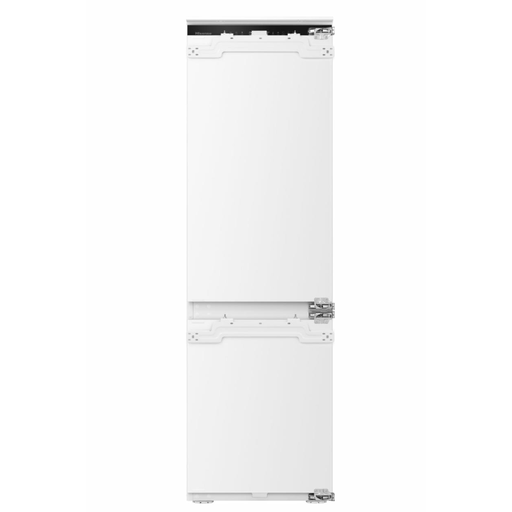 Image unavailable
Hisense RB3B250SAWC, 252 L integrated fridge freezer, No Frost, energy rating C
Worth considering if you’re replacing an appliance in a fitted kitchen and want separate space for fresh and frozen food.
The model lists 176 L for the fridge and 76 L for the freezer, energy use of 150 kWh/year, No Frost and a reversible door. Adequate ventilation and a suitable kitchen unit are needed for installation.
View on Joybuy
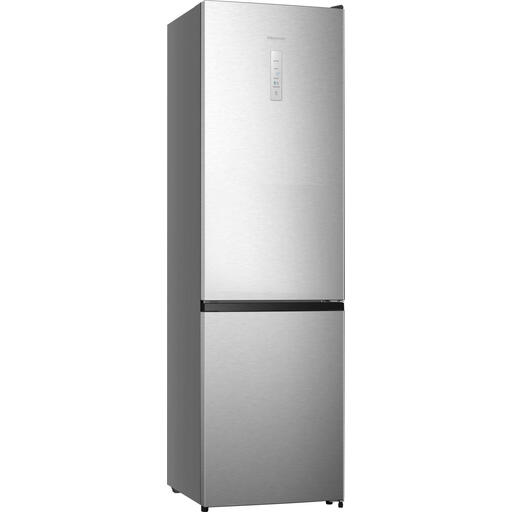 Image unavailable
Hisense RB440N4CCB, 336 L freestanding fridge freezer, Total No Frost, energy rating B
Worth considering if you’re looking for a freestanding fridge freezer with separate compartments and several freezer drawers.
The product description lists 238 L for the fridge, 98 L for the freezer, 135 kWh/year and a noise level of 35 dB. It also specifies 90° door opening and a reversible door, so check that it suits your kitchen layout.
View on Joybuy
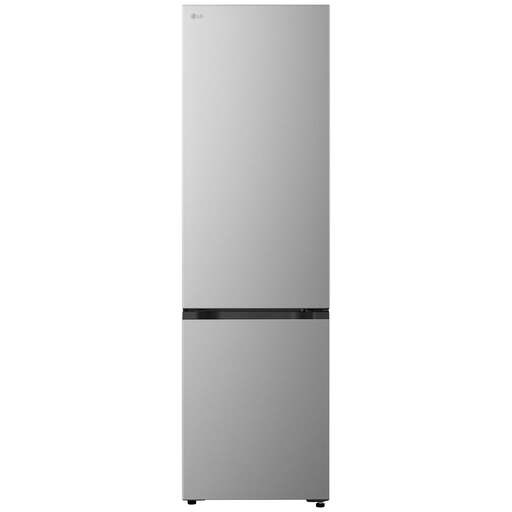 Image unavailable
LG GBBS322BPY NatureFRESH, 375 L freestanding fridge freezer, Total No Frost, energy rating B
Worth considering if you’re looking for a 375 L freestanding fridge freezer and want to avoid the regular manual defrosting required by models without Total No Frost.
The product information lists an energy rating of B. It requires at least 50 mm of clearance at the sides and 100 mm at the back for ventilation.
View on Joybuy
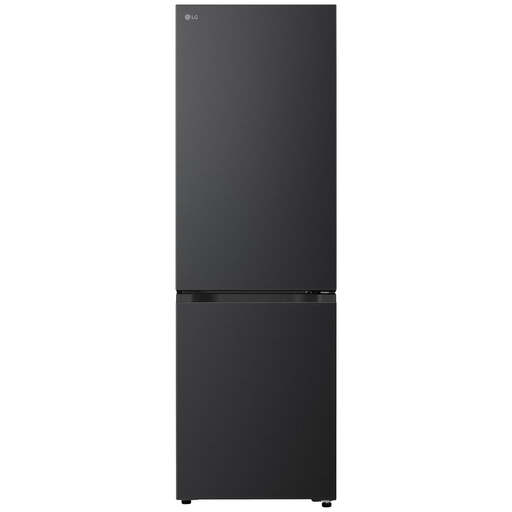 Image unavailable
LG GBBS312CEV NatureFRESH, 333 L black fridge freezer, Total No Frost, energy rating C
Worth considering if you want to organise food across a fridge compartment, a freezer and a separate cooling zone.
The product description lists capacities of 183 L, 113 L and 37 L respectively, and energy use of 169 kWh/year. It requires at least 5 cm of clearance at the back, above and at the sides.
View on Joybuy
 Image unavailable
Haier HTW5618ENMG, 360 L three-door fridge freezer, Total No Frost, energy rating E
Worth considering if you’re looking for a freestanding fridge freezer with several storage zones and separate space for fresh and frozen food.
The model lists 235 L for the fridge, 125 L for the freezer and annual energy use of 271 kWh. It features Total No Frost, a reversible door and My Zone and Humidity Zone compartments.
View on Joybuy
Frequently asked questions
What should I compare on the energy label of a new fridge freezer?
For the relevant appliances sold in France, energy labelling is compulsory, including online sales, according to the Ministry of the Economy. Compare the A to G rating, kWh/year, compartment capacities and noise information. The QR code links to the model’s details in EPREL. The rules don’t apply in the same way to second-hand products.
How should I measure up before ordering an integrated appliance?
Measure the inside of the housing for height, width and depth, then check the manual for ventilation and door-panel fitting requirements. Also make sure the door opens wide enough to remove the bins and drawers. As Que Choisir Ensemble points out, external measurements alone can’t confirm that the appliance will fit.
Does the stated storage time during a power cut guarantee that food will still be safe to eat?
No. This figure is for comparing a specific model under specific test conditions; it isn’t a universal guarantee about food. Anses recommends monitoring the temperature and states that the coldest part of the fridge should be at 4 °C. It also points out that freezing doesn’t destroy most micro-organisms.
What should I do with my old appliance when buying a new one?
When a new appliance is sold, the free “one-for-one” take-back scheme covers an equivalent used appliance, according to the DGCCRF. Ask the retailer how the take-back works in practice, and check what’s included separately from any delivery or installation services.
Should I always replace an ageing appliance?
Not without looking into the fault, the repair estimate and your household’s current needs. A repair bonus is available under certain conditions for eligible products repaired by approved repairers, according to the ministries responsible for the ecological transition. Check whether your specific case qualifies before factoring it into your decision.


