Households rethinking their storage
You’re replacing an appliance whose fridge or freezer compartment no longer suits your shopping habits, and want to choose the capacity of each separately.


When replacing an older appliance, first decide how much usable fridge and freezer space you need, then compare the kWh/an of models that can actually be installed in your home. A freestanding fridge freezer combines both functions in one space; a built-in model must fit the housing and door mounting, while two separate appliances are mainly worth considering if you need more freezer capacity. ADEME points out that an appliance that is too large or has more features than you need can increase your energy bill, so compare capacities that suit your habits.
You’re replacing an appliance whose fridge or freezer compartment no longer suits your shopping habits, and want to choose the capacity of each separately.
You need to replace a built-in appliance and check that the housing, cabinet door and ventilation openings are compatible.
You regularly store more frozen portions than a fridge freezer compartment can hold and are considering a separate freezer.
Choose this if: you have one space for the appliance and its two compartments meet your needs.
Check: the external dimensions, door opening and ventilation clearances specified for the model.
Choose this if: your kitchen has a housing that fits the specific appliance.
Check: the height, width, depth, cabinet door fixing and ventilation. For the ICNe 5103, Liebherr specifies a housing measuring 177,2 to 178,8 × 56 to 57 × 55,0 cm; these dimensions do not apply to other models.
Choose this if: you need more freezer space than a fridge freezer compartment offers and have room for two appliances.
Bear in mind: both appliances run continuously. Add together their stated annual energy use in kWh/an to compare them with a suitably sized fridge freezer.
ADEME points out that refrigeration appliances run continuously and that a larger capacity or more features than you need can increase energy use. The European Commission’s current energy label uses a scale from A to G; also compare kWh/an and capacity in litres.
| Criteria | What to check before buying | Who cares most about it |
|---|---|---|
| Fridge and freezer capacity | Compare the capacity in litres of each compartment separately, as well as the usable layout of the drawers and shelves. | If my shopping leaves the fridge overfull or the freezer almost empty, I want to tailor each capacity to what I store; around 28% of consumers put the balance between compartments first. |
| Annual energy use | Compare the kWh/an of models with similar capacities that meet your needs. If you’re buying two appliances, add their stated energy use together. | If I want to keep the electricity costs down for an appliance that runs continuously, I compare the kWh/an after working out the capacity I need; around 22% of consumers prioritise energy use. |
| Space and ventilation | Measure the height, width and depth; also check the door opening, housing, cabinet door and required clearances. | If the appliance needs to fit into a housing or an existing space, I want to avoid installation problems; around 22% of consumers put the available space first. |
| Freezing capacity and storage time | Check the freezing capacity in kg/24 h separately from the stated storage time in hours, and look at how each is measured. | If I regularly freeze food or am concerned about power cuts, I check these figures separately; around 17% of consumers prioritise how long the appliance keeps food cold. |
| Cooling system and maintenance | Check the cooling system in each compartment and the defrosting and cleaning requirements in the manual. | If I want to know what maintenance will be required, I look at the features of each compartment without assuming one tells me about the other; around 11% of consumers prioritise this criterion. |
For storage time, Que Choisir’s test measures how long it takes for the freezer temperature to rise from −17 °C to −9 °C with the power off. On its own, this result does not show the condition of every food item after a real power cut.
Total capacity can hide a freezer compartment that’s too small or, conversely, a fridge section that’s bigger than you need.
Compare the capacity of each compartment with what you usually store, then check how much usable space the drawers and shelves actually provide.
Housing dimensions, door mounting and ventilation clearances are separate requirements. A cabinet door or unit that needs adapting can make installation more complicated and may require professional help.
Check the installation instructions for the exact model before ordering, and compare them with your kitchen measurements.
A separate fridge and freezer both run continuously. Leaving the second appliance out gives you a misleading comparison of their stated energy use.
Add together the kWh/an for both models, then compare the total with a fridge freezer that offers the right usable capacity.
The European energy label for refrigeration appliances moved to a scale from A to G on 1 March 2021, so the old ratings cannot be compared directly with the current ones.
Compare current energy labels and kWh/an rather than relying on an old energy rating.
Worth considering for a freestanding fridge freezer or, if you need two appliances, a single-door fridge.
Worth considering for a built-in fridge freezer or a freestanding freezer paired with a separate fridge.
Worth considering for a freestanding fridge freezer with a bottom freezer, such as the B5RCNE365HXB.
Worth considering for a built-in fridge freezer, particularly the LNG7TE18S.
This selection includes freestanding and built-in fridge freezers. Compare their capacities, annual energy use and installation requirements to find the right fit for your space.
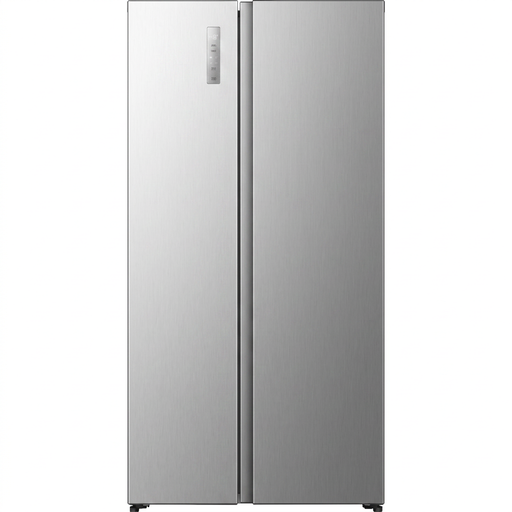 No image available
This freestanding fridge freezer is a good choice if you want to keep fresh and frozen food in one appliance.
Stated capacities: 347 l for the fridge and 197 l for the freezer. Stated energy use: 254 kWh/an. Dimensions: 911 × 1786 × 615 mm. Total No Frost and a water dispenser with a tank are listed; place it on a stable surface and leave the required ventilation clearances.
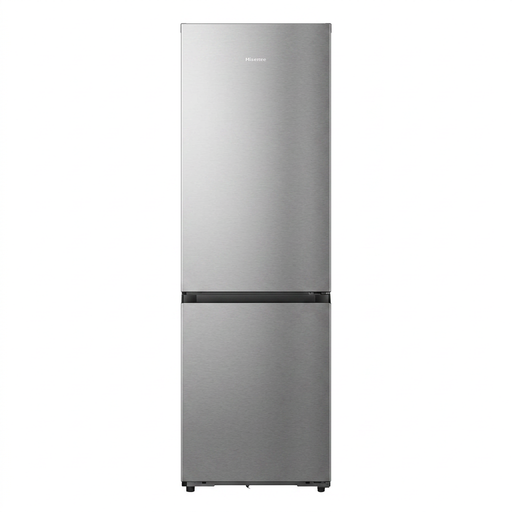 No image available
This freestanding fridge freezer combines fresh and frozen storage; check that the separate capacities suit what you need to store.
Stated capacities: 215 l for the fridge and 115 l for the freezer. Stated energy use: 165 kWh/an. Listed dimensions: 59,5 × 185,6 × 60 cm. A reversible door and frost-free cooling are listed; leave the required ventilation clearances.
 No image available
This built-in model could suit a fitted kitchen if the housing and sliding door mounting are compatible.
Stated capacities: 186 l for the fridge and 62 l for the freezer. TwinTech Total No Frost, MultiFlow and a freezing capacity of 5 kg/24 h are listed. Check that the unit and cabinet door are compatible with the intended fitting.
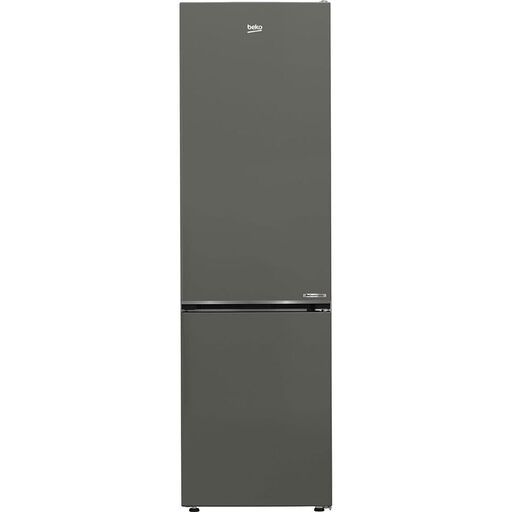 No image available
This freestanding fridge freezer is a good choice if you want fresh and frozen storage in one appliance and have enough space for it.
Stated capacities: 249 l for the fridge and 106 l for the freezer. Class C and stated energy use of 240 kWh/an. Total No Frost and a freezing capacity of 6 kg/24 h are listed. According to the product description, allow at least 5 cm of clearance at the sides and rear.
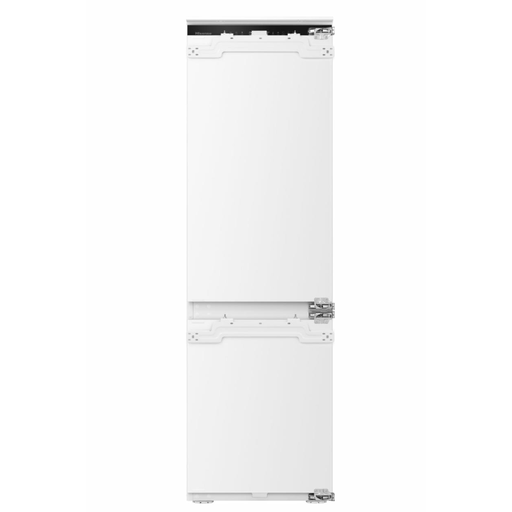 No image available
This built-in model can provide fridge and freezer space in a fitted kitchen, provided you follow the installation instructions.
Stated capacities: 176 l for the fridge and 76 l for the freezer. Stated energy use: 150 kWh/an. Class C, No Frost and a freezing capacity of 6 kg/24 h are listed. The product description mentions a reversible door; install and secure the appliance in accordance with the manufacturer’s instructions.
First compare the fridge and freezer capacities in litres, then the kWh/an of models suited to your needs. The current European energy label uses a scale from A to G; the rating doesn’t replace comparing capacity and annual energy use.
No, not on its own. In Que Choisir’s test, storage time is how long it takes for the freezer temperature to rise from −17 °C to −9 °C with the power off; this result doesn’t directly tell you the temperature of every food item after a real power cut.
Don’t rely on the external dimensions alone. Check the model’s manual for clearances, airflow and door opening; for a built-in model, also check the housing dimensions and cabinet door fixing.
The Ministry of Agriculture recommends setting the freezer to −18 °C; check the manual for the appliance’s specific settings and maintenance requirements. Find out whether the freezer needs manual defrosting or has No Frost technology.
For an appliance bought from a retailer, the DGCCRF states that the statutory guarantee of conformity is claimed from the seller under the conditions set out by law, within two years of delivery. When you buy a new appliance, the retailer must offer to take back the old one; confirm the practical arrangements before delivery.