What should you check before choosing?
Start by finding out whether your current appliance can be kept or repaired. Then work out how much space you need for fresh and frozen food before comparing the kWh/year figures of models that meet the same needs, as ADEME recommends.
| Consideration |
What to check |
Who it matters to |
| Repair or replace |
Check whether the appliance is keeping food cold, then get the fault and the possibility of repair assessed. |
When my appliance is still working or has a specific fault, I want to know whether I can keep using it before replacing it; around 34% of consumers put this decision first. |
| Annual energy use |
Compare the kWh/year figures for appliances with similar functions and usable capacities, rather than relying on the energy rating alone. |
If I’m replacing an appliance that runs continuously, I want to compare its energy use with that of a suitable model; almost 25% of consumers prioritise reducing their energy use. |
| Capacity and space |
Check the usable capacities of the fridge and freezer compartments, the dimensions and the way the doors open. |
My shopping requires a certain balance of fresh and frozen food, without exceeding the available space; around 25% of consumers put finding the right fit first. |
| Everyday comfort |
Check the noise level and which compartments, if any, have a frost-free function. |
If the appliance is near a living area, noise or defrosting matters to me every day; almost 16% of consumers say this is their main concern. |
Fridge-freezers to consider on Joybuy
These models combine storage for fresh and frozen food. If you’re replacing your appliance, first check the capacity and format you need, then compare the energy information for models that fit your available space.
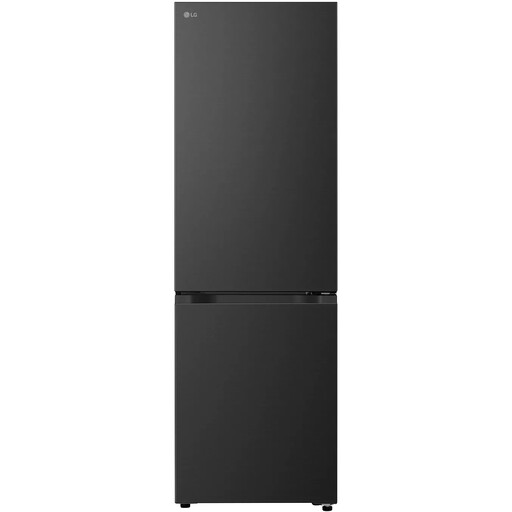 Image unavailable
LG GBBS312AEV, 333 L black fridge-freezer
Worth considering if you want one appliance for both fresh and frozen food. The model name indicates a 333 L capacity, No Frost and an A energy rating. Check the capacity of each compartment and the dimensions before comparing it with your current appliance.
View on Joybuy
 Image unavailable
Candy CFQQ5T817EPS, 467 L four-door fridge-freezer
Consider this if you need a four-door appliance for fresh and frozen food. The title indicates a 467 L capacity, Total No Frost and an E energy rating. Check that the split between compartments suits your shopping and that the appliance will fit in your available space.
View on Joybuy
 Image unavailable
Haier HTW5618ENMG, 360 L three-door fridge-freezer
Worth considering if you want to combine fresh and frozen food storage in a three-door format. The title lists a 360 L capacity, Total No Frost, an E energy rating, Wi-Fi and My Zone. Check the installation dimensions and the annual energy use of the exact model.
View on Joybuy
 Image unavailable
Sonlu CC-520WE, 444 L fridge-freezer
Consider this if you’re looking for a total capacity of 444 L for fresh and frozen food. The title lists frost-free operation, 40 dB and an E energy rating. Check the separate compartment capacities and dimensions before deciding whether this format is right for you.
View on Joybuy
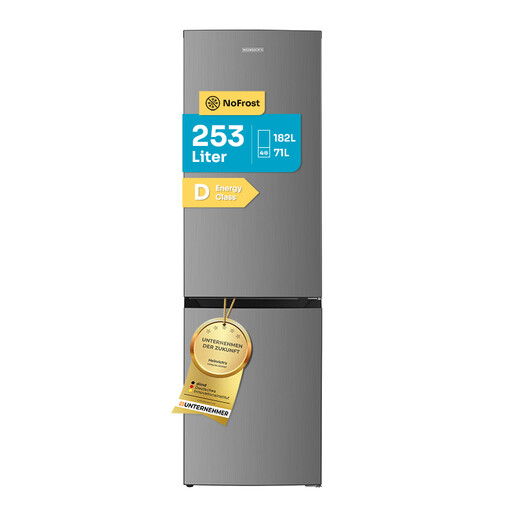 Image unavailable
Heinrich’s, 253 L stainless steel fridge-freezer
Worth considering if the stated split of 182 L for the fridge and 71 L for the freezer suits the food you store. The title lists No Frost and 39 dB. Check the full dimensions and kWh/year before deciding whether it’s a good replacement option.
View on Joybuy
Frequently asked questions
How can I estimate the annual energy savings after replacing an appliance?
Subtract the new appliance’s kWh/year figure from the old one’s, as long as you have comparable figures. If you don’t know how much energy the old appliance uses, taking an appropriate measurement can help you assess the difference. The indicative figures published by ADEME may not reflect your appliance’s actual energy use.
Is a better energy rating enough to choose a fridge?
No. Also compare kWh/year figures, usable capacities and the function of the appliances you’re considering. ADEME notes that a larger capacity or extra features can affect energy use. Check the dimensions and noise level too, if these matter in your home.
How can I arrange for my old cooling appliance to be taken away?
Check the collection arrangements with the seller before placing your order, particularly if your new appliance is being delivered to your home. ecosystem also offers collection, donation or recycling options, depending on the condition of your old fridge or freezer.
Can the QR code on the energy label help me compare models?
Yes. It lets you view information about the model in EPREL, the European Commission’s database for products covered by energy labelling. Make sure the reference you look up matches the exact model you’re considering.


