Households with perishable food to protect
If you still have meat, fish or prepared meals in the appliance, keeping food safe comes before choosing a new model. Anses stresses the importance of maintaining the cold chain.


If your fridge or freezer has stopped cooling, protect any perishable food first, then explore whether it can be repaired before deciding to replace it. If you need a new appliance, choose the fridge and freezer capacities you need, check the installation requirements and arrange for your old appliance to be collected. You can then use the energy label to compare capacity, kWh/year and noise levels, among other things.
If you still have meat, fish or prepared meals in the appliance, keeping food safe comes before choosing a new model. Anses stresses the importance of maintaining the cold chain.
If the appliance might be repairable, ask for the fault to be diagnosed and consider a repair before making your decision based on its age alone. If your appliance is eligible, ecosystem explains the conditions for accessing the Repair Bonus through a QualiRépar repairer.
If replacement is the only option, check the route to the installation space, the dimensions and the ventilation clearances. Also arrange a suitable take-back or collection service: ADEME recommends using a dedicated route for old refrigeration appliances.
First, make sure your food is stored safely. Then compare the possibility of a repair with an appliance that will provide the type of cooling you need. Make sure the delivery and take-back arrangements work with your choice.
| Concern | What to check | Consumers affected |
|---|---|---|
| Keeping food safe straight away | Work out whether your food needs to be chilled, frozen or both, and arrange suitable storage while you wait. | If there’s perishable food still in my appliance, I need to avoid extending the break in the cold chain. Around 36% of consumers would put keeping food safely stored at the top of their list. |
| Repair or replacement | Ask for the fault and repair options to be explained. For the Repair Bonus, check the conditions with a QualiRépar repairer. | If my appliance can be put back into service, I’d rather look into that option before replacing it. Repair would be the top priority for around 29% of consumers. |
| Choosing the right new appliance | Compare fridge and freezer capacity, kWh/year and noise levels on the energy label, and measure the space and access routes. | To restore the storage my household needs, I have to choose an appliance that fits the available space. Around 21% of consumers would prioritise this above all else. |
| Delivery and take-back | Confirm the delivery arrangements, take-back of the old appliance and any preparation instructions. | If I can’t easily get rid of my old appliance, its collection and access to my home will determine what happens next. This would be the main concern for around 14% of consumers. |
The type of fault, the appliance’s condition and your storage needs matter too. A repair may still be an option, although not every repair is covered by the Repair Bonus.
Get the fault assessed, then compare the proposed repair with the features of a potential replacement.
A freezer can’t replace a fridge for perishable fresh food. Anses recommends a temperature of 4 °C in the coldest part of the fridge.
Make a list of the fresh and frozen food you need to transfer, then check the capacity of each compartment separately.
Collection depends on the delivery arrangements and access to your home. ADEME recommends sending old refrigeration appliances through a suitable collection scheme rather than putting them out with ordinary bulky waste.
Before placing your order, confirm the take-back arrangements, where and when it will happen, and any preparation instructions.
According to the European Commission, the energy label for fridges and freezers also shows annual energy consumption, storage capacity and noise levels. The rating alone doesn’t tell you everything you need to know to make your choice.
Compare appliances with the same function and suitable capacities, then check their kWh/year, noise levels and dimensions.
These appliances combine a fridge and freezer, so they’re worth considering if you need a replacement that restores both functions. Before choosing, compare the split between fridge and freezer capacity with the food you need to store, and check the installation requirements and take-back arrangements for your old appliance.
 Image unavailable
Worth considering if you need to restore both fridge and freezer functions in a three-door appliance.
Stated capacity: 360 L; Total No Frost, energy rating E, Wi-Fi and My Zone are listed in the model name.
Check the dimensions, ventilation clearances and take-back arrangements before ordering.
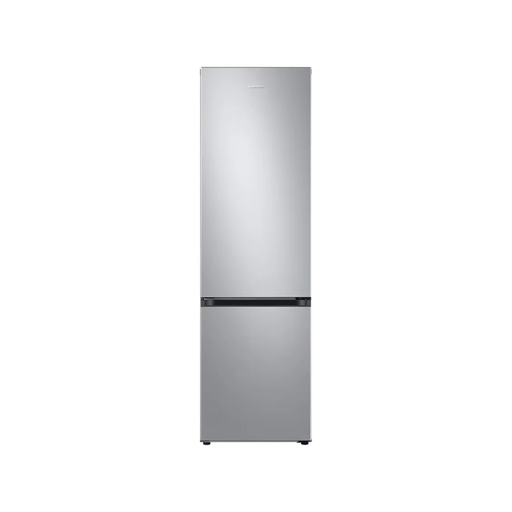 Image unavailable
Consider this if you’re looking for a freestanding appliance that combines a fridge and freezer.
Stated capacity: 390 L; energy rating D.
Check the dimensions, delivery access and take-back arrangements for your old appliance.
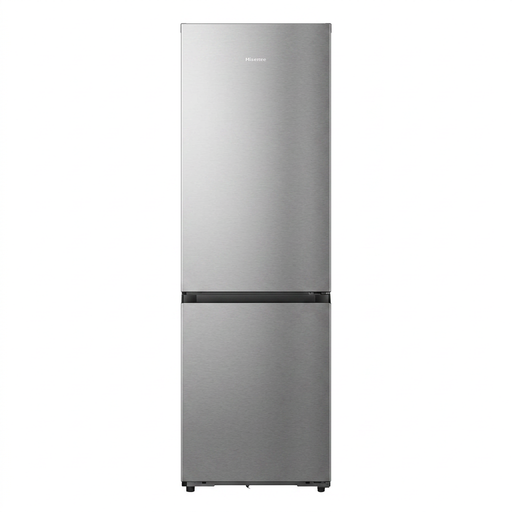 Image unavailable
Worth considering as a replacement for an appliance that keeps food chilled and frozen.
Stated capacity: 330 L; No Frost technology and stated noise level of 35 dB.
Check the energy label, then confirm the dimensions, ventilation requirements and take-back arrangements.
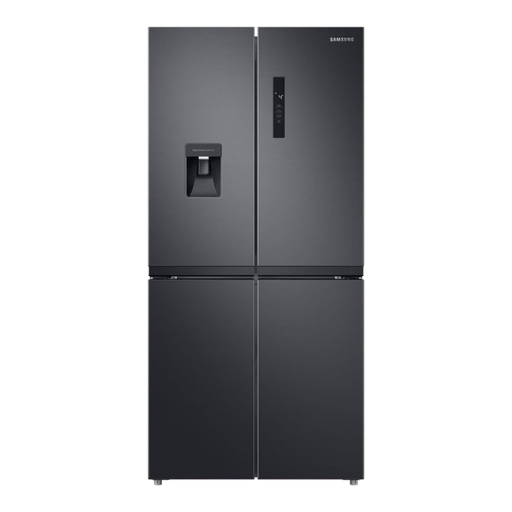 Image unavailable
Consider this if you need a replacement with a total capacity of 488 L for fresh and frozen food.
Energy rating E; black finish.
Check that it will fit through the access routes and in the available space, then confirm take-back of your old appliance.
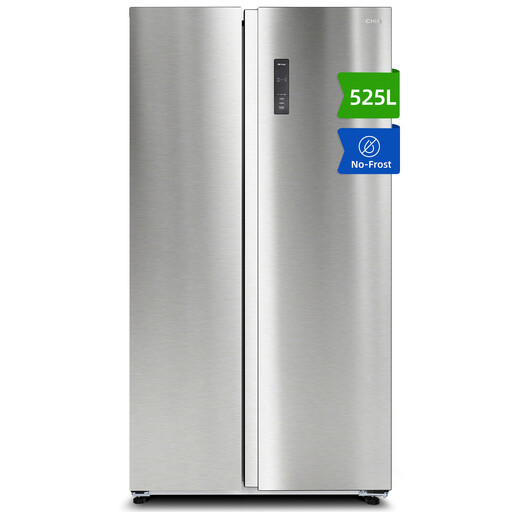 Image unavailable
Worth considering if you want separate fridge and freezer compartments in a side-by-side format.
Stated capacities: 333 L for the fridge and 192 L for the freezer; No Frost, energy rating E and stated noise level of 37 dB.
Check the dimensions, kWh/year, delivery access and take-back arrangements before choosing.
Yes, these appliance categories are included in the scheme described by ecosystem. However, eligibility depends on factors such as the warranty status, the fault and whether the repair is carried out by a QualiRépar repairer. Check these details before arranging a repair.
Ask the retailer to confirm the take-back arrangements before ordering, including the location, time slot, access to your home and how to prepare the appliance. ADEME says that, when replacing an appliance, you may be able to hand the old one to the retailer or delivery driver, depending on the arrangements in place.
No. Refrigeration appliances must be taken to a suitable collection scheme. ADEME recommends handing one over when you replace it or taking it to a collection point that accepts this type of appliance.
Anses recommends 4 °C in the coldest part of the fridge, especially for meat, fish and prepared meals. Check the model’s manual to find this area and set the appliance correctly.