Households replacing an essential appliance
You need to keep food fresh every day while deciding whether a repair is still worthwhile. If you buy a new appliance, check its capacity, annual energy consumption and noise level.


Before replacing a broken fridge or freezer, find out whether a professional repair is possible and worthwhile. If you need to replace it, choose between a fridge, a fridge freezer and a separate freezer according to how much room you need for fresh and frozen food. Then compare the annual energy consumption, dimensions and noise levels of models suited to your household.
You need to keep food fresh every day while deciding whether a repair is still worthwhile. If you buy a new appliance, check its capacity, annual energy consumption and noise level.
The space set aside for frozen food matters more than the total capacity shown: compare the freezer compartment in a fridge freezer with the capacity of a separate freezer.
Dimensions, door clearance and noise can all affect everyday use. The European Commission lists capacity and noise emissions among the information shown on the energy label for relevant refrigeration appliances.
First decide whether to repair or replace your appliance, then work out how much room you need for fresh and frozen food. Compare the other criteria across appliances that meet those needs.
Worth considering: if you mainly store fresh food and already have a suitable way to store frozen food.
Limitation: if you need freezer space, check whether the model has a freezer compartment and how much room it offers.
Worth considering: if you regularly need to store both fresh and frozen food in one appliance.
Limitation: the space available in each compartment varies by model; the freezer capacity may not suit bulk shopping.
Worth considering: if frozen food takes up a lot of space and you already have a fridge that suits your needs.
Limitation: it takes up extra space and adds its own annual electricity consumption.
Worth considering: if a professional can confirm that it can be repaired and that doing so is worthwhile.
Limitation: not all faults can be repaired under the same conditions; check the warranty before deciding, too.
| Criterion | What to check | Consumers concerned |
|---|---|---|
| Space for fresh and frozen food | Compare the usable capacity of each compartment in litres, rather than looking at the total capacity alone. | If I store both fresh and frozen food, I want each compartment to suit my storage habits; around 31% of consumers would prioritise this balance. |
| Continuous energy use | For appliances with a suitable capacity, look at the A to G energy rating alongside annual consumption in kWh. | An appliance that stays on all year makes me think about how much electricity it will use; around 31% of consumers would make this their top criterion. |
| Noise and installation | Check the dimensions, clearance and door opening against your home; compare the noise emissions in dB, too. | In an open-plan kitchen or a tight space, I don't want noise to be a nuisance or the door to be difficult to open. Around 15% of consumers would put these considerations first. |
| Repair and lifespan | Check the warranty and whether a professional diagnosis is available. If buying, look at the service terms and spare-parts availability, too. | If something goes wrong, I would rather find out whether the appliance can be kept in use before ordering another one; around 23% of consumers would make this their priority. |
The letter alone won't tell you whether the capacity is right or what the model's stated annual energy consumption is.
For an appliance with a capacity to suit your needs, check the A to G rating alongside the kWh per year, the capacity of each compartment in litres and the noise emissions shown on the EU energy label.
A fault doesn't always mean you need to buy a new appliance, but whether it can be repaired depends on the appliance and the diagnosis.
Check the warranty and speak to a professional. If you may be eligible for QualiRépar support, confirm that the appliance, fault and repair work qualify. Always leave work on the refrigeration circuit to a professional.
Suitable storage capacity isn't enough if you can't get the appliance to its intended spot or the door gets in the way.
Measure the space and the delivery route, then check the dimensions, door swing and clearances specified in the model's instructions.
A feature or compartment described as a fresh-food zone isn't a substitute for checking the storage temperature.
After installation, check the coldest part of the fridge: Anses recommends a temperature of between 0 °C and 4 °C in this area.
The KGN33NWDA freestanding fridge freezer is a useful point of comparison if you want separate capacity for fresh and frozen food.
The CBNstb 579i Peak is worth looking at if you want a fridge freezer with dedicated compartments and NoFrost technology.
The W9C841COX freestanding fridge freezer is an example of a design with separate compartments and a Dual No Frost system.
These models include fridge freezers and appliances designed for storing frozen food; the AUCMA chest freezer can also be used in fridge mode. First choose the configuration you need, then compare the specifications of the exact model.
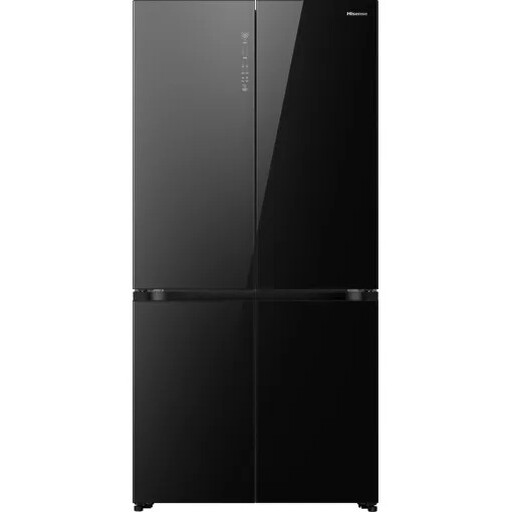 Image unavailable
A large-capacity appliance for keeping fresh and frozen food in one place. The title states a capacity of 591 L and an E energy rating; check the capacity of each compartment, the kWh per year and the dimensions in the exact model details.
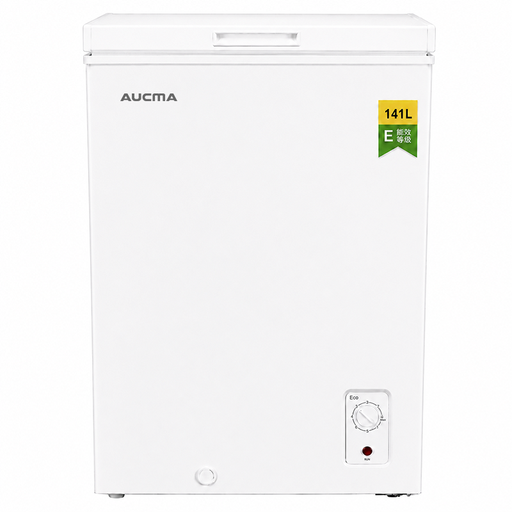 Image unavailable
Worth considering if you want a separate appliance that can be set up for the type of storage you need: it works as either a fridge or a freezer, not both at the same time. The title states an E energy rating, a 7-level thermostat, a removable basket and a defrost drain. Allow enough space to open the lid.
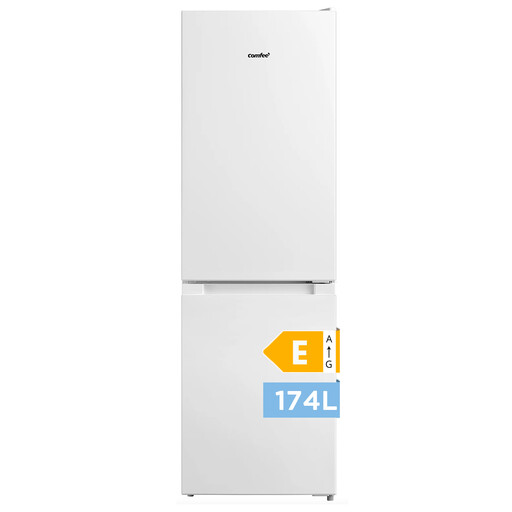 Image unavailable
A fridge freezer for fresh and frozen food, with a stated height of 150 cm. The title states a 70/30 split, 39 dB, an E energy rating, a reversible door and Low Frost technology. Check the full dimensions, kWh per year and the space needed to open the door.
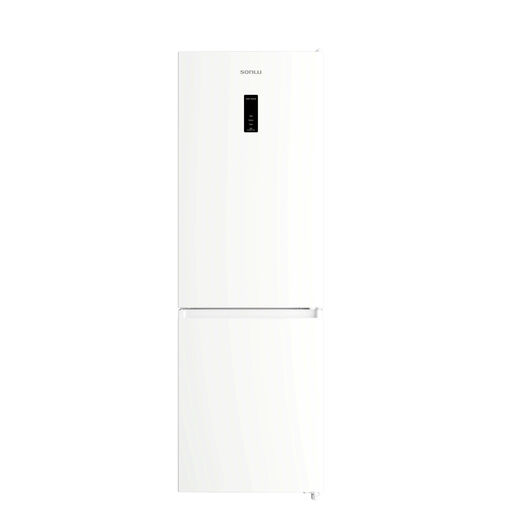 Image unavailable
For regularly storing fresh and frozen food in two compartments. The title states a 211 L fridge capacity, a 99 L freezer capacity, a width of 60 cm and an E energy rating. Check the other dimensions, noise level and annual energy consumption before comparing this model with another fridge freezer.
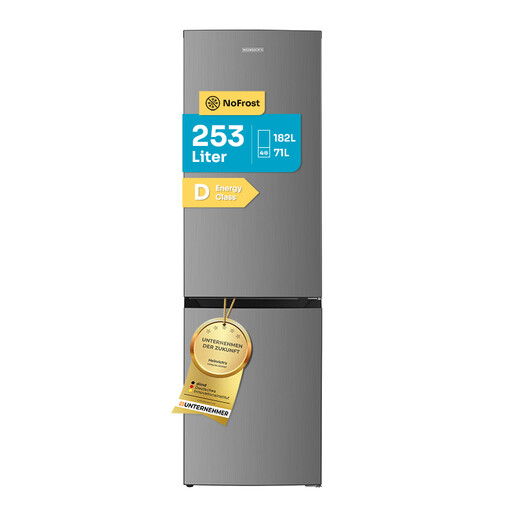 Image unavailable
For keeping fresh and frozen food in the same appliance. The title states a 182 L fridge capacity, a 71 L freezer capacity, 39 dB and No Frost technology. Check the dimensions and annual energy consumption of this model before buying.
First compare the annual energy consumption in kWh and the capacity you need, then look at the A to G energy rating and noise emissions. The European Commission lists this information for the relevant domestic refrigeration appliances; scan the QR code on the label to access the model's details in EPREL.
Yes, if a professional can confirm that the fault is repairable and that getting the appliance working again is worthwhile. Check the warranty first. If you're considering the QualiRépar scheme in France, ask the repairer to confirm that the appliance and repair work meet its requirements.
Don't assume that this index is available for all fridges and freezers. The French ministry responsible for the ecological transition describes the rollout of the index for televisions and washing machines. For a refrigeration appliance, check the model information on the energy label, along with the service terms and spare-parts availability.
Anses recommends a temperature of between 0 °C and 4 °C in the coldest part of the fridge. Check it after switching the appliance on, and make sure food isn't blocking the circulation of air.