Households dealing with a fault
Your appliance is not cooling as well, is icing up unusually or is making an unfamiliar noise. Before replacing it, you want to know whether it can be repaired and whether it still meets your storage needs.


If your fridge or freezer is not cooling properly, is icing up unusually or has become noisy, get the fault assessed first: its age alone is not enough to justify replacing it. If you buy a new appliance, choose the fresh and frozen storage capacity you need, then compare the annual energy consumption of appliances with the same function and a similar capacity. Don’t overlook their dimensions or noise levels.
Your appliance is not cooling as well, is icing up unusually or is making an unfamiliar noise. Before replacing it, you want to know whether it can be repaired and whether it still meets your storage needs.
Fridges and freezers run continuously, as ADEME points out. You want to compare their annual energy consumption without choosing unnecessary capacity or features.
You need to replace an appliance, but your requirements for fresh and frozen food have changed. The layout of the compartments, the dimensions and the noise level matter just as much as the advertised total capacity.
First decide whether a fault needs diagnosing, then work out whether you need refrigeration, freezing or both. ADEME recommends checking the energy label. To compare annual energy consumption, look at appliances with the same function and a similar capacity.
| What matters | What to check | Consumers concerned |
|---|---|---|
| Repair or replace | Ask what is causing poor cooling, unusual icing or an unfamiliar noise; check the warranty before deciding. | When my appliance shows a single symptom, I’d rather find out whether it can be repaired before buying another one; around 27% of consumers would make this their priority. |
| Energy consumption and capacity | Compare the kWh/year shown on the labels of models with the same type and a similar capacity, as well as their usable capacities. | If my main aim is to reduce energy consumption, I don’t want to run an unnecessarily large appliance; around 33% of consumers would put this suitability first. |
| Storage layout | Check the fridge and freezer capacities separately, then check the dimensions and the space needed to open the doors. | I mainly store fresh food, or a lot of frozen food: total capacity alone doesn’t meet my needs. Around 27% of consumers would put this balance first. |
| Noise and maintenance | Check the model’s noise level, defrosting method and the availability of spare parts. | In an open-plan living space, I pay attention to noise and future maintenance; around 13% of consumers would make this their main concern. |
A large fridge-freezer, a fridge-only model and a freezer do not serve the same purpose. ADEME also points out that size and unnecessary features affect energy consumption.
Choose the type and capacity you need first, then compare the kWh/year of similar appliances. Check how the compartments are arranged on the energy label or in the product specifications.
Poor cooling, unusual icing or an abnormal noise should be checked, but none of these symptoms alone tells you whether the appliance needs replacing.
Check the warranty and ask for a diagnosis. If you are considering the Repair Bonus, confirm the conditions that apply to the appliance and repairer before relying on it.
Two fridge-freezers with the same total capacity can offer different amounts of fridge and freezer space. An appliance that suits your storage needs must also fit through to its intended position and have room for its doors to open.
Compare the capacity of each compartment and measure the height, width, depth, delivery route and clearance needed for the doors or lid.
In France, electrical and electronic equipment must be collected appropriately. The ministry responsible for the ecological transition points out that some items contain components that are hazardous to the environment.
ADEME says you may be able to return your old appliance to the retailer or delivery team when replacing it. Confirm the take-back arrangements before delivery.
These brands offer refrigeration appliances in a range of formats. Always compare the specifications of the exact model rather than assuming its energy consumption or suitability based on the brand alone.
Bosch offers fridges, fridge-freezers and freezers.
Liebherr offers fridge-freezers with features including BioFresh compartments and NoFrost.
Beko offers fridges in a range of capacities, with technologies such as HarvestFresh, AeroFlow and NeoFrost Dual Cooling available on selected models.
These models combine refrigeration and freezing in one appliance. If you mainly need fridge space, or only need a freezer, choose the right type of appliance first, then compare its annual energy consumption.
 Image unavailable
Worth considering if you need a large-capacity fridge-freezer; check that its compartments and dimensions really suit the way you use it.
Class E and Total No Frost are stated in the product name. Check the model’s energy label to compare its kWh/year with other fridge-freezers of a similar capacity.
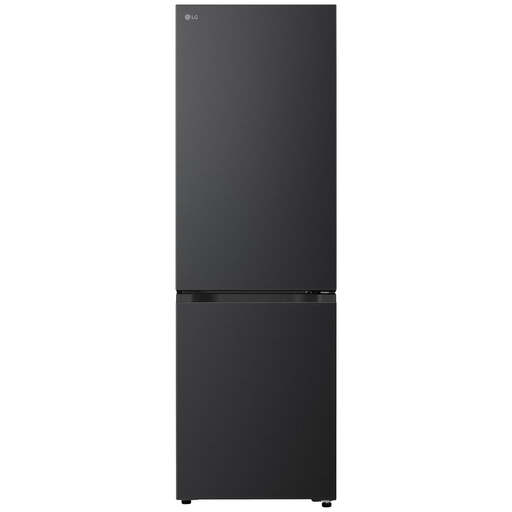 Image unavailable
Worth considering if you want fresh and frozen food in one appliance; check how much space is given to each compartment before choosing.
Class C is stated in the product name. To assess whether it will fit and how much energy it uses, check the exact model’s dimensions and kWh/year.
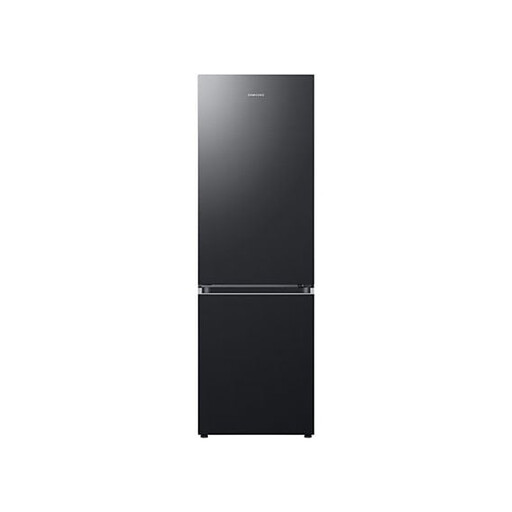 Image unavailable
This fridge-freezer offers fresh and frozen storage in one appliance; check that the compartment layout suits you.
Class D is stated in the product name. Check the model’s kWh/year, noise level and full dimensions before comparing it with other models or installing it.
 Image unavailable
Worth considering if your storage needs justify a large fridge-freezer; check the fridge and freezer capacities separately before choosing this size.
The product name states class E, 40 dB and frost-free operation. Also check the exact model’s dimensions and kWh/year.
 Image unavailable
Worth considering if you are looking for a more compact fridge-freezer, provided its layout and dimensions suit your space.
The product name states 153 L for the fridge, 74 L for the freezer, a width of 54 cm, class E, a reversible door and Low Frost. Low Frost does not mean No Frost; check the maintenance required, as well as the kWh/year, height and depth.
Poor cooling, unusual icing or an unfamiliar noise are reasons to investigate the cause. ADEME lists these symptoms for refrigeration appliances; none of them alone means the appliance needs replacing.
First compare the function and usable capacities, then the exact model’s annual energy consumption in kWh and noise level. The energy label and the European Commission’s EPREL database provide product information; an energy efficiency rating alone is no substitute for comparing appliances with a similar capacity.
No. You need to check the conditions before arranging a repair. ADEME notes, in particular, that the item must not be covered by a warranty or insurance and that the repair must be carried out by a certified professional. Also confirm that the appliance and fault are eligible.
Arrange for it to be taken back or collected appropriately rather than disposed of with general waste. ADEME says you may be able to return it to the retailer or delivery team when replacing it; agree the arrangements before delivery.