What should you compare before deciding?
Start with the appliance you own, then compare alternatives that can provide the same amount of storage. A difference in energy rating alone isn’t enough to show whether replacing it is worthwhile.
| Priority | What to check | How this meets my needs |
|---|
| Energy consumption |
Check the kWh/year figure for your old appliance, if available, then compare it with the figure on the label of the model you’re considering. ADEME presents the A to G rating as a useful guide; annual energy consumption lets you compare specific models. |
My appliance runs continuously: I want to know how much energy I could save before deciding whether it’s worth replacing. |
| Capacity |
Compare the capacity in litres of the fridge and freezer separately, as well as any features you’ll use. ADEME points out that a larger size and too many features can increase energy consumption. |
I don’t store many frozen foods, so a large freezer may not suit my habits, even in an appliance with a better energy rating. |
| Repair |
If there’s a fault, keep your proof of purchase and contact the seller if the statutory conformity guarantee may apply. Otherwise, ask for a diagnosis or quote before ruling out a repair. |
If the fault can be repaired, I’d like to know that before arranging to have a new appliance installed. |
| Configuration |
If you’re considering two separate appliances, add together their kWh/year and capacities before comparing them with a fridge-freezer of suitable capacity. Also check how much space each one needs. |
I need more freezer space, so I want to compare two separate appliances with a fridge-freezer that offer similar storage, without assuming which will use less energy. |
| Installation |
Measure the housing or space, access routes and door-opening direction. Check whether a model is integrated or freestanding, and look up the exact model’s dimensions. |
My appliance needs to fit into a housing, so energy consumption isn’t the only factor if the dimensions mean it won’t fit. |
| Ease of use |
If noise matters, compare the stated noise levels of the models you’re considering. Check maintenance features and alarms separately to see which ones suit your needs. |
I’m concerned about noise in an open-plan kitchen. If defrosting is a nuisance, I’ll check exactly which compartments have a No Frost function. |
A few things to know about selected brands
These features apply to the models mentioned, not every appliance made by each brand.
Bosch
Bosch offers a range of freestanding and integrated fridge-freezers.
- Bosch’s product details for the KGN33NWDA list 189 L of fridge space, 90 L of freezer space and a noise level of 40 dB(A). Compare these figures with those of an appliance that offers the capacity you need.
- These figures and features apply to this model only, not other Bosch models such as the KGN33NLEB featured below.
Whirlpool
Whirlpool’s range includes fridge-freezers in different sizes and configurations.
- Whirlpool describes the W7X83AW as a freestanding Total No Frost fridge-freezer. This feature may be useful if you want to reduce the need for manual defrosting.
- Check the capacity, energy consumption and dimensions of the specific model you’re considering. A feature description alone doesn’t tell you whether it’s right for your household.
Electrolux
Electrolux offers a range of integrated fridge-freezers designed for fitted kitchens.
- Electrolux’s product details for the ENV9GB18S list 125 kWh/year, 188 L of fridge space and 62 L of freezer space. Its installation dimensions can help you check whether it will fit your housing.
- These figures apply to the ENV9GB18S only. They aren’t enough to compare the whole range with freestanding appliances of different capacities.
Fridge-freezers to consider on Joybuy
These models show a range of capacities and installation types to consider when replacing a fridge-freezer. To decide, compare each one with your current appliance, the space you have available and the capacity you use.
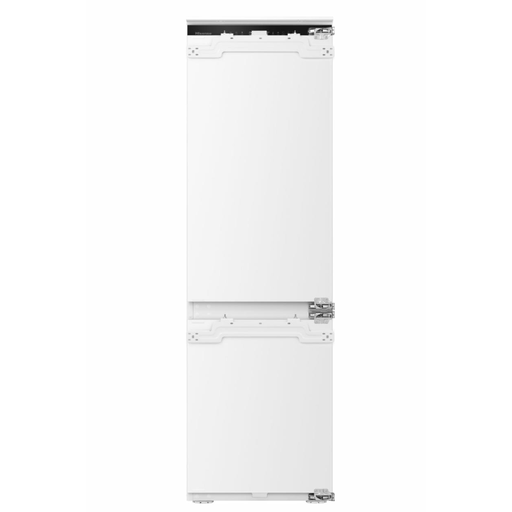 Image unavailable
Hisense RB3B250SAWC integrated 252 L
Worth considering if you’re replacing an integrated fridge-freezer and need a capacity of 252 L. The model name indicates a Class C rating and a No Frost function. Check the capacity of each compartment, the kWh/year and the housing dimensions on the label and in the documentation for the exact model.
View on Joybuy
 Image unavailable
Haier HTW5618ENMG 3-door 360 L
This style is worth comparing if you’ll make good use of its 360 L capacity and want three doors. The model name indicates Total No Frost, a Class E rating and Wi-Fi. Before deciding whether these features are right for you, compare the kWh/year and the capacity of each compartment with your needs.
View on Joybuy
 Image unavailable
Candy CFQQ5T817EPS 4-door 467 L
Its four doors and 467 L capacity are suited to households that need plenty of storage, though it’s worth checking this against your habits. The model name indicates Total No Frost and a Class E rating. Check the kWh/year, how the capacity is divided between compartments and the space needed to open the doors.
View on Joybuy
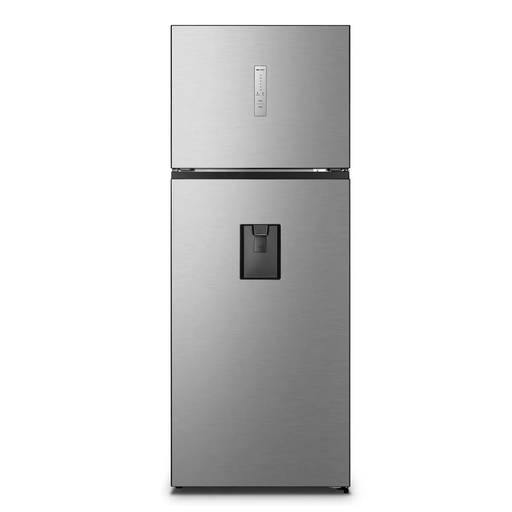 Image unavailable
Hisense FTN461WCE1 467 L
Another 467 L option to consider if this capacity suits your storage needs. The model name indicates Total No Frost and a Class E rating. Compare how its capacity is divided between the fridge and freezer, its kWh/year and its dimensions with those of the other styles you’re considering.
View on Joybuy
 Image unavailable
Bosch KGN33NLEB 282 L, bottom freezer
Worth comparing if you’re looking for a 282 L fridge-freezer with a bottom freezer. The model name indicates a Class E rating. Check the kWh/year, the capacity of each compartment and the dimensions of the KGN33NLEB. If noise matters where you plan to put it, check its noise level too.
View on Joybuy
Frequently asked questions
What should you compare on a fridge-freezer’s energy label?
First compare the kWh/year figures for the specific models, then their A to G ratings and the capacity of the fridge and freezer. The European Commission lists these details, along with dimensions, in the EPREL database. Make sure the appliances you compare meet the same storage and installation needs.
How can you estimate the difference in energy consumption after replacing an appliance?
Subtract the kWh/year figure for the new model from that of your current appliance, if you have a usable figure for it. The result is an estimate based on the appliances and how they’re used. ADEME’s published average figures don’t guarantee savings for your household.
Does a fault mean you have to replace the appliance?
No. Have the fault assessed before you decide. In France, according to Légifrance, sellers are responsible under the statutory conformity guarantee for defects that appear within two years of the goods being delivered. Depending on the conditions set out in the Consumer Code, bringing the goods into conformity may involve a repair or replacement. Outside this framework, a diagnosis and quote can help you decide.
Do two separate appliances necessarily use more energy than a fridge-freezer?
No, you can’t draw that conclusion without comparing suitable models. Add together the kWh/year figures for the separate fridge and freezer, then compare their capacities with those of a fridge-freezer that meets the same needs. ADEME’s average figures don’t necessarily relate to appliances with equivalent capacities.
How can you avoid replacing your fridge-freezer with one that’s too large?
Assess separately how much space you use for fresh and frozen food, then compare those needs with the capacity listed for each compartment. Next, check the kWh/year and dimensions of the model you’re considering. Two appliances with similar total capacity may divide that space in ways that don’t suit you.


