Choose based on how much fresh and frozen food you keep in your kitchen: a fridge is mainly suited to the former, while a fridge-freezer combines both in one appliance. If you regularly stock up on frozen food, a separate freezer can complement your fridge. Then compare the capacity of each compartment, the space needed for installation and the annual energy consumption listed for the models you’re considering.
Who are these appliances for?
How often you use fresh and frozen food matters more than the total capacity alone: it determines which compartment you really need.
Households that often buy fresh food
If most of your groceries need refrigerating and you keep only a small amount of frozen food, start by looking at the fridge capacity and whether you can control the temperature. The Anses recommends keeping the coldest part of the fridge between 0 and +4 °C.
Households that regularly use both compartments
If you store fresh and frozen food every week and don’t want multiple appliances, look at how the capacity is split in a fridge-freezer, rather than its total volume. Public EPREL data lists the fresh and frozen compartments separately.
Households that stock up on frozen food
If you prepare meals in advance or store lots of frozen food, a separate freezer gives you dedicated capacity and storage. How easy it is to reach your food, and the space available, can help you choose between an upright and a chest freezer.
Which features should you prioritise?
First decide whether you mainly need fridge space, two compartments you’ll use regularly, or more room for frozen food. Then compare the dimensions and annual energy consumption of appliances that meet your needs. According to ADEME, refrigeration appliances run continuously.
Fridge
Best for: households where fresh food makes up most of the groceries and a dedicated freezer compartment isn’t needed.
Bear in mind: check whether it has a freezer compartment. An appliance designed for refrigeration won’t meet your needs if you regularly stock up on frozen food.
Fridge-freezer
Best for: households that regularly store both fresh and frozen food and want a single appliance.
Bear in mind: the split between the two compartments varies by model. A large total capacity doesn’t guarantee enough space in the compartment that matters most to you.
Upright freezer
Best for: a separate supply of frozen food that you want to access using drawers or shelves, depending on the model’s layout.
Bear in mind: it’s an additional appliance to go with the fridge you need for fresh food, and it needs its own space.
Chest freezer
Best for: a large amount of frozen food, if you’re happy to store items further down inside the freezer.
Bear in mind: measure the floor space and clearance needed to open the lid. The inside is accessed differently from an upright freezer.
| Factor |
What to check |
Who it’s for |
| Room for fresh food |
Fresh compartment capacity in litres and how to control its temperature. |
If most of my shopping needs refrigerating, I want enough room for it without choosing an appliance based on its total capacity; around 27% of consumers would prioritise this need. |
| Balance between the two compartments |
Separate capacity in litres for fresh and frozen food in the fridge-freezer. |
I regularly store both types of groceries and want one appliance to do the job; around 33% of consumers would have this priority. |
| Separate frozen food storage |
Freezer capacity, dimensions and access to food, depending on the interior layout. |
If I prepare portions in advance or buy lots of frozen food, I want dedicated space where I can find what I need; around 20% of consumers would put this need first. |
| Continuous energy use |
Annual energy consumption in kWh/an and energy rating, comparing appliances of a similar type and capacity. |
As my appliance runs all year, I want its capacity and features to suit how I actually use it; around 20% of consumers would prioritise this factor. |
Mistakes to avoid before you buy
-
Looking at total capacity alone
A large total capacity in a fridge-freezer can hide a compartment that’s too small for the food you store most. EPREL and manufacturers’ product information list fresh and frozen capacities separately.
Compare the capacity of each compartment separately, then check that the split suits your habits.
-
Comparing energy ratings without checking kWh/an
The energy rating doesn’t replace the model’s stated annual energy consumption. According to ADEME, the size and certain features can also affect the energy consumption of a refrigeration appliance that runs continuously.
Compare kWh/an for appliances of a similar type and capacity, while making sure you still get the space you need.
-
Choosing a chest freezer without measuring the space
A chest freezer needs to be accessed from above, unlike an upright model. The conditions in which it can operate in a cool room also depend on the model; the features highlighted by Liebherr don’t apply to every chest freezer.
Measure the space and clearance needed to open the lid, then check the ambient temperature range specified for the model you’re considering.
-
Leaving your old appliance until delivery day
If you’re replacing a refrigeration appliance, arrange for it to be taken away with your delivery or organise another suitable collection option.
Ask the seller what collection arrangements apply to your purchase and how to prepare your old appliance.
Brands to consider across different ranges
These brands showcase different types of refrigeration appliances. Always compare the specifications of the model you’re interested in, rather than assuming that features offered in one range apply to every model.
Bosch
The range includes upright freezers designed to help you organise your frozen food.
- For some models, Bosch features bins and removable fittings to help you adapt the storage space.
- Check the features available on the specific model, along with its capacity, dimensions and energy consumption.
Liebherr
The brand offers chest freezers for storing frozen food.
- Liebherr highlights features related to frost and, on some models, use in unheated rooms.
- Check the ambient temperature range for the model you choose, as well as its size and how easy it is to reach the contents.
Whirlpool
The fridge-freezer range lets you compare how capacity is split between fresh and frozen food.
- The Whirlpool product information for the WHK2 6493 X4E lists 340 L for fresh food and 150 L for frozen food, with an energy consumption of 297 kWh/an.
- These figures apply to the WHK2 6493 X4E only; check the capacities and energy consumption for any other model.
Beko
Depending on the model, the fridge-freezer range includes compartments that can be used in different ways.
- Beko says that some Multizone models let you change how a compartment is used.
- This feature depends on the model, so check its specifications and installation requirements before taking it into account.
Appliances available on Joybuy
These models are mainly suited to choosing one appliance that combines fridge and freezer compartments. The upright freezer shown is for separate frozen food storage; it doesn’t replace a fridge for fresh food.
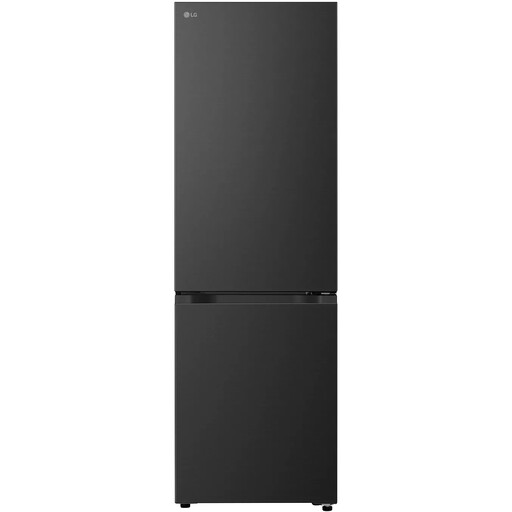 Image unavailable
LG GBBS312AEV, 333 L No Frost fridge-freezer
Worth considering if you want to store fresh and frozen food in one appliance. The model name indicates a total capacity of 333 L, No Frost and an A energy rating. Check how the capacity is split between the two compartments and measure the space before you choose.
View on Joybuy
 Image unavailable
Candy CFQQ5T817EPS, 467 L four-door fridge-freezer
If you want fresh and frozen food storage in a four-door appliance, compare the space allocated to each compartment with the way you’ll use it. This model has a stated total capacity of 467 L, Total No Frost and an E energy rating. Also check how much space you’ll need to open the doors.
View on Joybuy
 Image unavailable
Samsung RF50C530EB1, 495 L multi-door fridge
Worth considering if you’re looking for a multi-door appliance for fresh and frozen food. Its stated total capacity is 495 L and it has an E energy rating. Check the capacity of each compartment, whether it will fit into the space available and the clearance needed.
View on Joybuy
 Image unavailable
CHiQ JR227LSE, 227 L fridge-freezer, 54 cm wide
If you’re short on width, this fridge-freezer, listed as 54 cm wide, is worth comparing with the space available. Its 227 L capacity is split between 153 L for fresh food and 74 L for frozen food. It also has Low Frost and an E energy rating. Low Frost doesn’t mean frost-free, so check the annual energy consumption listed for this model too.
View on Joybuy
 Image unavailable
Heinrich´s, 161 L No Frost upright freezer
Worth considering if you want to add dedicated freezer space to your fridge, rather than store fresh food. This model has a stated capacity of 161 L, No Frost, drawers and a C energy rating. Check its installation dimensions and annual energy consumption before comparing it with other freezers.
View on Joybuy
Frequently asked questions
What temperature should a household fridge be?
The Anses recommends keeping the coldest part of the fridge between 0 and +4 °C. Check the temperature regularly and avoid overfilling the appliance, as this can restrict airflow.
What should I compare on the energy label and product information?
Compare the energy rating and annual energy consumption in kWh/an, then check the separate capacities of the fresh and frozen compartments, along with the dimensions. EPREL lists these details for registered refrigeration appliances. Comparing kWh/an is most useful between models of a similar type and capacity.
Can a separate freezer replace a fridge?
No, not if you also store food that needs to be kept chilled: a separate freezer is for frozen food. You’ll still need a suitable fridge compartment for fresh food. The Anses recommends a temperature of between 0 and +4 °C in the coldest part of the fridge.


