Who is this choice for?
The right format depends first on how much space you need for fresh and frozen food. Noise levels and where the appliance will go can then help you choose between models that meet the same storage needs.
Households keeping an eye on kWh/year
You’re replacing an appliance that’s used all year round and want to compare its stated annual energy consumption without choosing an unsuitable capacity. ADEME points out that fridges and freezers run continuously; their energy labels also show capacity and noise levels.
Households storing fresh and frozen food
You want to keep both types of food in a fridge-freezer, but the total capacity doesn’t tell you how many litres are available in each compartment. Check how the space is divided to make sure it suits your usual shopping habits.
Households storing lots of frozen food
You batch-cook meals or regularly buy frozen food. It’s worth considering a separate freezer if you have a suitable space and can easily access the food, as UFC-Que Choisir notes in its freezer guide.
Which criteria should you consider?
Decide what you need to store first, then compare the energy labels of appliances designed for the same purpose. The European Commission says that labels for refrigeration appliances show details including annual energy consumption, storage volumes and airborne acoustical noise emissions.
Fridge
Consider this if: you mainly store fresh food and have little need for frozen storage, or already have it covered.
The trade-off: check how much space is actually available for frozen food before relying on this as your only appliance.
Fridge-freezer
Consider this if: you need space for both fresh and frozen food but don’t want to install two separate appliances.
The trade-off: the split between the two compartments varies by model. A large total capacity doesn’t guarantee the amount of space you need in each section.
Separate freezer
Consider this if: bulk shopping or batch cooking means you need a separate supply of frozen food.
The trade-off: this appliance also runs continuously and needs a suitable space. An upright freezer and a chest freezer offer different ways to access your food.
| Criteria |
What to check |
Who is this for? |
| Annual energy consumption |
Compare the kWh/year figures for appliances with a similar capacity and intended use, along with their energy class and usable storage volumes. |
My appliance will be running all year, so I want to limit its energy use without giving up the space I need. Around 25% of consumers prioritise this criterion. |
| Fresh and frozen storage split |
Check the capacity in litres of the fridge and freezer compartments separately, rather than looking at the total capacity alone. |
I store fresh food every day, but also need some space for frozen food. Around 31% of consumers prioritise this split. |
| Frozen food storage |
For a separate appliance, check the usable capacity and choose between drawers in an upright freezer and top access in a chest freezer. |
My bulk shopping or batch-cooked meals mean I need more freezer space. Around 19% of consumers put this capacity first. |
| Location and noise |
Measure the appliance, access routes and clearance needed; check its stated dB(A) level and climate class. |
In an open-plan kitchen or a room where temperatures vary, I need to be able to install and use the appliance there. These considerations come first for around 25% of consumers. |
Brands to consider for these models
The details below apply to the specific models mentioned, not to every appliance from each brand.
Bosch
According to Bosch Electroménager France, the freestanding Série 4 KGN36VWED fridge-freezer has 237 L of fridge capacity and 89 L of freezer capacity, in an appliance that’s 600 mm wide.
- Bosch’s product information lists Total No Frost and a stated noise level of 39 dB(A).
- There’s less space for frozen food than fresh food, so check whether 89 L is enough for your usual supply.
Samsung
According to Samsung France, the RB33B612EWW/EF fridge-freezer has 230 L of fridge capacity and 114 L of freezer capacity, giving a total of 344 L.
- Samsung lists full No Frost cooling and a stated noise level of 35 dB.
- Its product information lists 254 kWh/year and an E energy class. Compare these figures with fridge-freezers that offer the storage capacity you need.
Hisense
According to Hisense France, the freestanding Hi5 RB440N4ACA fridge-freezer has a capacity of 336 L, an A energy class and stated annual energy consumption of 109 kWh.
- Hisense’s product information lists Total No Frost for this model.
- At a stated height of 2 017 mm, check your available space and the clearance needed for installation.
Appliances for fresh and frozen food
These Joybuy products include fridge-freezers for storing fresh and frozen food, as well as an upright freezer for separate frozen food storage. Compare their stated capacities with your actual needs, then check the model’s energy label and dimensions before choosing.
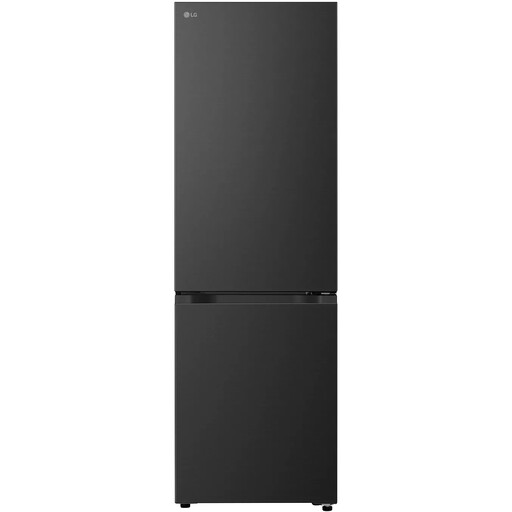 Image unavailable
LG GBBS312AEV 333 L No Frost fridge-freezer, A energy class
Worth considering if you want to store fresh and frozen food in one appliance.
- Total capacity stated in the product name: 333 L; No Frost technology and A energy class.
- Check the capacity of each compartment and the clearance needed in your chosen location.
View on Joybuy
 Image unavailable
Haier HTW5618ENMG 3-door 360 L fridge-freezer, E energy class
This three-door fridge-freezer is worth considering if you want to store fresh and frozen food in one appliance.
- Total capacity stated in the product name: 360 L; Total No Frost, Wi-Fi and My Zone.
- The E energy class alone doesn’t tell you how much it will cost to run. Compare the stated kWh/year with other fridge-freezers of a suitable capacity.
View on Joybuy
 Image unavailable
Sonlu CC-520WE 444 L No Frost, E energy class
Worth considering if you’re looking for a large-capacity appliance for fresh and frozen food.
- Total capacity of 444 L and stated noise level of 40 dB, as listed in the product name.
- Before choosing this size, check the capacity of each compartment and the external dimensions.
View on Joybuy
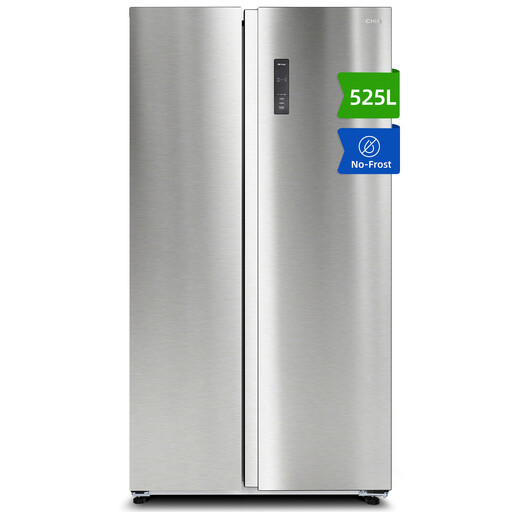 Image unavailable
CHiQ JR525WSE 525 L side-by-side fridge-freezer, E energy class
The stated capacity split lets you assess the space available for fresh and frozen food separately.
- 333 L for the fridge and 192 L for the freezer, according to the product name; No Frost and a stated noise level of 37 dB.
- To assess energy use and installation requirements, check the kWh/year on the energy label, along with the required dimensions and clearance.
View on Joybuy
 Image unavailable
Heinrich’s 161 L No Frost upright freezer, C energy class
This upright freezer is designed for separate frozen food storage, with drawer compartments.
- Stated capacity of 161 L, No Frost technology and C energy class.
- Check the kWh/year, dimensions and climate class, particularly if you plan to install it in an unheated room.
View on Joybuy
Frequently asked questions
Is the energy class enough to choose an appliance that uses less energy?
No. Compare the stated kWh/year figures for appliances of the same type and with a similar capacity. The European Commission says the energy label also shows storage volumes and airborne acoustical noise emissions, which can help you check that the models you’re comparing suit your needs.
Can you install a chest freezer in a garage or cellar?
Yes, as long as the temperature range specified for the model is suitable for the room. Check its climate class in the instruction manual rather than assuming an unheated garage is suitable. UFC-Que Choisir stresses the importance of this check for chest freezers, which are often kept outside the kitchen.
How do you choose the right capacity for a fridge-freezer?
Compare the fridge and freezer capacities in litres separately against your storage habits. The total capacity doesn’t show you how the space is divided. For example, Bosch lists 237 L of fridge capacity and 89 L of freezer capacity for the KGN36VWED, while Samsung lists 230 L and 114 L for the RB33B612EWW/EF.
What should you do with your old appliance when replacing it?
Before delivery, ask whether the retailer offers a take-back service or find a suitable collection point. The Ministry for Ecological Transition reminds consumers that electrical and electronic equipment may contain components that are hazardous to the environment.


