Which option is right for you?
The right format depends first and foremost on how much fresh and frozen food you usually store.
Households replacing an old appliance
If your fridge or freezer is still working, note its capacity and consider your storage needs before choosing a replacement. When comparing new appliances, ADEME recommends checking the energy label. Also look at the annual energy consumption for appliances of a similar format and capacity to the one you need.
Households storing fresh and frozen food
A fridge-freezer combines both compartments in one appliance. Check their capacities separately: the European EPREL database distinguishes between the capacity of non-frozen and frozen compartments, while a total capacity figure doesn’t show how the space is divided.
Households stocking up on frozen food
If you batch-cook or regularly store large quantities, consider adding a separate freezer alongside your fridge. Check its freezing capacity, dimensions and annual energy consumption: it’s an additional appliance that will be running all the time.
What should you compare?
First, work out how much space you need for fresh and frozen food. If your current appliance is still working and frost or storage is the main issue, consider whether maintenance or reorganising the contents could solve the problem before you replace it.
Fridge
Consider it: if you mainly store fresh food and don’t need a supply of frozen food in this appliance.
Bear in mind: it won’t provide freezer space if your needs change.
Fridge-freezer
Consider it: if you regularly store both fresh and frozen food, but don’t need a large separate freezer.
Bear in mind: the compartments share the total capacity, so the freezer section may be smaller than you need.
Separate freezer
Consider it: if you regularly need more freezer space than a suitable fridge-freezer can offer.
Bear in mind: you’ll need to make room for it and factor in its energy consumption as well as your fridge’s.
| Criteria | What to check | Your needs |
|---|
| Energy use |
Compare kWh/year across appliances of a similar format and capacity. Consider the energy rating alongside this figure and check the model’s details in EPREL. |
I want to know the stated annual energy consumption without comparing appliances that offer different amounts of storage space. |
| Usable capacity |
Check the fridge and freezer capacities separately, then check the external dimensions and the clearance required for installation by the manufacturer. |
Most of my shopping goes in the fridge, or I regularly need several drawers for frozen food. |
| Food storage and maintenance |
Check the temperature at the coldest point. Treat frost-reducing features separately from the stated annual energy consumption, and look at alarm features too if they matter for your needs. |
I want to keep food at a suitable temperature and make defrosting less of a chore, without assuming that an anti-frost feature on its own reduces energy use. |
A guide to some of the brands
These examples show how to read the specifications for individual models; they don’t apply to every product from each brand.
Bosch
The Bosch KGN39EXCF fridge-freezer is an example of a product listing that gives the usable capacity of each compartment separately.
- Bosch states that the KGN39EXCF offers 260 L of fridge space and 103 L of freezer space, with a C energy rating and a noise level of 35 dB.
- These figures and the stated No Frost feature apply to the KGN39EXCF, not to all Bosch fridge-freezers.
Liebherr
Liebherr fridge-freezers can be assessed in terms of the capacity you need and how much of a concern frost is for you.
- For the CUele281-26, Liebherr states a total capacity of 265 L and a noise level of 38 dB. It describes SmartFrost as significantly limiting frost build-up.
- This claim about frost doesn’t tell you the appliance’s energy consumption; check its energy details separately.
Beko
Beko’s French product selection pages let you search for refrigeration appliances by certain capacity and energy-use specifications.
- Annual energy consumption and the net capacity of the freezer are among the filters available for the built-in fridge-freezer category.
- A catalogue filter can’t tell you which model suits your needs: compare the specifications of the products you’re considering.
Fridge-freezers available on Joybuy
These five models are fridge-freezers, worth considering if you need to store both fresh and frozen food. For each one, compare the stated capacity with your needs, then check the energy label for the exact model before comparing annual energy consumption.
 Image unavailable
CHiQ JR263LGE – 262 L Low Frost fridge-freezer, 70/30
Worth considering if you’re looking for a 54 cm-wide fridge-freezer for fresh and frozen food. The model name indicates a height of 176 cm; check the installation space, the capacity of each compartment and the annual energy consumption on its energy label.
View on Joybuy
 Image unavailable
LG GBBSJ1CCSW – 333 L fridge-freezer, C energy rating
Consider this fridge-freezer if you want to divide a stated total capacity of 333 L between fresh and frozen food. Check the type and capacity of each compartment on the official product page, as well as the annual energy consumption for this model.
View on Joybuy
 Image unavailable
Bosch KGN33NLEB – 282 L fridge-freezer, E energy rating
This model, with the freezer at the bottom, could suit you if this layout makes it easier to organise your food. To assess its capacity and energy use, compare the capacity of both compartments and the kWh/year stated for the KGN33NLEB.
View on Joybuy
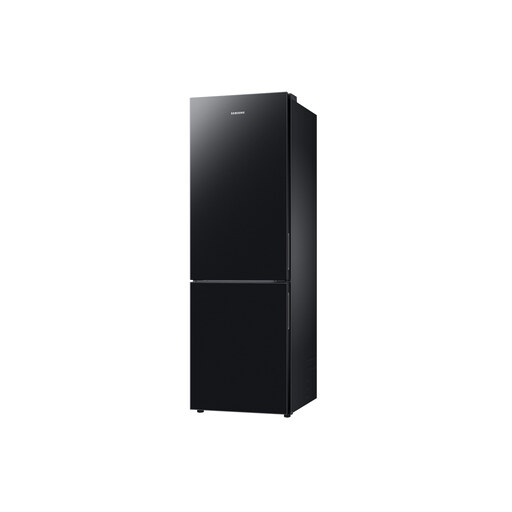 Image unavailable
Samsung RB33B612EBN – 344 L fridge-freezer, E energy rating
Worth considering if you need a fridge-freezer with a stated total capacity of 344 L. Make sure the split between fridge and freezer space suits your habits, then compare its kWh/year with those of fridge-freezers of a similar capacity.
View on Joybuy
 Image unavailable
Candy CFQQ5T817EPS – 4-door fridge-freezer, 467 L
This Total No Frost model is worth considering if you regularly need plenty of room for fresh and frozen food. Check that the stated 467 L capacity suits your needs and that the appliance fits in the space available; check its kWh/year and the capacity of each compartment separately.
View on Joybuy
Frequently asked questions
What should you compare on the energy label?
Compare annual energy consumption in kWh, the energy rating and the usable capacity of each compartment across appliances of a similar format and capacity. The European Commission makes declared data for refrigeration appliance models available in EPREL. Check the noise level too if it matters where you plan to put the appliance.
Is a better energy rating enough to make your choice?
No. The rating is a useful guide, but appliances with different capacities or formats may not meet the same needs. Also compare their kWh/year and the space available for fresh and frozen food, using the model details in EPREL.
What temperature should your fridge be?
Anses recommends a temperature of 0 to +4 °C at the coldest point to keep food fresh. Check the actual temperature inside the appliance, for example with a thermometer, rather than relying only on the control setting.
What should you do with your old appliance in France?
The French Ministry for Ecological Transition lists options including taking it to a collection point or recycling centre, returning it to a retailer, or donating it to a social and solidarity economy organisation. Choose an option that suits the appliance’s condition, and arrange for it to be taken away before your new one is delivered, if necessary.


