If you mainly store fresh food, start by looking at a fridge. If you regularly keep both fresh and frozen food, consider how the compartments are divided in a fridge-freezer. A separate freezer can add extra space when you need to store more frozen food. However, two separate appliances take up more room, and you’ll need to compare their annual energy consumption: ADEME points out that cooling appliances run continuously.
Which set-up is right for you?
How much space you need for fresh and frozen food is the first thing to consider when choosing an appliance. Dimensions and energy consumption can then help you narrow down the options.
Households that store both fresh and frozen food
If you use both compartments every week, a fridge-freezer combines the two functions in one appliance. Check the capacity of each compartment separately: a sufficient total capacity doesn’t guarantee the right balance between them.
Households that store lots of frozen food
Buying in bulk or preparing meals in advance may make a dedicated freezer a worthwhile addition to your fresh-food storage. Whether you choose an upright or chest freezer will depend on factors such as how you want to access your food and how much floor space you have.
Households with limited space or energy use in mind
Whether you’re shopping for a small kitchen, utility room or garage, measure the usable space and check the appliance’s operating conditions. ADEME points out that an appliance that’s too large or has more features than you need can push up your electricity bill.
What should you check before choosing?
First work out how much space you need for each type of food, then compare appliances with similar configurations and capacities.
| Priority |
What to check |
Think about your needs |
| Capacity and configuration |
Compare the usable litres in the fridge and freezer compartments, not just the total capacity. If you store a lot of frozen food, also consider whether an upright or chest freezer will give you the access you need. |
I mainly store fresh food: a fridge may be enough. If I regularly use both compartments, I’ll check how the space is divided in a fridge-freezer. If I need more room for frozen food, I’ll consider a separate freezer. |
| Energy consumption |
For the relevant cooling appliances, the energy label scale runs from A to G, according to the European Commission. Also compare kWh/year for appliances of the same type and similar capacity, and don’t overlook their size. |
A cooling appliance runs continuously in my home, so I’m looking for a suitable capacity rather than unused space or features I don’t need. ADEME warns that an appliance that’s too large or has unnecessary features can increase your bill. |
| Installation and noise |
Measure the space, access route and clearance needed to open doors, drawers or lids. Check the noise level in dB and the ambient temperatures allowed in the appliance’s manual. |
Noise matters to me in an open-plan kitchen. If the appliance is going in a garage or unheated room, I’ll check its operating conditions before choosing it. |
| Maintenance and features |
Check the exact model for its defrosting system, alarms and any connected features. Choose features that help with a regular task, rather than paying for equipment you won’t use. |
If I want to reduce manual defrosting, I’ll check how the freezer compartment is designed to work. I’m only interested in an alarm or connected feature if it’s useful to me. |
What mistakes should you avoid?
-
Choosing based on the energy rating alone
The letter alone doesn’t tell you whether the capacity suits your household or what the chosen model’s annual energy consumption is.
Compare the energy rating, kWh/year and usable capacity of each compartment across appliances of a similar type and capacity.
-
Going bigger without needing the extra storage
ADEME points out that fridges and freezers run continuously, and that their size and some additional features can increase your bill.
Work out how much space you really need for fresh and frozen food before choosing a capacity or convenience feature.
-
Forgetting about access and room conditions
A chest freezer takes up floor space. In a cellar or garage, the ambient temperature must also be within the appliance’s specified operating range.
Measure the access route and check that the lid or doors can open fully. Then check the climate class and the manual for the exact model.
-
Choosing connected features before the right size
A connected feature won’t change how much room you have in the compartments or the space needed to install the appliance.
First work out the capacity, dimensions and energy consumption you need. Then consider what each feature would actually do for you.
A guide to the brands
These examples show features to compare on specific models; they don’t necessarily apply to other appliances from the same brand.
Bosch
The French range includes freestanding and integrated fridge-freezers.
- For the KGN33NSDB fridge-freezer, Bosch lists 189 l of fridge capacity, 90 l of freezer capacity, 40 dB(A) and Total No Frost.
- These specifications apply to the KGN33NSDB. Check the capacity and features of any other model separately.
Liebherr
The range includes freestanding upright freezers as well as integrated models.
- Liebherr lists a capacity of 238 l, a noise level of 36 dB and NoFrost for the FNe 5006 Pure freezer.
- The brand says the SmartDeviceBox can be fitted to this model, so don’t assume connectivity is already built in.
Beko
Chest freezers in the range may suit households with enough floor space to store more frozen food.
- Depending on the model, Beko offers features such as MinFrost, temperature alerts and wheels.
- Beko says some models with Freezer Guard can be used at temperatures as low as −15 °C. Check the model number and manual before installing an appliance in an unheated room.
Fridge-freezers to consider on Joybuy
These models combine refrigeration and freezing in one appliance. To choose between them, check how the capacity is divided, the space needed for installation and the energy consumption of the exact model.
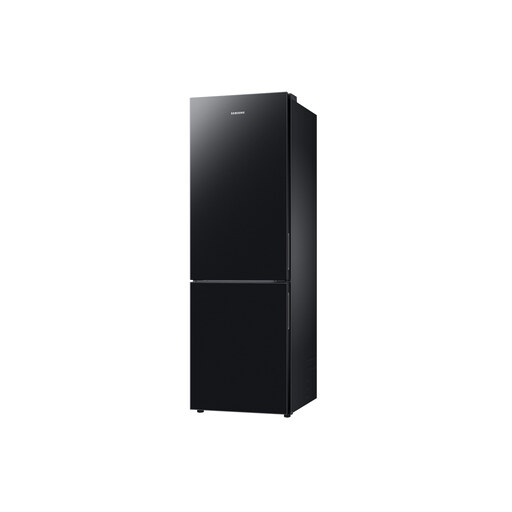 Image unavailable
Samsung RB33B612EBN, black fridge-freezer, 344 L, energy class E
If you want to store fresh and frozen food in one appliance, check that the advertised 344 L capacity is divided in a way that suits your needs. Also check the dimensions and ventilation clearances required before installation.
View on Joybuy
 Image unavailable
Candy CFQQ5T817EPS, four-door fridge-freezer, 467 L, energy class E
This four-door design is worth considering if you’re looking for an advertised total capacity of 467 L for fresh and frozen food. The model name indicates Total No Frost. Check how the compartments are divided, the width and whether it will fit through the access route to its final position.
View on Joybuy
 Image unavailable
CHiQ JR263LGE, black fridge-freezer, 262 L, Low Frost
If width is a key consideration, this fridge-freezer is listed as 54 cm wide and 176 cm high. Check the usable capacity of each compartment: Low Frost doesn’t mean No Frost. If you’re installing it in a garage or outbuilding, check the ambient temperatures allowed in the manual.
View on Joybuy
 Image unavailable
LG GBBSJ1CCSW, white fridge-freezer, 333 L, energy class C
If you use the appliance for both fresh and frozen food, compare the usable capacity of the compartments rather than relying on the advertised total of 333 L. Also check the dimensions and clearances required to install the exact model.
View on Joybuy
 Image unavailable
AEG NSC6M18FES, integrated fridge-freezer, 249 L, energy class E
If your kitchen is designed for an integrated appliance, check the housing dimensions and door system compatibility. Make sure the usable capacity of each compartment suits your needs, rather than relying on the advertised total of 249 L, and check the energy label to compare annual consumption.
View on Joybuy
Frequently asked questions
How do you compare energy labels for cooling appliances?
For the domestic fridges and freezers covered, the European Commission says the A to G scale has been in use since 1 March 2021. Also check annual consumption in kWh, compartment capacities and noise information. Where possible, compare appliances of the same type and similar capacity.
Can you put a chest freezer in a garage or cellar?
Yes, as long as the room temperature stays within the operating conditions specified for the model you choose. Check its climate class and manual. Beko says some chest freezers with Freezer Guard can be used at temperatures as low as −15 °C, but this doesn’t apply to every freezer.
Should you choose a No Frost appliance?
Not necessarily. Depending on how the model works, No Frost may help reduce the need to defrost the freezer compartment. First check the capacity, kWh/year, noise level and dimensions: this feature alone doesn’t mean an appliance is a better fit for your household.


