What should you look for?
Start by having the fault assessed. If you replace the appliance, choose between a fridge and a fridge-freezer based on your storage needs. Consider a separate freezer only if your frozen food storage needs and available space justify it.
| What matters |
What to check |
Who this matters to |
| Repair or replace |
Ask a professional to diagnose the fault and check with a QualiRépar repairer whether it qualifies for the Repair Bonus. |
If my appliance is no longer cooling properly, I want to find out whether it can be repaired before replacing it; around 27% of consumers would put this first. |
| Installation and delivery |
Measure the space and delivery route; check the manual for requirements relating to the alcove, door clearance and ventilation. |
In a kitchen with narrow access, I need to be able to get the appliance in and install it without obstructing the doors or ventilation; around 33% of consumers would prioritise this compatibility. |
| Fresh and frozen storage |
Compare the usable capacity and internal layout of each compartment separately. |
I regularly store frozen food and do not want to reduce the space for fresh food; around 20% of consumers would put this balance at the top of their list. |
| Energy use and noise |
For models with a similar format and capacity, check the annual energy consumption on the current energy label and the noise level in dB. |
In an open-plan kitchen, I want to factor in noise while comparing the electricity used by an appliance that runs continuously; around 20% of consumers would make this their priority. |
Brands to consider, depending on the model
These range examples can help you identify features to compare. The details given apply to the models listed, not to every appliance from each brand.
Bosch
Bosch offers a range of freestanding fridge-freezers. Its KGN36VLED product details list 237 l of fridge space, 89 l of freezer space and a noise level of 39 dB.
- The separate capacities make it easier to judge whether this model suits your balance of fresh and frozen food storage.
- Its stated dimensions of 186 × 60 × 66 cm need to be checked against your available space and the clearances specified in the manual.
Whirlpool
The Whirlpool models listed include a built-in fridge-freezer and an upright freezer: two formats for different installation needs.
- Whirlpool specifies a 56 cm niche and a noise level of 32 dB for the built-in WHC18T323P fridge-freezer.
- The WHMFF 6314 W6E upright freezer is a separate appliance; its stated capacity of 286 l does not replace a fridge compartment.
Liebherr
Liebherr lists a capacity of 362 l and a noise level of 33 dB for its CBNstb 579i Peak fridge-freezer, which features BioFresh Professional and NoFrost.
- The listed compartments and features can be assessed against your food storage habits.
- According to Liebherr, the appliance measures 201,5 × 59,7 × 67,5 cm. Check that it can be delivered to and installed in your chosen space.
Fridge-freezers on Joybuy
These appliances combine refrigeration and freezing in one unit. They give you several capacities and formats to compare, including a built-in model and a side-by-side model, if you have decided to replace your fridge-freezer.
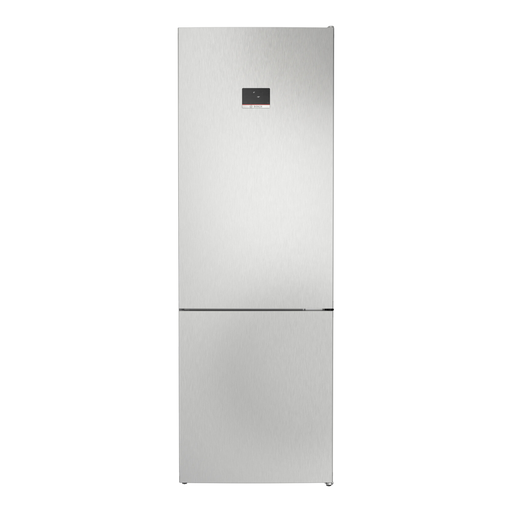 Image unavailable
Bosch KGN497LDF, 440 l fridge-freezer, class D
Worth considering if you want to replace your current fridge-freezer with a large-capacity model. Check its overall dimensions, the delivery route and the clearances specified in the manual.
View on Joybuy
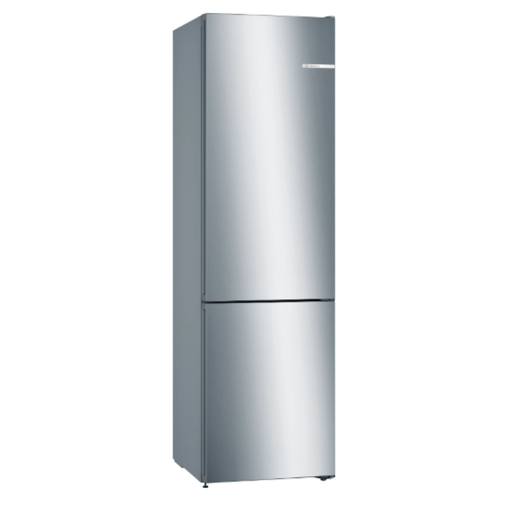 Image unavailable
Bosch KGN39VLEB, 368 l fridge-freezer, class E
A fridge-freezer to consider if you want to keep fresh and frozen food in one appliance. If your kitchen is open-plan, check the exact model’s noise level before choosing.
View on Joybuy
 Image unavailable
Bosch KGN33NLEB, 282 l fridge-freezer, class E
Compare this model if you are looking for a fridge-freezer with a bottom freezer and a total capacity of 282 l. Check the installation clearances and noise level if your space requires it.
View on Joybuy
 Image unavailable
AEG NSC6M18FES, 249 l built-in fridge-freezer, class E
Worth considering if you are replacing a fridge-freezer built into a fitted kitchen. The model name includes TwinTech No Frost; above all, check the niche dimensions in the manual and the annual energy consumption on its energy label.
View on Joybuy
 Image unavailable
CHiQ JR525WSE, 525 l side-by-side fridge-freezer, class E
Worth considering if you need plenty of space in both compartments: the product details list 333 l for the fridge and 192 l for the freezer, as well as 37 dB and No Frost. Check its dimensions, the delivery route and annual energy consumption before opting for this format.
View on Joybuy
Frequently asked questions
Can a fridge-freezer qualify for the Repair Bonus?
Yes, subject to certain conditions. ecosystem includes fridge-freezers in its QualiRépar scheme for appliances owned by households and bought in France. Ask an accredited repairer to check the appliance’s warranty status and whether the fault qualifies.
Will the retailer take away my old appliance when I replace it?
The ‘one-for-one’ take-back service applies when you buy an appliance of the same type, as the French Ministry for the Ecological Transition explains for household appliances in France. Before placing your order, check the collection or take-back arrangements with the retailer, particularly if access to your home is difficult.
Can I take my old fridge somewhere else?
Yes. The French Ministry for the Ecological Transition lists collection points and household waste recycling centres as options for electrical appliances. Take your refrigeration appliance to an appropriate recycling facility rather than putting it in general waste.
How much space should I leave around a new fridge?
Follow the clearance requirements in the manual for the model you choose; they are not the same for every appliance. Samsung gives clearance measurements for some of its appliances but notes that they can vary. Do not apply them to another model, particularly a built-in one.
How can I compare the energy use of two fridge-freezers?
Compare the annual energy consumption shown on the energy labels of appliances with a similar type and capacity. The European Union’s Your Europe portal sets out the current A to G scale. Also consider capacity and noise level, rather than looking at the rating alone.


