People who prepare meals to freeze
If you cook several meals in advance, look at the freezer capacity, the drawer layout and how easy it is to reach your portions. The appliance’s total capacity alone won’t tell you how well it suits this purpose.


For weekly shops and meals prepared in advance, start by deciding how much room you need for fresh food and frozen portions. A fridge-freezer suits a mix of both, while a fridge with a small freezer compartment is best if you freeze very little. Separate appliances are worth considering if you regularly keep a large amount of frozen food and have space to install them. Then compare the dimensions, noise level and energy consumption of the exact model you’re considering. ADEME points out that refrigeration appliances run continuously, and an unnecessarily large capacity can increase their energy consumption.
If you cook several meals in advance, look at the freezer capacity, the drawer layout and how easy it is to reach your portions. The appliance’s total capacity alone won’t tell you how well it suits this purpose.
If you do a big shop but freeze very little, shelf space, salad drawers and room for your containers may matter more than a large freezer.
A narrow alcove, a walkway near the door or an open-plan living space makes the full dimensions, installation clearances and stated noise level particularly important.
If you shop less often and prepare meals in advance, start by working out how much of your food will be kept chilled and how much will be frozen. The right appliance type will then depend on the space available and how regularly you need to freeze food.
Consider it if : you store fresh food and frozen portions in the same appliance every week.
Bear in mind : the balance between the two compartments varies by model and may feel restrictive if your habits change.
Consider it if : fresh food is your priority and you only freeze small amounts occasionally.
Bear in mind : having a freezer compartment doesn’t guarantee enough space for several weeks’ worth of prepared portions.
Consider it if : keeping a large frozen reserve is a regular part of your routine and you have room for two appliances.
Bear in mind : you’ll need space for two appliances and should check the stated energy consumption of each. ADEME points out that refrigeration appliances run continuously.
Consider it if : the available height or space to move around your kitchen is the main limit on your choice.
Bear in mind : a smaller capacity may limit how much you can buy at once or how many portions you can freeze.
| Feature | What to check | Who is it for? |
|---|---|---|
| Fresh and frozen storage | Compare the usable capacity of each compartment separately and check the drawer layout. | When I prepare portions for several days, I want to find them easily without taking up space for fresh groceries. Around 33% of consumers say this balance is their top priority. |
| Fresh food storage | Check the space in the salad drawers and the clearance between shelves for your containers. | If most of my weekly shop is fresh, I need to store larger items without making everything else difficult to reach. This is the main priority for around 25% of consumers. |
| Size and noise | Measure the space, walkway and door clearance; check the model’s stated noise level. | In a small kitchen or open-plan room, an appliance that blocks the way or makes too much noise can affect everyday use. Around 25% of consumers prioritise these space and noise considerations. |
| Energy consumption | Compare the energy rating and stated annual kWh consumption of models with similar dimensions and capacity. | If I won’t use the extra capacity, I’d rather check how much energy an appliance that stays switched on all the time will use. Avoiding excess capacity is the top priority for around 17% of consumers. |
A large fridge-freezer may not leave enough room for frozen portions or fresh groceries, depending on your routine. For example, Whirlpool lists 223 l of fridge capacity and 97 l of freezer capacity for its WFNF82EOXFR. The total capacity alone doesn’t show how the space is divided.
Make a note of what you store in each compartment, then compare their usable capacities separately across the models you’re considering.
The energy rating letter doesn’t replace the annual kWh figure for a specific appliance. ADEME also notes that size and unnecessary extra features can affect the energy consumption of refrigeration appliances, which run continuously.
Compare both figures on the labels of models with similar capacities and dimensions, and don’t go for more space unless you have a clear need for it.
The depth, door clearance and installation gaps required can make an appliance awkward to use, even if it fits in the space you had in mind.
Check the dimensions of the appliance or alcove, the route into your kitchen and the installation instructions in the manual.
Taking away your old fridge requires a little planning, particularly if access to your home is restricted.
Ask the retailer how collection of an old appliance of the same type works, and mention any access issues before placing your order.
These examples can help you identify features to compare on the specifications for individual models. They don’t represent every product range from each brand.
Worth considering for freestanding and built-in fridge-freezers if dimensions and interior layout are high on your list.
Worth considering if installation dimensions and the stated noise level matter in your kitchen.
Worth considering if the space for fresh food and frozen food will determine which fridge-freezer you choose.
Worth considering if you’re looking for a large stated capacity but still need to keep an eye on the appliance’s depth.
These models are built-in or freestanding fridge-freezers to consider if you want to store fresh food and frozen portions in one appliance. Choose according to your available space and how the capacity is divided, rather than looking at the total capacity alone.
 Image unavailable
A good option for a fitted kitchen where you want space for both chilled and frozen food. The model is listed with No Frost, an Inverter compressor and a C energy rating. Before choosing it, compare the compartment capacities with the portions you plan to store, and check the niche dimensions and ventilation requirements in the manual.
 Image unavailable
Worth considering if you do a weekly shop and need freezer space in a fitted kitchen. The product title lists TwinTech No Frost and an E energy rating. Check the usable capacities before making your choice: the stated total of 249 l differs from the combined detailed capacities of 186 l and 62 l. Also check the model’s annual energy consumption on the label and any door installation requirements.
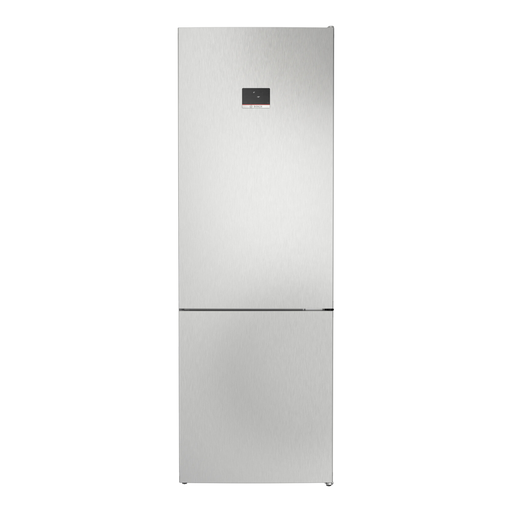 Image unavailable
For a household that regularly uses plenty of chilled and freezer space, provided each compartment suits its needs. This model is listed with a D energy rating. Before buying, check the delivery route, the space needed for its stated dimensions of 70 × 203 × 66,7 cm and the ventilation clearances.
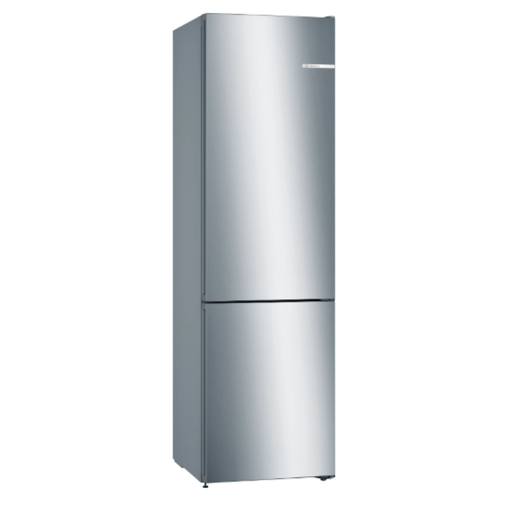 Image unavailable
Worth considering if your fresh groceries need plenty of room but you still need freezer space. This model is listed with an E energy rating. Check the usable space in each compartment and the ventilation clearances. If your kitchen is open-plan or near a room where you relax, check its stated noise level before deciding.
 Image unavailable
A practical choice for mixed storage needs if a total capacity of 282 l suits your household. The freezer is at the bottom and the model is listed with an E energy rating. Check how the capacity is divided, the space needed for installation and the stated noise level if noise is a concern in your home.
First, compare the usable fridge and freezer capacities separately. Then check the dimensions, stated noise level, energy rating and annual kWh consumption of the exact model. Appliances with the same total capacity may divide the space between the two compartments differently.
Not necessarily. Extra capacity is only useful if it suits the food and portions you actually store, in the right compartment. ADEME points out that refrigeration appliances run continuously, and that a larger size or unnecessary extra features can increase their energy consumption.
No. This feature relates to frost and varies by model and compartment; it doesn’t mean that all maintenance is eliminated. Check the manual for your chosen appliance to find out what still needs to be done.
Ask the retailer about collection before placing your order, and let them know if there may be access issues at your home or with the old appliance. Ecologic explains that an old appliance of the same type can be collected when you buy a new one. Ask the retailer how collection will work for your delivery.