Which factors should you prioritise?
The right style depends mainly on how much space you need for frozen food and how much room you have for the appliance.
Fridge-freezer
Consider this if: you store both fresh food and a few frozen portions in one appliance.
Bear in mind: the split between fridge and freezer space is fixed for each model.
Multi-door
Consider this if: you’re looking for plenty of capacity, with separately accessible compartments, and have enough room.
Bear in mind: a wide or deep appliance can be tricky to install; check the energy consumption of the specific model you choose.
Separate fridge and freezer
Consider this if: you regularly freeze lots of portions and want to choose the capacity of each appliance independently.
Bear in mind: you’ll need room for two appliances and will need to add together their annual energy consumption.
To estimate the capacity you need, UFC-Que Choisir suggests using 100 to 150 L for one person, then adding 50 L for each additional person. Use this as a starting point, adapting it to how often you shop and how much space you actually need in each compartment.
| Factor |
What to check |
What matters to shoppers |
| Well-balanced capacity |
Usable litres in the fridge and freezer; dimensions and door clearance. |
If I shop for several days at a time, I want to store fresh food without reserving space for capacity I won’t use; around 42% of consumers prioritise this balance. |
| Room for frozen portions |
Usable freezer capacity and the layout of its drawers. |
When I prepare meals to freeze, I need compartments where I can organise portions without sacrificing too much room for fresh food; around 33% of consumers put this capacity first. |
| Energy use and noise |
Annual energy consumption in kWh and stated noise level in dB(A), comparing models of a similar type and capacity. |
In an open-plan kitchen, I want to take account of the noise and energy use of an appliance that runs continuously; around 25% of consumers prioritise this trade-off. |
Fridge-freezers to consider on Joybuy
These fridge-freezers and multi-door models offer two ways to organise fresh and frozen food in one appliance. Before choosing, compare their total capacity with the space you need in each compartment.
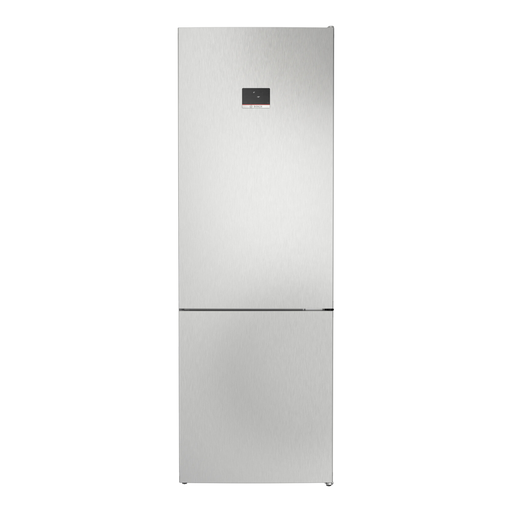 Image unavailable
Bosch KGN497LDF, 440 L fridge-freezer, grey
Worth considering if you want to store fresh food and frozen portions in a fridge-freezer. It has a stated total capacity of 440 L and a D energy rating. Check that you have enough room to install it and open the doors.
View on Joybuy
 Image unavailable
Candy CFQQ5T817EPS, 467 L multi-door fridge-freezer, silver
Worth considering if you’re looking for a four-door appliance to organise your shopping and frozen food. The model name indicates a total capacity of 467 L, Total No Frost and an E energy rating. Measure the space needed for installation.
View on Joybuy
 Image unavailable
Haier HTW5618ENMG, 360 L three-door fridge-freezer
Worth considering if you want to store fresh and frozen food in a three-door appliance. The model is listed with a total capacity of 360 L, Total No Frost, My Zone, Wi-Fi and an E energy rating. Check its dimensions before deciding where to put it.
View on Joybuy
 Image unavailable
Samsung RF50C530EB1, 495 L multi-door fridge, black
Worth considering if you need a multi-door appliance for a large weekly shop. It has a stated total capacity of 495 L and an E energy rating. Check the space needed around the appliance and the plumbing requirements if you want to use a water dispenser.
View on Joybuy
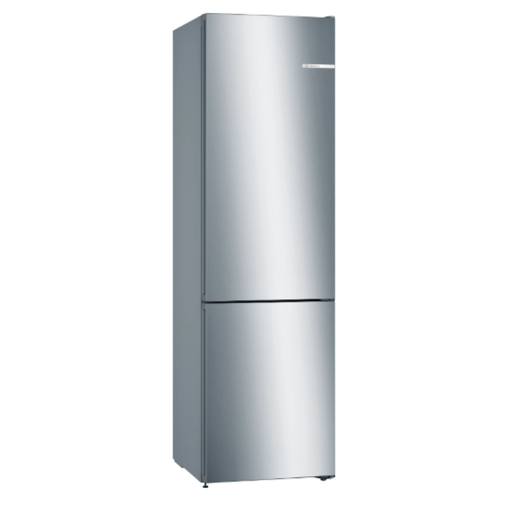 Image unavailable
Bosch KGN39VLEB, 368 L fridge-freezer, stainless-steel finish
Worth considering if you’re looking for a fridge-freezer for fresh food and frozen portions. It has a stated total capacity of 368 L and an E energy rating. If noise is a deciding factor, compare the noise level of this model before choosing.
View on Joybuy
Frequently asked questions
What capacity do I need for shopping that lasts several days?
Start with UFC-Que Choisir’s suggested guide: 100 to 150 L for one person, then add 50 L for each additional person. Adjust the space for the freezer according to how many portions you prepare, and the fridge capacity according to the fresh food you keep between shops.
Where should I store prepared meals and perishable food?
Anses recommends keeping cooked meals and other perishable foods in the coldest zone of the fridge, at 4 °C. For portions intended for the freezer, it advises freezing food as soon as you buy or prepare it, and notes that freezing at −18 °C doesn’t eliminate most microorganisms.
Do I need to choose a No Frost model to freeze meals?
No, No Frost isn’t essential for storing frozen portions. On models that have it, this feature can reduce the need to deal with frost, but it doesn’t replace checking the temperature or arranging food so that air can circulate. Check that the exact model you’re considering has this feature.
How do I compare the energy use of two appliances?
Compare their annual energy consumption in kWh with the usable capacity of each compartment, ideally choosing appliances of a similar type and capacity. Energy labels available in the European Commission’s database show details including annual energy consumption and capacity; it’s also worth checking the noise level if the appliance will be installed near a living area.


