For meals prepared in advance, choose a fridge if you plan to eat the portions soon, a fridge-freezer if you need both spaces in one appliance, or a separate freezer if most of your food will be frozen. Measure your containers and the space available, then compare usable capacity, stated energy consumption and the instructions for each model. In France, ANSES recommends 4 °C in the coldest part of the fridge and indicates -18 °C for home freezing: claims about freshness are no substitute for checking the settings.
Who is this choice for?
Meals to eat soon
You mainly need to store chilled portions and find them easily. Compare the usable space and interior layout with your containers, without confusing capacity with shelf life. Que Choisir Ensemble outlines the different fridge formats, while ANSES provides guidance on food storage.
Stocks of frozen portions
You prepare batches and keep portions frozen between cooking sessions, so consider the dedicated capacity, compartments and amount you can freeze at once separately. MesMenus’ freezing scenarios and the specifications published by Boulanger illustrate these needs, but they don’t point to one universal capacity.
A kitchen with limited space
You need to store meals in a small space. Consider the appliance’s configuration, interior layout, dimensions and required clearance together, using the specification sheet for the exact model and the guidance from Que Choisir Ensemble.
Which criteria matter for your meal prep?
| Consideration |
What to check |
Who is most concerned? |
| Storing chilled portions |
Compare the fridge’s usable capacity and interior layout with your containers. |
If I want to keep together the portions for my next few meals, the layout and chilled storage space matter more than the total capacity. Around 26% of consumers make room for chilled meals their top priority. |
| Frozen stocks and batches |
Check the freezer capacity and, separately, how much you can freeze in one session. |
When I prepare several batches, I want to fit in the new portions without losing track of what’s already stored. Around 21% of consumers prioritise frozen stocks and batches. |
| Temperature and keeping track |
Check the instructions to identify zones and settings, then label the portions you store. |
If I want to control storage conditions and find each portion, I check the settings and how the compartments are organised. Around 21% of consumers put temperature control and keeping track of food at the top of their list. |
| Fitting the appliance into your space |
Measure the space, access and clearance; check the ambient temperature requirements for the exact model. |
When space or room temperature limits my options, I check that the appliance will fit and open without blocking access. Around 16% of consumers prioritise installation constraints. |
| Energy use and maintenance |
Compare kWh/year for options that meet the same need and check the maintenance instructions. |
If the appliance runs continuously, I take its stated energy consumption and maintenance requirements into account rather than choosing on capacity alone. Around 16% of consumers put these two factors first. |
ANSES recommends 4 °C in the coldest part of the fridge for perishable foods and indicates -18 °C for home freezing. The European energy label provides information including stated energy consumption and capacity; ADEME points out that fridges and freezers run continuously. To estimate running costs from kWh/year, use your own €/kWh tariff: actual usage may differ from standardised test conditions.
Mistakes to avoid
-
Choosing by total capacity without checking how it is divided
Fridge and freezer capacity serve different purposes. A large total capacity alone doesn’t tell you whether the available space will suit your portions.
Compare usable capacity in each section separately and check that your containers fit in the compartments you plan to use.
If a compartment is too small for your needs, you may have to replace the appliance or buy an additional one.
-
Taking a freshness claim as a guarantee of shelf life
A convenience feature or practical storage layout doesn’t replace food-specific guidance. ANSES points out that storage times depend, among other things, on the food in question.
Check food storage guidance and the appliance instructions; don’t extend storage times arbitrarily.
-
Adding a freezer without accounting for continuous operation
ADEME points out that fridges and freezers run continuously, and that an appliance that’s too large or an extra appliance can increase electricity use.
Compare the stated energy consumption of the complete setup you need for your portions, and check that you have room for an additional appliance.
A second appliance also needs a suitable spot and regular maintenance.
-
Assuming similar model numbers refer to the same version
The available documents for the Liebherr FNd 522i and FNd522i-22 don’t list exactly the same specifications. Information for one variant won’t necessarily apply to the other.
Check the full model number against the product information and instructions before comparing specifications or installation requirements.
Brands to use as a guide
Bosch
The freestanding Series 4 fridge-freezers, including the KGN36VWED, are worth considering if you’re looking for an appliance that combines fridge and freezer storage.
- Bosch Electroménager France lists separate usable fridge and freezer capacities for the KGN36VWED and describes its Total NoFrost feature.
- Claims about the benefits of Multi Airflow and VitaFresh aren’t independent evidence of how long your meals will keep.
Liebherr
NoFrost upright freezers, including the FNd 522i, are a useful point of reference if you need dedicated freezer storage.
- Liebherr documents control features and SpaceBox storage on the relevant models.
- Check the specifications and ambient temperature limits for the exact model; they don’t automatically apply across variants.
Samsung
SpaceMax fridge-freezers, including the RB34C600ESA/EF, listed at 344 L by Samsung France, are worth considering if you want to compare interior capacity and connected features.
- Samsung says SpaceMax uses thinner walls and offers connected management features on selected models.
- The results claimed for AI Energy depend on settings and conditions of use; on their own, they don’t demonstrate that food will be stored safely.
Joybuy products for this need
This selection includes fridge-freezers for storing chilled and frozen portions, as well as an upright freezer for dedicated frozen storage. Check the settings and installation requirements in the instructions for the exact model.
 Image unavailable
Samsung RB33B612EBN, 344 L fridge-freezer, black, class E
Consider this if you’d like to combine fridge and freezer storage in one appliance.
Stated capacities: 230 L for the fridge and 114 L for the freezer; stated freezing capacity: 7 kg/24 h. The product information lists No Frost, four shelves and three freezer drawers. Check the instructions for this model to confirm the settings are suitable for the food you’re storing.
View product
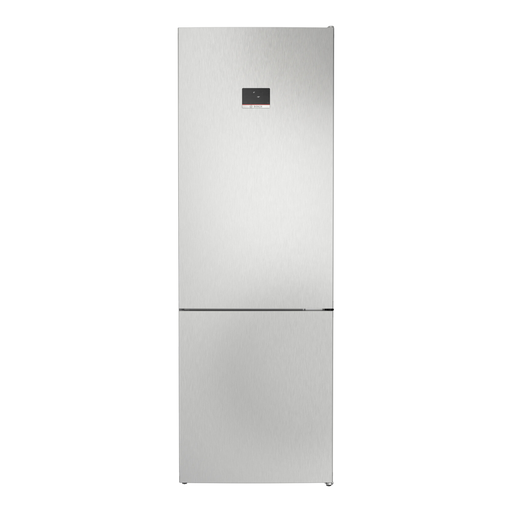 Image unavailable
Bosch KGN497LDF, 440 L fridge-freezer, grey, class D
Worth considering if you need separate spaces for chilled portions and frozen batches.
Stated capacities: 311 L for the fridge and 129 L for the freezer; stated freezing capacity: 9,5 kg/24 h. The product information lists five shelves, a meat and fish zone, and a four-star freezer compartment. Check the settings and installation requirements in the instructions for this model.
View product
 Image unavailable
Heinrich’s, 161 L upright freezer, No Frost, class C
Consider this if you’re looking for dedicated frozen storage, with no fridge compartment listed.
The product information lists a capacity of 161 L, three drawers and two shelves, as well as No Frost and Fast Freeze. The stated temperature range is -14 °C to -22 °C; check the instructions to confirm the settings suit your needs.
View product
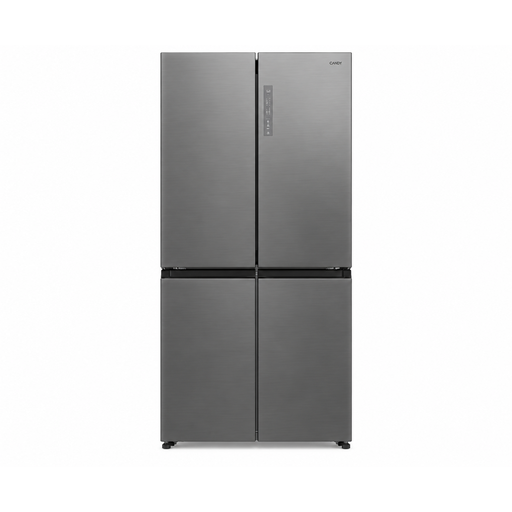 Image unavailable
Candy CFQQ5T817EPS, 467 L four-door fridge-freezer, class E
Worth considering if you’d like to store chilled and frozen food separately in a multi-door appliance.
Stated capacities: 311 L for the fridge and 156 L for the freezer; stated freezing capacity: 10 kg/24 h. The product information lists Total No Frost, two freezer drawers, six door balconies and an adjustable shelf. Check the instructions for the settings specific to this model.
View product
 Image unavailable
Sonlu CC-520WE, 444 L side-by-side fridge-freezer, class E
Consider this if you’d like an appliance with two storage sections and have room for it in your kitchen.
The product information states a total capacity of 444 L and lists fridge and freezer compartments, Total No Frost and a control panel for adjusting the temperature. The product name lists a noise level of 40 dB. Check the capacity of each compartment and the settings in the information for the exact model.
View product
Frequently asked questions
Can I keep all my meals for the week in the fridge?
Don’t assume you can: storage time depends on the food. For some highly perishable cooked dishes with no use-by date, ANSES says a storage time of less than three days is often recommended and advises asking the retailer. Follow the guidance for each food.
Does freezing destroy micro-organisms?
No. ANSES explains that most survive freezing, so freezing doesn’t reset the food’s safety status.
Can I put a freezer in an unheated garage?
Only if the conditions for the exact model are suitable for the temperature in your garage. Some features documented by Liebherr are designed for cold rooms, but this doesn’t apply to every freezer: check the limits listed in the instructions.
Does No Frost mean I don’t need to clean the appliance?
No. Automatic defrosting and cleaning serve different purposes. ANSES recommends cleaning dirty surfaces straight away and thoroughly cleaning the fridge as often as needed, at least once a year.
What can you compare on a fridge or freezer energy label?
The European energy label provides information including the energy class, energy consumption, capacity and noise level. Its QR code links to EPREL information. These details help you compare appliances, but don’t certify the conditions in which your meals will be stored.


