Households mindful of ongoing energy use
If you’re replacing an older appliance, compare its annual kWh consumption without giving up the space you need for your shopping. The European energy label also shows capacity and noise level.


When replacing an appliance that runs around the clock, start by choosing a format and capacity that suit the amount of fresh and frozen food you buy. Then compare annual energy consumption in kWh across models with similar capacities and layouts. Don’t forget to check the installation dimensions and noise level: an energy rating letter alone isn’t enough to compare appliances of different sizes.
If you’re replacing an older appliance, compare its annual kWh consumption without giving up the space you need for your shopping. The European energy label also shows capacity and noise level.
A fitted kitchen, hallway or narrow doorway can determine which model will fit. Measure the space and the delivery route, then check the installation instructions and, for a built-in model, the door-fitting system.
If you shop less often or prepare meals in advance, check the freezer compartment capacity separately from the total capacity. As UFC-Que Choisir points out, a small freezer compartment may not be suitable if you store a lot of frozen food.
The right format depends first on how much fresh and frozen food you usually store. The energy label, installation measurements and maintenance options can then help you compare suitable models.
Consider this if: you mainly store fresh food, don’t keep much frozen food or already have a separate freezer.
Limitation: a small freezer compartment, if included, may not be suitable for storing large amounts of frozen food.
Consider this if: you regularly store fresh and frozen food in one appliance.
Limitation: two fridge freezers with the same total capacity may divide the space differently between their compartments.
Consider this if: frozen food takes up a large part of your shopping and you have space for two appliances.
Limitation: this option takes up more space. Add together the annual energy consumption listed for each appliance before comparing it with a fridge freezer.
| Feature | What to check | What matters to consumers |
|---|---|---|
| Annual energy consumption | Compare kWh/year and energy ratings for appliances with similar capacities and compartment layouts. | If I’m replacing an appliance that runs day and night, I want to reduce its electricity use without losing the space I need. Around 26% of consumers prioritise energy consumption. |
| Fresh and frozen capacity | Check the fridge and freezer capacities in litres separately, then choose a format that suits your shopping habits. | When I store both the week’s meals and frozen food, the total capacity doesn’t tell me whether each compartment will be big enough. Around 26% of consumers put storage capacity and layout ahead of other criteria. |
| Installation and access | Measure the space and access route. For a built-in model, also check the housing, ventilation and door system. | In a fitted kitchen or where access is narrow, I need to be able to install and open the appliance once it’s delivered. Around 21% of consumers prioritise whether it will fit their space. |
| Maintenance and service life | Check the model documentation, information about spare parts and repair options. | I want to be able to maintain the appliance and look into repair options before considering replacing it again. Around 16% of consumers prioritise how long it can be used. |
| Noise and features | Check the stated noise level in dB and consider which cooling or defrosting features you’ll actually use. | If the appliance is near a living area, its noise level and the freezer’s maintenance needs matter every day. For around 11% of consumers, this is the top priority. |
An energy rating doesn’t tell you the annual energy consumption or how much room there is for food. Appliances with very different capacities won’t meet the same needs.
For similar layouts, also check kWh/year, fresh and frozen capacities, and noise level. Scan the QR code on the European energy label to access the model’s information in EPREL.
The external dimensions don’t tell you whether it will fit in the housing. The door-fitting system and the clearances specified in the instructions matter too.
Measure the height, width and depth of the housing, then compare them with the installation diagram for the exact model and its door-fixing system.
A small freezer compartment may not be enough if you regularly store frozen food or cook meals in advance.
First work out how much space your frozen food usually takes up, then compare the freezer capacity of a single-door fridge, a fridge freezer or a separate freezer.
An old fridge needs to be taken to an appropriate collection facility. Arrange its removal at the same time as the new model’s delivery.
Ask the retailer how to arrange collection of your old appliance and confirm the practical details before delivery.
The range includes freestanding fridge freezers, with capacities and dimensions to compare on a model-by-model basis.
The brand’s built-in fridge freezers are worth considering when the housing and door-fitting system limit your replacement options.
The range includes built-in fridge freezers with housing and energy consumption specifications to compare with your existing installation.
These Joybuy appliances combine fridge and freezer space in one unit, with both freestanding and built-in formats available. Compare their capacity with your needs, then check the energy label and instructions for your chosen model before replacing your old appliance.
 Image unavailable
Worth considering if you want to store fresh and frozen food in a three-door appliance. The title lists a capacity of 360 l, an E rating and Total No Frost. Check how the capacity is divided, the installation clearances and the energy label for the exact model.
 Image unavailable
Worth considering if you need plenty of total capacity in one appliance. The title lists a capacity of 495 l and an E rating. Check how much space is reserved for the freezer, how much room the doors need to open and the installation requirements for the exact model.
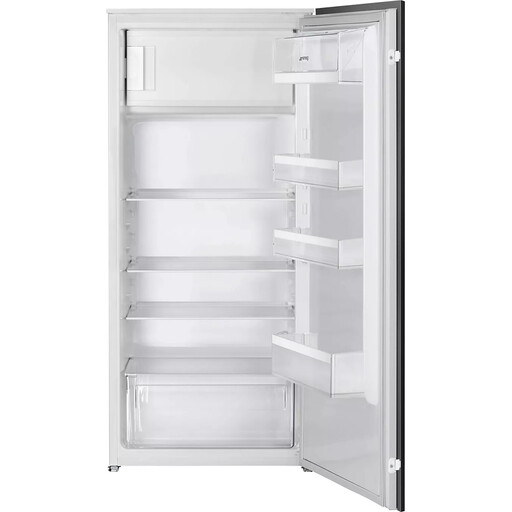 Image unavailable
Worth considering for a fitted kitchen where fresh food is the main priority. The title lists a 188 l single-door appliance with a top freezer and an E rating. Before replacing a built-in model, check the freezer capacity, housing measurements and door-fitting system.
 Image unavailable
Worth considering if you’re looking for a fridge freezer with the freezer at the bottom. The title lists a capacity of 282 l and an E rating. Check the capacity of each compartment, ventilation clearances and stated noise level if the appliance will be near a living area.
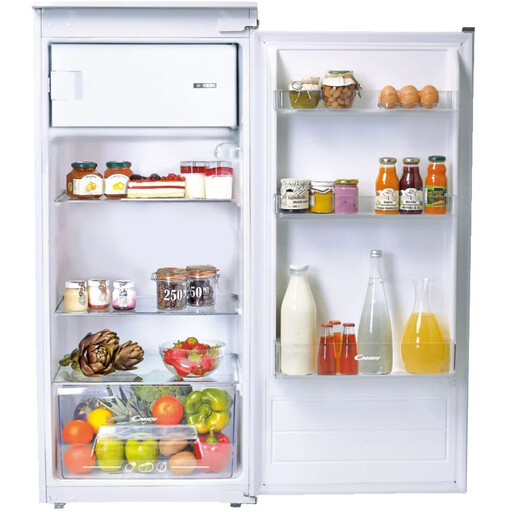 Image unavailable
Worth considering if space is limited and you mainly need to keep food fresh. The title lists a capacity of 179 l and a single-door format. If you regularly store frozen food, check the freezer compartment capacity as well as the installation dimensions.
No. Also compare kWh/year and the capacity of each compartment across appliances with similar layouts and capacities. According to the European Commission, the label also shows the noise level, and its QR code links to the model’s information in EPREL.
Measure the height, width and depth of the housing, then check the new model’s instructions, external dimensions, door-fitting system and required clearances. The housing dimensions specified by Liebherr for the ICBNci 5663 differ from those specified by Electrolux for the ENT6NE18S. The dimensions of your old appliance don’t guarantee that a new one will fit.
This feature is worth considering if you want to limit frost build-up and manual defrosting, depending on the specifications stated for the model. It doesn’t replace the need to compare freezer capacity, kWh/year, noise level and installation requirements.
Ask the retailer about collection arrangements when you order your new appliance. If delivery is planned, confirm in advance where and when your old fridge can be handed over.