How do you choose the layout and format?
Start by working out how much space you need for fresh and frozen food, then compare the available formats with your kitchen dimensions and the features of each model.
Top freezer
Best for: Darty recommends this format for households that mainly eat fresh food and only freeze food occasionally.
Consider: If you gradually start storing more frozen food, the split between the compartments may no longer suit your needs.
Bottom freezer with drawers
Best for: Darty recommends this format if you regularly use frozen food; the drawers help you organise portions and shopping.
Consider: A bottom freezer doesn’t automatically mean there’s enough space or that the drawers will be easy to open.
Separate appliances
Best for: A separate freezer can meet ongoing storage needs that a fridge-freezer compartment can’t, if you have the space.
Consider: You’ll need room and a power supply for a second appliance that runs continuously. UFC-Que Choisir points out that a chest freezer takes up more floor space.
| Priority | What to check | Think about your needs |
|---|
| Fresh and frozen food storage |
Compare the fridge and freezer capacities separately. Check the freezer’s position and the layout of its drawers. |
I mainly eat fresh food but want to keep some frozen items; or I freeze food often enough to need storage organised by category. |
| Capacity and access |
Work out the usable capacity you need based on the size of your household and how often you shop. Check the shelves, drawers and whether the freezer drawers can open fully. UFC-Que Choisir gives an average guide of 100 to 150 L for one person, plus 50 L for each additional person, adjusted to suit your needs. |
I need my shopping to fit in the compartments I actually use, without making frozen food difficult to reach. |
| Installation |
Measure the space and check that the doors can open. For a built-in model, check the space, door fixing and ventilation requirements against the instructions for the exact model. |
The doors and drawers need to open in my kitchen once the appliance is installed. |
| Energy use and noise |
Compare the kWh/year for models with similar formats and capacities, then check their stated noise levels. The European Commission’s EPREL database lists details including annual energy consumption, dimensions and compartment capacities. |
I want to compare the energy use of appliances that will fit in my kitchen and take the noise level into account for the space where they’ll be used. |
Which brands and ranges should you consider?
These examples highlight features to check on a specific model. They don’t necessarily apply across an entire brand.
Bosch
Worth considering for a freestanding fridge-freezer with a bottom freezer. Compare the capacities and installation requirements of the model you choose.
- Bosch Electroménager France’s product information for the KGN39AIAU lists a 260 L fridge compartment, a 103 L freezer compartment, NoFrost, an A rating and 29 dB(A).
- These specifications apply to the KGN39AIAU, not other Bosch models. Check the dimensions and clearance requirements of the model you’re interested in.
Beko
Worth considering if the door-fixing system and built-in installation of a fridge-freezer with a bottom freezer are important to your choice.
- Beko France describes the BCNA275E44SN as a built-in model with sliding door fixing and NeoFrost Dual Cooling technology.
- Check the model instructions to make sure the space, cabinet door and ventilation requirements are compatible with your kitchen.
Liebherr
Liebherr’s French catalogue features freestanding and built-in appliances to consider depending on your available space and storage needs.
- According to Liebherr, some fridge-freezers in its catalogue may feature technologies such as NoFrost or BioFresh.
- Check the technology, capacities, noise level and energy consumption for the exact model rather than assuming they apply across the brand.
Fridge-freezers to consider on Joybuy
These models include freestanding fridge-freezers with a bottom freezer and one built-in model. Compare their storage layout and installation requirements with your shopping habits and kitchen. This selection doesn’t replace considering a top-freezer model or separate appliances if those formats better suit your needs.
 Image unavailable
CHiQ JR263LGE, 262 L, Low Frost, black
If kitchen width is a key consideration, check that its 54 cm width will fit the space. The model name indicates a height of 176 cm and a 70/30 split. Also check the clearance requirements and ambient temperature conditions in the instructions.
View on Joybuy
 Image unavailable
Haier HTW5618ENMG, 3 doors, 360 L
If you want to keep fresh and frozen food separate, check the capacity of each compartment and how easy it is to access. The model name indicates Total No Frost, an E rating, Wi-Fi and My Zone. Check the instructions for the required dimensions and clearances.
View on Joybuy
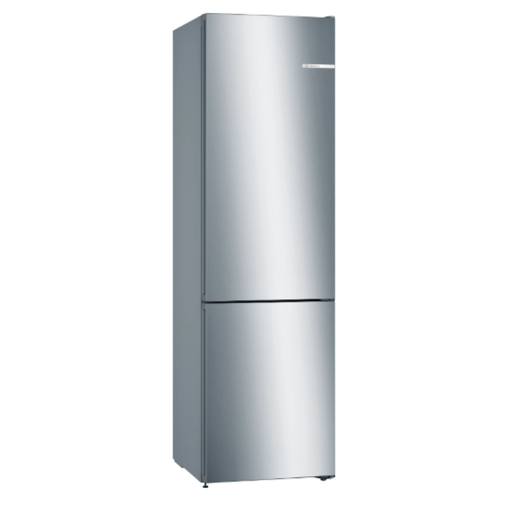 Image unavailable
Bosch KGN39VLEB, 368 L, E rating, stainless steel
If your shopping includes both fresh and frozen food, compare the capacity of each compartment with your needs rather than focusing on the 368 L total alone. Before choosing this model, check its dimensions and installation clearances. Also check the stated noise level if it matters in your kitchen.
View on Joybuy
 Image unavailable
Bosch KGN33NLEB, bottom freezer, 282 L, E rating
If you regularly use frozen food, check how much space this bottom-freezer fridge-freezer provides. Its stated total capacity is 282 L. Compare the individual compartment capacities, how easily the drawers open and the installation dimensions before choosing.
View on Joybuy
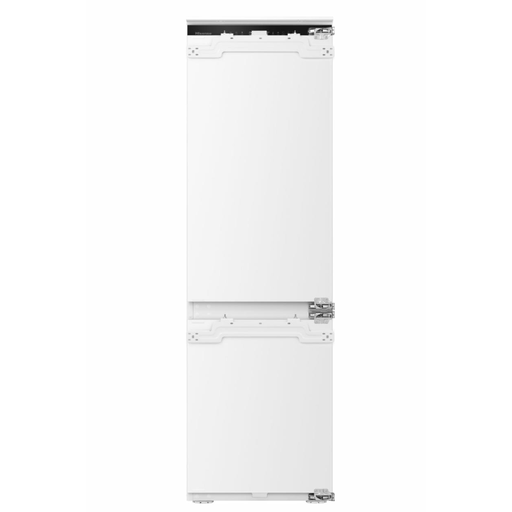 Image unavailable
Hisense RB3B250SAWC, built-in, 252 L, C rating
If you have a fitted kitchen with a space for a built-in appliance, first make sure the model can be installed there. Then compare its storage for fresh and frozen food. The model name indicates No Frost and an Inverter compressor. Check the instructions for the required space dimensions, cabinet door fixing and ventilation.
View on Joybuy
Frequently asked questions
How do you choose between two fridge-freezers with similar total capacities?
Compare the fridge and freezer capacities separately, then check the internal layout. If you mainly buy fresh food, prioritise fridge space. If you regularly freeze food, check the freezer capacity and how easy it is to access. This is the distinction between uses made in the Darty and UFC-Que Choisir guides.
Is the energy rating enough to compare energy use?
No. Also compare the kWh/year for models with similar formats and capacities. ADEME points out that cooling appliances run continuously; average energy consumption won’t predict how much a particular model will use in your home. The European Commission’s EPREL database lets you check the annual consumption and stated capacities of a specific appliance.
What should you measure before ordering a built-in fridge-freezer?
Measure the space and check the model instructions for the cabinet door fixing system, door opening and ventilation requirements. Bosch also stresses the importance of levelling the appliance so its doors close properly. Don’t assume the clearances for one model will apply to another.
What statutory guarantee applies to an appliance bought from a business in France?
In France, the statutory guarantee of conformity applies to new, second-hand and refurbished goods sold by a business to a private individual, according to the DGCCRF. It covers, among other things, goods that don’t match their description and certain faults relating to installation carried out by the seller. This is separate from any additional commercial guarantee.


