Which factors should you look at first?
For a household’s regular shopping, first choose a layout that gives you the right balance of fresh and frozen storage. Then check that the appliance fits in your kitchen and suits the way you use it.
Fridge-freezer
Consider it: if you want fresh and frozen food in one main appliance and both compartments are big enough for your shopping.
Bear in mind: the freezer space may be limiting if frozen food makes up a large part of your shopping.
Multi-door
Consider it: if you need more capacity and have enough space for it.
Bear in mind: weigh the extra capacity against the width, depth and energy consumption of the model you choose.
Two separate appliances
Consider them: if you have a long-term need for dedicated freezer capacity and space for two appliances.
Bear in mind: you’ll need room for both appliances and should compare each one based on how you’ll use it.
| Factor |
What to check |
Who is it for? |
| Fresh and frozen capacity |
Compare the usable capacity in litres of each compartment separately, rather than looking at the total capacity alone. |
If my weekly shop includes lots of fresh food and a regular stock of frozen food, I need space for both; around 33% of consumers would put this balance first. |
| Cooling after your shop |
Check the cooling system in each compartment and, where available, test results for cooling and freezing after food is added. |
When I put away several bags at once and open the door frequently, I care most about how quickly the temperature returns to normal and how frost is managed; nearly 27% of consumers would prioritise this. |
| Kitchen space |
Measure the space and access routes; check the manual for clearance requirements and door-opening space. |
If the space or access route is narrow, a larger appliance is no use if it can’t be installed properly; around 20% of consumers would put the right fit first. |
| Noise and energy consumption |
For models of a similar size and capacity, compare the kWh/year and dB(A) figures on the energy label. |
In an open-plan kitchen, I want to consider everyday noise without overlooking energy consumption; around 20% of consumers would prioritise these factors. |
Fridges to compare on Joybuy
This selection includes fridge-freezers and multi-door appliances for storing fresh and frozen food after your shop. Compare the space in each compartment and the overall dimensions before choosing a style.
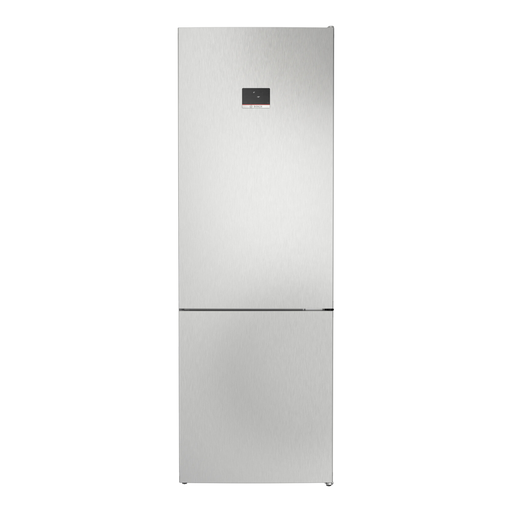 Image unavailable
Bosch KGN497LDF, 440 L fridge-freezer, grey
If your shopping includes both fresh and frozen food, check whether the split of the 440 L capacity between the compartments suits your habits.
Stated total capacity: 440 L; energy rating: D. Measure the space and access routes before installation.
View on Joybuy
 Image unavailable
Candy CFQQ5T817EPS, 4-door multi-door fridge-freezer, 467 L
If you’re considering a multi-door model for your weekly shop, compare the space allocated to frozen food and check that all four doors can open in your kitchen.
Stated total capacity: 467 L; Total No Frost; energy rating: E. This technology alone doesn’t tell you how stable the temperature is after your shop.
View on Joybuy
 Image unavailable
Haier HTW5618ENMG, 3-door fridge-freezer, 360 L
To organise fresh and frozen food in a three-door appliance, look at the capacity of each compartment rather than the number of doors alone.
Stated total capacity: 360 L; Total No Frost; energy rating: E. Check the dimensions and clearance needed for installation.
View on Joybuy
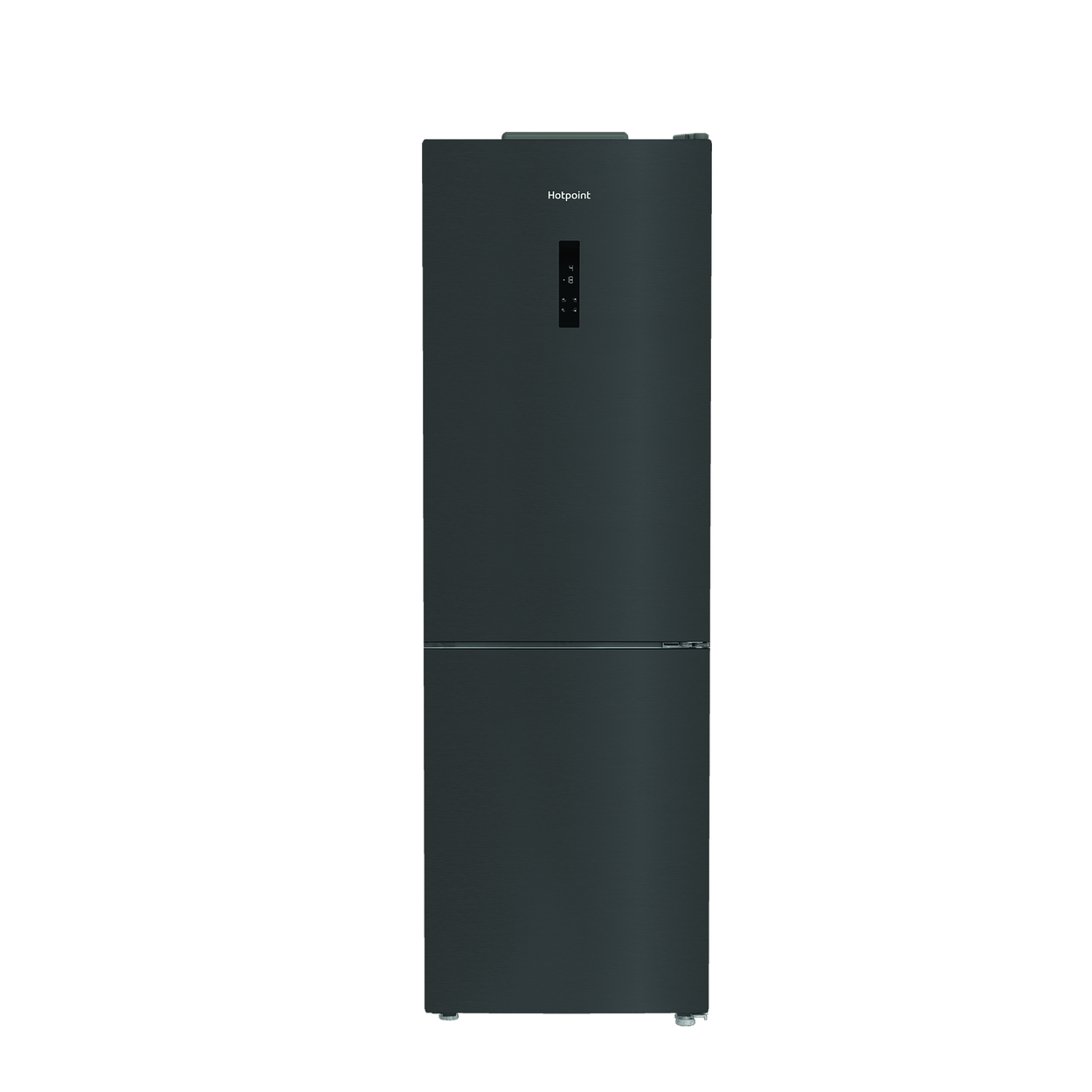 Image unavailable
Hotpoint HPK26363XBR5E, 316 L fridge-freezer
If you’re looking for a fridge-freezer for regular shopping, compare the space in each compartment with the fresh and frozen food you buy.
Stated total capacity: 316 L; Double No Frost; energy rating: D. For an open-plan kitchen, also check the noise level on the model’s label.
View on Joybuy
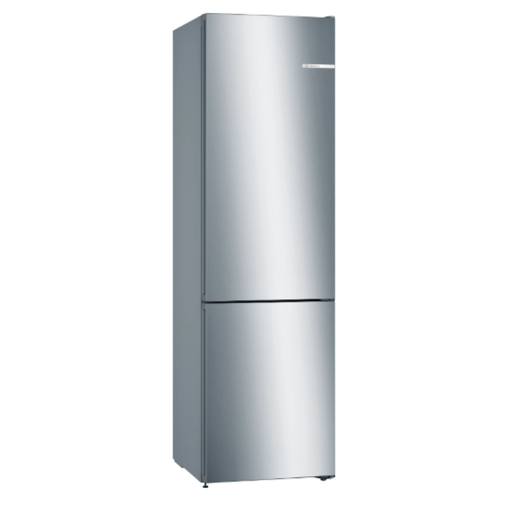 Image unavailable
Bosch KGN39VLEB, 368 L stainless steel fridge-freezer
If you want to fit a full shop into a fridge-freezer, check that the freezer capacity suits the amount of frozen food you usually keep.
Stated total capacity: 368 L; energy rating: E. If you often freeze food after your shop, check the model’s freezing capacity.
View on Joybuy
Frequently asked questions
What capacity do I need for a week’s shopping?
First, compare the usable capacity of the fridge and freezer with what you actually buy. UFC-Que Choisir suggests 100 to 150 l for one person, plus 50 l for each additional person. Then adjust the freezer space to suit the amount of frozen food you buy, rather than assuming the total capacity guarantees a particular split.
Is NoFrost essential for a weekly shop?
No: frost management alone doesn’t show how quickly the fridge returns to temperature after you add food. UFC-Que Choisir distinguishes between cooling systems and tests factors including daily additions and a weekly shop. If this matters to you, look for test results for the specific model.
How do I choose between two similar models for an open-plan kitchen?
Compare their noise levels and annual energy consumption, looking at models of a similar size and capacity. According to the European Commission, the energy label shows noise emissions, kWh/year and compartment capacities. Also check that the doors and drawers can open in the space available.
Does a family always need a multi-door fridge?
No: a multi-door model is only worth considering if its compartments and dimensions suit your family and kitchen. For the larger models described by UFC-Que Choisir, also measure the delivery access routes and compare kWh/year with appliances that have the capacity you need.


