Households that cook and freeze portions
If you prepare meals in advance and keep leftovers, look at the space available in each compartment rather than the total capacity alone. Frozen portions should be easy to find.


Choose a format based on how much fresh and frozen food you actually keep between shops: a fridge-freezer suits a mix of needs, while a separate freezer or two separate appliances may be a better fit if your storage needs and available space justify it. Then compare usable capacity in litres for each compartment, dimensions and annual energy consumption between appliances intended for similar uses. The ADEME points out that fridges and freezers run continuously, and that size and unnecessary extra capacity can affect energy use.
If you prepare meals in advance and keep leftovers, look at the space available in each compartment rather than the total capacity alone. Frozen portions should be easy to find.
Less frequent shopping or regular batch freezing may call for extra capacity. However, a separate appliance needs more space and also uses electricity continuously, as the ADEME points out.
A compact model is worth considering if you usually keep limited stocks. Make sure it still has enough room for your shopping, leftovers and, if needed, frozen food.
First decide whether you mainly need space for fresh food, frozen food or both. This will help you choose between a fridge-freezer, two separate appliances or a freezer to add to your existing fridge. If space means you need a compact model, check the capacity of each compartment before compromising on dimensions.
| Criterion | What to check | Who it matters to |
|---|---|---|
| Capacity split | The usable capacity in litres of the fridge and freezer separately, then the space available on shelves and in drawers. | When I plan meals for several days, I want to store fresh food, leftovers and a few frozen portions without losing track of what I already have; around 40% of consumers prioritise this balance between compartments. |
| Freezing capacity | The usable freezer capacity in litres, the size of the drawers or baskets, and the space needed for a separate appliance. | For batch cooking and keeping portions close at hand, I mainly need a freezer that’s spacious and easy to organise; freezing is the top priority for around 30% of consumers. |
| Annual energy consumption | The kWh/year shown on the label, compared between appliances of a similar type and capacity; if you have two appliances, check both figures. | If I prioritise the energy use of an appliance that stays plugged in all the time, I want to compare its capacity with what I actually store; around 20% of consumers put energy efficiency at the top of their list. |
| Size and space | The appliance’s dimensions, the clearances specified by the manufacturer and the delivery route, without overlooking usable capacity. | In a small kitchen, I need an appliance that fits in its allotted space while still holding my usual shopping; a compact footprint is the priority for around 10% of consumers. |
A large advertised capacity can hide a freezer compartment that’s too small for prepared portions, or too little fridge space for your regular shopping.
Compare the usable capacity of each compartment and check that your containers and dishes fit in the drawers and under the shelves.
The ADEME points out that cooling appliances run continuously, and that a larger size or unnecessary extra capacity can increase energy use.
Check the kWh/year as well as the energy rating, and compare appliances with similar uses and capacities.
More space won’t necessarily prevent duplicate purchases or food being forgotten. The ADEME recommends checking what you have before shopping and tidying your fridge regularly.
Plan storage zones and a simple inventory of frozen food before increasing your capacity.
A fridge can be difficult to deliver or remove if you haven’t checked access and made practical arrangements in advance.
Before ordering, check the access dimensions, delivery terms and what’s offered for collecting or disposing of your old appliance.
Bosch’s range of fridge-freezers may appeal to households looking to organise fresh and frozen food in one appliance.
Some Liebherr fridge-freezers have freshness compartments and separate cooling zones. Consider these if their layout suits the foods you store.
Beko’s range is worth exploring if the layout of the fruit and vegetable drawer or the separation of cooling zones matters to you.
Some Whirlpool fridges with 6th Sense are designed for households interested in automatic regulation.
These appliances combine refrigeration and freezing in one unit, with a range of formats and advertised capacities. To choose between them, consider the space you have alongside the amount of fresh and frozen food you store. If freezing makes up a much larger part of your needs, it’s also worth looking at a dedicated appliance.
 Image unavailable
Worth considering if you want to store fresh and frozen food in one appliance.
The product title lists a capacity of 344 L and an energy rating of E. Check the capacity split and dimensions on the model’s product page before deciding where to put it.
 Image unavailable
Worth considering if your shopping and frozen portions call for plenty of space in a multi-door appliance.
The title lists a capacity of 467 L, Total No Frost and an energy rating of E. Check the dimensions, delivery access and door-opening direction: the product details state that the doors aren’t reversible.
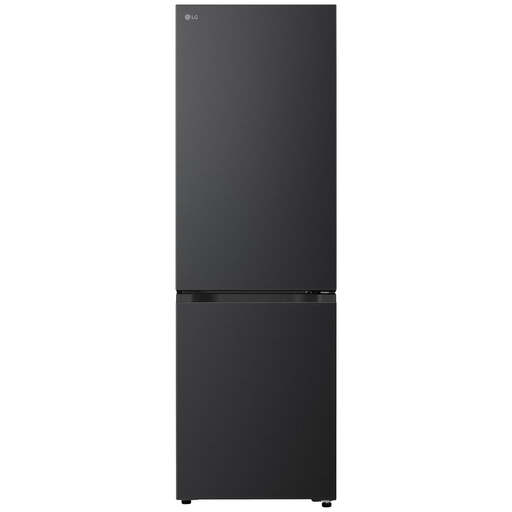 Image unavailable
Worth considering if you need a mix of fridge and freezer space. Check how much room is allocated to each type of food.
The title lists a capacity of 333 L and an energy rating of C. The stated total capacity also includes a 37 L chiller compartment, so check the exact split before counting it as fridge or freezer capacity.
 Image unavailable
Worth considering if a large amount of fresh and frozen storage suits your usual shopping and the space you have available.
The title lists a capacity of 495 L and an energy rating of E. Check the door layout and interior configuration on the model’s product page, then compare its energy use with appliances of a similar capacity.
 Image unavailable
Worth considering if you need plenty of capacity in both compartments and have enough space for a side-by-side model.
The title lists 333 L for the fridge and 192 L for the freezer, along with No Frost, 37 dB and an energy rating of E. Check the model’s dimensions and kWh/year before comparing its size and energy use.
Compare the energy rating, kWh/year, compartment capacities and noise information for appliances covered by EU energy labelling. To choose between models, compare appliances with similar uses and capacities rather than directly comparing a compact model with a large multi-door one.
No. More space is no substitute for keeping track of your food. The ADEME recommends checking what you have before shopping and tidying your fridge regularly. Only increase capacity if the amount of food you actually store and how you organise it justify doing so.
Before ordering, check what collection or drop-off options are available, as well as the removal arrangements and access to your home. If the appliance still works, donating it or finding a way to reuse it may also be an option. ecosystem also offers collection and recycling options for cooling appliances.
Yes, if the fridge is near a living or sleeping area. Compare the stated noise level in dB and the noise class of similar models, rather than assuming how noisy an appliance will be based on its range name alone.