What should you look for?
Fridge-freezer
Worth considering: if you regularly shop for both fresh and frozen food and want to install just one appliance.
Bear in mind: the split between the two compartments varies by model. A large total capacity could still leave too little room in the compartment that matters most to you.
Fridge with a freezer compartment
Worth considering: if you mainly store fresh food and only buy a small amount of frozen food.
Bear in mind: check that the compartment can actually hold your occasional frozen-food purchases. This option won’t meet the same needs as regularly stocking up on frozen food.
Separate fridge and freezer
Worth considering: if your long-term storage needs in either compartment exceed the space offered by a fridge-freezer.
Bear in mind: you’ll need room for two appliances, and should compare their annual energy consumption, as both run continuously, as ADEME points out.
Whichever format you choose, start by thinking about what you usually buy, then compare the usable capacities with the space available in your kitchen. The European Commission says the energy label includes details such as the capacity of each compartment, annual energy consumption and noise levels.
| Criteria |
What to check |
Who it matters to |
| Fresh and frozen storage |
Compare the usable capacity in litres of each compartment with the foods and pack sizes you buy. |
If my big shops include both fresh and frozen food, I want enough room in the right compartment rather than an impressive total capacity; around 33% of shoppers would prioritise this split. |
| Capacity and size |
Measure the height, width and depth, then check how much room is needed to open the doors. |
In a narrow kitchen, I want more storage without blocking the walkway or access to the doors. Around 27% of shoppers would put this constraint first. |
| Continuous energy use |
Check the kWh/an and energy rating in relation to the capacities; compare similar configurations. |
Once I know I have enough space, I’d rather keep an eye on the appliance’s day-to-day energy use than add capacity I won’t use; around 20% of shoppers would make energy consumption their main consideration. |
| Storage and maintenance |
Check the internal layout, temperature settings and defrosting requirements for the model. |
When there’s a longer gap between shops, I need to store food without restricting airflow and be able to maintain the appliance; around 20% of shoppers would make this their priority. |
Brands to know when comparing formats
The specifications below relate to the models named by their manufacturers, not to every appliance from each brand.
Bosch
A brand to consider when comparing freestanding fridge-freezers where width and the split between chilled and frozen storage matter.
- Bosch lists 260 l of fridge capacity and 103 l of freezer capacity for the KGN39AIAU.
- This model is 203 cm tall, so check the available height. Its specifications won’t necessarily apply to other Bosch models.
Liebherr
Worth considering if you’re looking for a high-capacity fridge-freezer with dedicated storage zones.
- Liebherr lists a total capacity of 423 l for the CBNsdc 765i and describes BioFresh as a zone kept close to 0 °C.
- Its stated width of 74,7 cm needs to be checked against the available space and door clearance.
Whirlpool
A model to look at if you need to compare a large fresh-food compartment with plenty of freezer space.
- Whirlpool lists 340 l of fridge capacity and 150 l of freezer capacity for the WHK2 6493 X4E.
- The stated energy consumption for this model is 297 kWh/an. Compare its capacity and energy use with your actual needs.
Fridge-freezers available on Joybuy
These appliances combine fridge and freezer compartments in one unit. To choose between them, check how much room you need in each compartment and the dimensions of the exact model: a higher total capacity doesn’t guarantee the right split for your shopping.
 Image unavailable
Haier HTW5618ENMG, 3 doors, 360 L
Worth considering if you want one appliance to organise fresh and frozen food between shops.
The model name lists a capacity of 360 L, an E energy rating and Total No Frost. Check the capacity of each compartment, the dimensions and the clearance needed before buying.
View on Joybuy
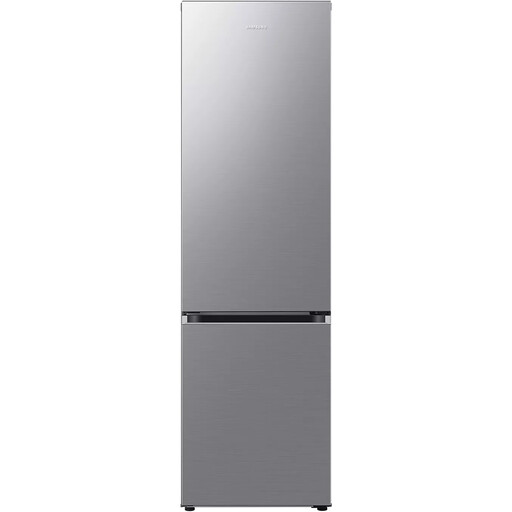 Image unavailable
Samsung RB38C603CS9, 390 L, C energy rating
Worth considering if you want to compare a fridge-freezer for regular shops that include both fresh and frozen food.
The model is listed with a total capacity of 390 L and a C energy rating. Check the capacity of each compartment and the available height: the product details state 203 cm.
View on Joybuy
 Image unavailable
Candy CFQQ5T817EPS, 4 doors, 467 L
Worth considering if your shopping needs plenty of storage space for fresh and frozen food.
The product name lists a capacity of 467 L, an E energy rating and Total No Frost. Its stated width of 83,3 cm makes it particularly important to measure the space, access route and door clearance.
View on Joybuy
 Image unavailable
Bosch KGN33NLEB, bottom freezer, 282 L
Worth comparing if you want to store fresh and frozen food in a 282 L fridge-freezer.
The product name gives it an E energy rating. The product details specify that the NoFrost system applies to the freezer; check the capacity of each compartment and the clearance needed to install the exact model.
View on Joybuy
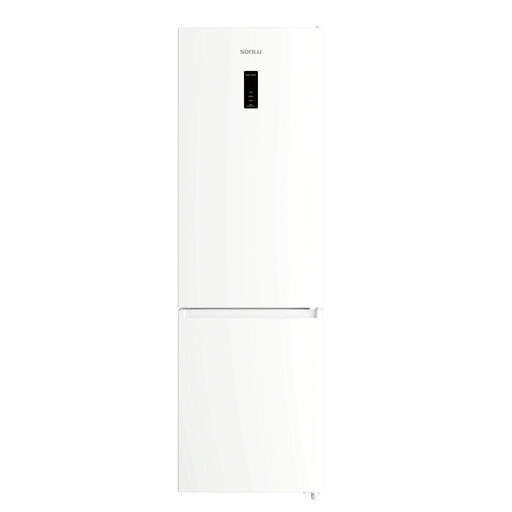 Image unavailable
Sonlu CD‑400RW, 355 L, E energy rating
Worth considering if you need a fridge-freezer with separate capacities listed for fresh and frozen food.
The product name lists 252 L for the fridge, 103 L for the freezer and a width of 60 cm. Also check the other dimensions and annual energy consumption in the details for the exact model.
View on Joybuy
Frequently asked questions
What should I look for on a fridge-freezer’s energy label?
Check the annual energy consumption, compartment capacities, energy rating and noise level. The European Commission says these details appear on the labels for appliances covered by EU rules. Compare similar models with comparable capacities and formats rather than choosing based on the rating letter alone.
What temperature should I set to keep food fresh between shops?
Anses recommends a temperature below 4 °C in the coldest part of the fridge. Store perishable food there, following the storage instructions, and always observe use-by dates: keeping food at the right temperature won’t extend them.
Can I fill the fridge completely after a big shop?
Avoid overfilling it: Anses recommends allowing air to circulate inside. If your shopping regularly fills every shelf, check how much usable storage space there really is and how it’s arranged, rather than relying on the stated capacity alone.
What should I do with my old fridge when replacing it?
Arrange for it to be taken to an appropriate recycling route for refrigeration appliances. ADEME says you can, for example, hand it to the retailer or delivery team when your new appliance is delivered, or take it to the electrical and electronic equipment area at a recycling centre.


