Which households are they for?

Households with a balanced mix of fresh and frozen shopping

You shop regularly for fresh food, some frozen items and leftovers or prepared portions, without building up large stocks. The split between refrigeration and freezing capacity, the appliance footprint and kWh/year are therefore the main points to consider.

Households that cook and freeze in quantity

You prepare portions in advance, buy in bulk or regularly store frozen food. A separate freezer can meet this need if you have room for it and are happy with its installation requirements and continuous energy consumption.

Households restricted by a cabinet space or small kitchen

You are replacing an integrated appliance or fitting out a limited space. Check the appliance or cabinet dimensions, delivery access, the door-fixing system and the ventilation requirements for the exact model.

Priorities before buying

Fridge only

Consider this: if most of your shopping is fresh food and you have little or no need to store frozen food.

Bear in mind: it does not replace freezer space for buying in batches or storing meals for longer periods.

Fridge freezer

A good choice: if you store fresh food every week along with a moderate amount of frozen food, but do not have room for a second appliance.

Compare: freezer capacity depends on the internal layout, not just the total volume.

Separate freezer

Consider this: if batch cooking, bulk shopping or frozen food stocks are a long-term requirement.

Plan for: this additional appliance also runs continuously and needs a suitable location.

Priority What to check Your needs
Capacity split Compare the refrigeration and freezer litres separately. Also check the drawers, shelves and genuinely usable space for boxes or bulky items. I want to avoid a freezer that is too small for bulk purchases, without paying for capacity that would rarely be used.
Continuous energy use Read the A to G energy class alongside kWh/year and usable volumes. Compare appliances of a similar type and capacity. I am looking for an appliance suited to my storage needs rather than an oversized or over-equipped model. The ADEME reminds us that fridges and freezers run continuously.
Installation Measure the height, width and depth, as well as access routes. For an integrated appliance, check the cabinet space, door fixing and installation instructions. My appliance must fit through to the kitchen and into the available space without preventing the doors from opening.
Ease of use Check whether the relevant compartment has NoFrost, the noise level in dB(A) and the power-cut storage time when these factors matter to you. In an open-plan kitchen, I may prioritise a suitable noise level. If I keep substantial stocks, storage time during a power cut may also influence my choice.

Mistakes to avoid

  • Choosing based on total volume

    A fridge freezer can offer a substantial total volume while leaving too little room for frozen food. Conversely, a separate freezer that is only partly filled is still an appliance that runs continuously.

    Over a representative period, make a list of the fresh food, frozen items and portions you want to store, then compare the usable litres of each compartment.

  • Comparing the energy class without checking kWh/year

    The energy class alone does not allow a fair comparison between appliances of different volumes or formats. The European label also shows annual energy consumption, volumes and noise levels.

    Use the A to G class as a starting point, then compare kWh/year, usable volumes and features between appliances intended for the same purpose.

  • Ordering an integrated appliance without checking the cabinet space

    Cabinet dimensions, door fixing and installation requirements vary from one model to another. An integrated appliance cannot be replaced based on width alone.

    Keep a record of the height × width × depth measurements of the space and access routes, then compare them with the product details and instructions for the exact model before buying.

  • Assuming every feature is identical across a range

    NoFrost, noise, storage time during a power cut and internal layout vary depending on the model, its format and its installation.

    Check the product details, energy label and instructions for the chosen model rather than assuming that a nearby model has the same specifications.

Brand guide

Bosch

The range includes fridges, fridge freezers, integrated models and extra-wide formats, making it useful for comparing different capacities and configurations.

  • For the KGN39AIAU, Bosch specifies Total NoFrost, VitaFresh XXL, an A energy class and a noise level below 29 dB, among other features.
  • These details apply to this specific model; check the label, dimensions and specifications of the model you choose.

Liebherr

This range offers large-capacity fridge freezers and freezers, both freestanding and integrated, with published cabinet dimensions for certain models.

  • For example, Liebherr states a capacity of 485 L and a noise level of 34 dB for the CNsfa 7723, as well as precise cabinet dimensions for the ICNd 5133.
  • Volumes, dimensions and technologies vary considerably between models and must be checked individually.

Whirlpool

The range covers freestanding and integrated fridge freezers for households weighing up capacity, cabinet restrictions, noise, storage time during a power cut and defrosting.

  • For the WHC20D011B1 FR, Whirlpool publishes a total capacity of 300 L, energy consumption of 225 kWh/year and 19 hours of storage time during a power cut.
  • Features such as Total No Frost and 6th SENSE apply to specific models, not the entire brand.

Joybuy products

These Joybuy options are fridge freezers for households that want to store both fresh and frozen food in a single appliance.
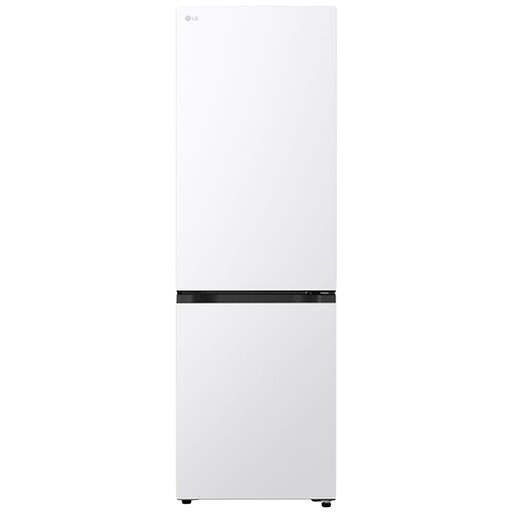
LG GBBSJ1CCSW 333 L fridge freezer, class C

LG GBBSJ1CCSW 333 L fridge freezer, class C

For regular shopping that combines fresh and frozen food, with a stated fresh-food compartment capacity of 37 L.

Stated volumes: 183 L refrigeration and 113 L freezing; 169 kWh/year, 34 dB and Total No Frost.

Check the depth of 674 mm, the stated clearances of at least 5 cm and whether the T climate class is suitable for your room.

Joybuy

Samsung RB33B612EBN 344 L fridge freezer, class E

Samsung RB33B612EBN 344 L fridge freezer, class E

For a household that regularly stores fresh and frozen food in separate compartments.

Stated volumes: 230 L refrigeration and 114 L freezing; No Frost, 254 kWh/year, 35 dB and 9-hour storage time during a power cut.

The door is reversible; however, check the ventilation clearances specified in the instructions.

Joybuy
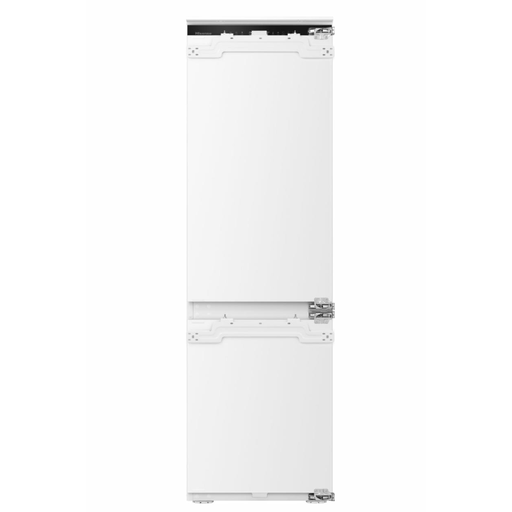
Hisense RB3B250SAWC 252 L integrated fridge freezer, class C

Hisense RB3B250SAWC integrated 252 L, class C

For a fitted kitchen requiring an integrated fridge freezer with separate fresh and frozen food capacities.

Stated volumes: 176 L refrigeration and 76 L freezing; No Frost, 150 kWh/year, 34 dB and 14-hour storage time during a power cut.

Before buying, make sure you check the cabinet space, access routes, ventilation and door system compatibility.

Joybuy

Bosch KGN33NLEB 282 L fridge freezer, class E

Bosch KGN33NLEB 282 L fridge freezer, class E

For predominantly fresh-food shopping with a moderate supply of frozen food.

Stated volumes: 193 L refrigeration and 89 L freezing; 228 kWh/year, NoFrost freezer and adjustable shelves.

Check the model’s label and product details for noise, storage time during a power cut and freezing capacity, as well as the required access routes and clearances.

Joybuy

AEG NSC6M18FES 249 L integrated fridge freezer, class E

AEG NSC6M18FES integrated 249 L, class E

For a household with regular fresh-food shopping and a moderate supply of frozen food, in a compatible fitted kitchen.

Stated volumes: 186 L refrigeration and 62 L freezing; TwinTech Total No Frost, 37 dB, separate controls and sliding door.

Check the cabinet dimensions, furniture compatibility and energy label before comparing this model with fridge freezers of a similar capacity.

Joybuy

Frequently asked questions

Which parts of the energy label should you compare?

Compare the A to G class with annual consumption in kWh, storage volumes and noise emissions. The European Commission states that this information appears on the label of refrigeration appliances; compare it between appliances of the same type and with a similar capacity.

Can you rely on the energy class alone?

No. The class should be considered alongside kWh/year and usable volumes, as a larger appliance may meet different storage needs. The ADEME also highlights that size and excessive features can increase your energy bill.

What should you measure before ordering a refrigeration appliance?

Measure the available space, the access routes to the kitchen and the appliance dimensions. For an integrated model, also check the cabinet dimension range, depth, door-fixing system and the ventilation requirements in the instructions.

Is a separate freezer automatically better if I store a lot of food?

No. It becomes suitable when your freezing needs consistently exceed those of a fridge freezer and an appropriate location is available. In that case, compare its capacity, kWh/year, noise, storage time during a power cut and climate class.

What legal protection applies after buying a new appliance in France?

According to the Ministry of the Economy, the statutory guarantee of conformity can be claimed from the professional seller for two years for a new product. A commercial warranty is optional and supplements the statutory guarantees without replacing them.