Households that shop for the week
If you bring home several days’ worth of fresh and frozen food, compare the usable capacity of each compartment rather than just the advertised total capacity.


For a weekly shop that includes fresh and frozen food, a fridge-freezer is a good place to start: its two compartments make it easy to check how much space is set aside for each. If storage space is especially important, consider a multi-door model too, provided it will fit in your kitchen. If space is limited, a compact model means you’ll need to keep the amount you store to a minimum. In every case, compare the usable capacity, dimensions and noise level of the specific model with your needs.
If you bring home several days’ worth of fresh and frozen food, compare the usable capacity of each compartment rather than just the advertised total capacity.
In an open-plan kitchen or one close to a living area, the stated noise level may influence your choice. Compare models that also meet your storage needs.
Suitable capacity is not enough if the appliance won’t fit through to the kitchen or its doors cannot open properly. Measure the access route and the space where it will go, then check the installation instructions for the model you’re considering.
First, choose a format that suits the space available and the amount of food you need to store. The capacity of both compartments, followed by installation requirements and noise level, will help you narrow down models in the same format.
Consider it: if your shopping for several days calls for separate compartments for fresh and frozen food.
Bear in mind: a separate freezer compartment does not guarantee enough space for your shopping.
Consider it: if space is limited and you store only a small amount of frozen food.
Bear in mind: the freezer compartment may be too small for a sizeable weekly stock-up.
Consider it: if your household needs plenty of room for both types of food and has a suitable space for the appliance.
Bear in mind: its size means you’ll need to check the route into the kitchen and whether the doors can open fully.
Consider it: when available space is the priority and you only need to store small quantities.
Bear in mind: this format is unlikely to suit a large weekly shop that includes both fresh and frozen food.
| Criteria | What to check before you buy | Who this matters to |
|---|---|---|
| Fridge and freezer capacity | Check the usable litres in each compartment and compare them with your weekly shop. According to UFC-Que Choisir, 100 to 150 L for one person, plus 50 L for each additional person, is a useful average guide. Adjust it to suit your habits. | If I bring home several days’ worth of shopping, I need enough room for fresh food without squeezing out my frozen food. Around 36% of consumers put this balance of capacity at the top of their list. |
| Space and installation | Measure the access route, the space where the appliance will go and the clearance needed to open the doors. For a built-in model, also compare the housing dimensions and fitting instructions with the model’s manual. | When my kitchen has a built-in space or a narrow access route, I need to be able to install and open the appliance before I can make use of its capacity. This is the top priority for around 29% of consumers. |
| Noise | Compare the stated noise level in dB(A) for models that meet your capacity and space requirements. | In an open-plan kitchen, I want to avoid the noise of an appliance near the living area becoming a daily nuisance. Noise is the top priority for around 21% of consumers. |
| Energy and maintenance | Check the energy label and the model’s stated energy consumption. Look separately at its defrosting system and maintenance information. | If I plan to keep this fridge for a long time, I want to understand its stated energy consumption and the maintenance it will need. Around 14% of consumers prioritise this information. |
Two appliances with a similar total capacity may have different amounts of space for fresh and frozen food. A freezer that is too small can still be restrictive, even if the total capacity seems sufficient.
Estimate how much you put in each compartment after your shop, then compare the stated usable litres for each one separately.
With a built-in model, the appliance dimensions alone don’t tell you everything you need to know about installation. Access, the housing and clearance for the doors can all affect whether it will fit.
Measure the delivery route and the space where it will go, then follow the installation instructions for the exact model rather than relying on the dimensions of another appliance.
No Frost relates to defrosting; this feature alone is not enough to compare the energy consumption of two fridges.
Compare the defrosting system you want separately from the energy rating and stated consumption on the energy label. ADEME describes this label as a useful guide when choosing household appliances.
A large capacity won’t make up for an access route that is too narrow or doors that can’t open properly in your kitchen.
Check that the capacity of each compartment suits your shopping, and that the route, location and door clearance will allow you to install the appliance.
These range and model examples can help you identify formats and features to compare. Whatever you decide, check the product information for the specific model you choose.
Worth exploring if you want to compare fridge-freezers by compartment capacity and noise level.
Worth exploring if you want to compare fridge-freezers with different capacities to suit your household.
Worth exploring if your household is considering a large-capacity multi-door model.
Worth exploring if you want to compare a built-in fridge-freezer for a kitchen with suitable housing.
Worth exploring if space is the priority and you’re considering a compact, single-door fridge.
These Joybuy models give you a chance to compare fridge-freezers and multi-door models for storing fresh and frozen food together. Compare compartment capacities and your kitchen’s constraints before choosing between these two formats.
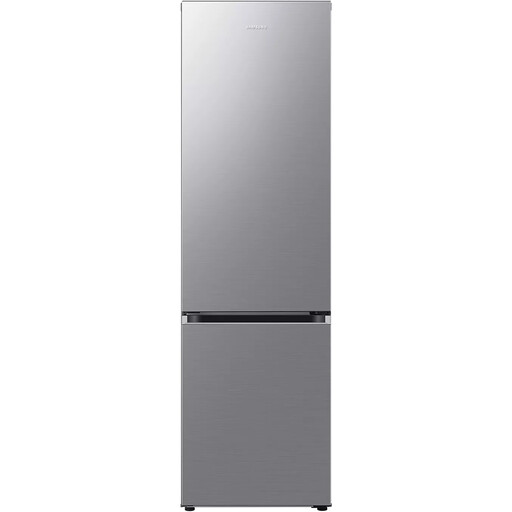 Image unavailable
Worth considering if your shopping calls for a fridge-freezer with space for fresh and frozen food.
Stated total capacity: 390 L; energy rating shown: C. Compare the capacity of each compartment and the installation dimensions with your needs.
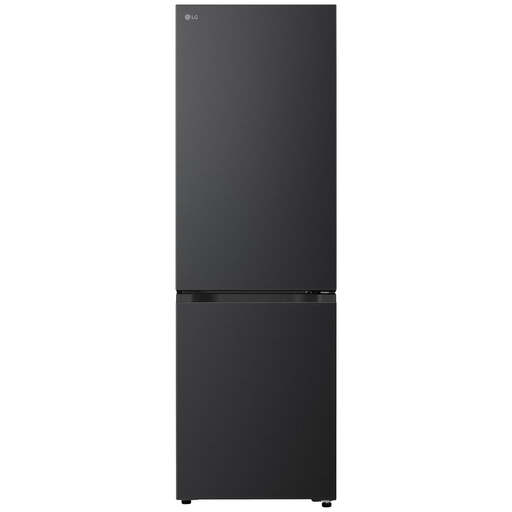 Image unavailable
Worth considering if you’re looking for a fridge-freezer to store several days’ worth of shopping.
Stated total capacity: 333 L; energy rating shown: C. Check how much space is set aside for the freezer and the clearances specified in the manual.
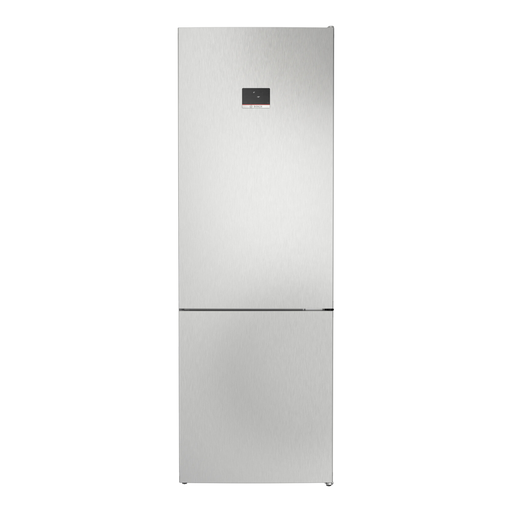 Image unavailable
Worth considering if you’re looking for a fridge-freezer and have enough space for an appliance of this capacity.
Stated total capacity: 440 L; energy rating shown: D. Check the fridge and freezer capacities separately, then make sure the appliance can get through to your kitchen.
 Image unavailable
Worth considering if a large capacity for fresh and frozen food suits your shopping and your kitchen can accommodate a multi-door model.
Stated total capacity: 495 L; energy rating shown: E. Check the capacity of each compartment, the delivery route and the clearance needed to open the doors.
 Image unavailable
Worth considering if you’re looking for a multi-door model to keep fresh and frozen food separate.
Stated total capacity: 467 L; energy rating shown: E; Total No Frost feature mentioned in the model name. Compare compartment capacities and check the direction and clearance needed to open the doors.
Start with the amount of food you actually keep in the fridge and freezer. UFC-Que Choisir gives an average guide of 100 to 150 L for one person, plus 50 L for each additional person. Adjust this to how often you shop, and check the capacity for frozen food separately.
Only choose one for this purpose once you’ve checked the capacity of its freezer compartment. If you need to store a lot after your weekly shop, compare this capacity with that of a fridge-freezer with a separate freezer.
Measure the route into your kitchen, the space where the appliance will go and the clearance needed to open the doors. For a built-in model, also check the housing dimensions and the installation and ventilation requirements in the manual for the specific model.
No. Check the model’s stated energy consumption, capacity and noise level too. ADEME recommends using the energy label as a guide when choosing an appliance, but it does not replace checking the capacity of each compartment or the installation requirements.