
Livraison le jour même ou le lendemain

Qualité garantie

Débloquez vos offres de bienvenue: Livraison GRATUITE | Jusqu'à -80 % | 30 jours d'essai gratuits à JoyPlus
Téléchargez l'application
Buying a fridge freezer isn't just about comparing capacity or the colour of the door. Between promises of whisper-quiet operation, smart features and "frost-free" systems, some options genuinely make life easier, while others can push up the bill without meeting your needs.
Whether you're a couple, a family, or living in a flat with a compact kitchen, the right choice really comes down to usable capacity, dimensions, energy consumption and interior layout.
A fridge freezer advertised as 330 litres doesn't offer 330 litres of refrigeration. Part of the capacity is taken up by the freezer, sometimes with drawers that limit how you can store bulky items. Always check the split between fridge capacity, freezer capacity and any chill zone.
For a couple, an appliance of 170 to 280 litres can be enough, depending on your shopping habits. A family that cooks a lot or regularly stocks up on frozen goods would be better off looking at 330 to 437 litres. Larger models from 474 to 525 litres, however, need a sufficiently spacious kitchen and suitable access for delivery.
A No Frost or Total No Frost fridge limits ice build-up thanks to a fan-assisted air circulation system. This usually means no manual defrosting of the freezer, but it doesn't let you off cleaning the shelves, door seals and drawers.
Low Frost, found on some compact appliances, reduces frost build-up without eliminating it completely. Occasional defrosting may still be needed. The difference between No Frost and Low Frost is worth checking in the spec sheet, especially if you're after an easy-to-maintain appliance.
Noise levels are measured in dB(A). A few decibels can make a real difference in an open-plan kitchen or a studio flat. The models featured here show, according to the available specs, a level between 34 and 41 dB.
Also consider the noise emission class, the compressor's position and the quality of the levelling. Installed on an uneven floor, an appliance can generate more vibrations, even if its spec sheet claims a moderate noise level.
A fridge advertised as 60 cm wide isn't always exactly 600 mm. The LG GBBSJ1CCSW measures 597 mm wide, while the Hisense RB5K330GSFC comes in at 595 mm. Larger models, like the Beko B5RCNE406HG at 762 mm, won't fit in a standard niche.
Measure:
Spec sheets often allow around 5 cm of clearance around the appliance, but this varies between models. A reversible door can also make installation easier when placed next to a wall.
The European energy label uses a scale from A to G. Several appliances in this selection fall into class C, but the annual consumption in kWh deserves just as much attention.
Two fridge freezers of the same capacity can show different consumption figures. For reference, the LG GBBSJ1CCSW is rated at 169 kWh/year, compared to 165 kWh/year for the Hisense RB5K330GSFC. These figures are useful for comparing models, but they don't let you calculate the exact running cost, which depends on your electricity tariff, room temperature and usage habits.
A fridge with a bottom freezer puts fresh food at eye level. That's handy if you open the fridge section often. A top-mounted freezer can, however, be more accessible for some users and sometimes allows for a more manageable overall height.
Look at the number of drawers, whether there's a fold-down shelf, the door balconies and the option to adjust the temperature separately. Fast freeze is useful when you need to store a large quantity of fresh food, but it does cause a temporary increase in energy consumption.
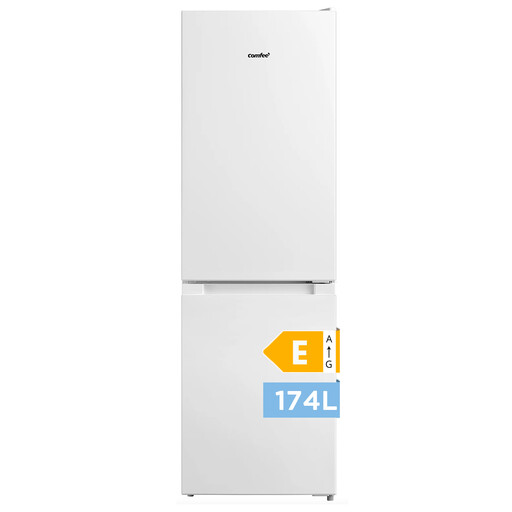
Why this choice suits this profile: With 115 L for the fridge, 59 L for the freezer and a width of 50 cm, this size works well for smaller homes and households of two or three people.
Its dimensions reduce the risk of choosing an appliance that's too bulky for a narrow kitchen. The Low Frost technology spaces out defrosting, without claiming to offer a completely frost-free freezer.
174 L, reversible door, LED lighting, four-star freezer and stated noise level of 39 dB.

Why this choice suits this profile: This discreet fridge combines 333 L of capacity, Total No Frost, an energy class C rating and several settings suited to a family kitchen.
The stated data lets you compare noise and consumption in a concrete way: 34 dB and 169 kWh/year, rather than relying on a simple marketing promise.
333 L, class C, FRESHConverter drawer, 110° door opening and ThinQ connectivity with Wi-Fi.
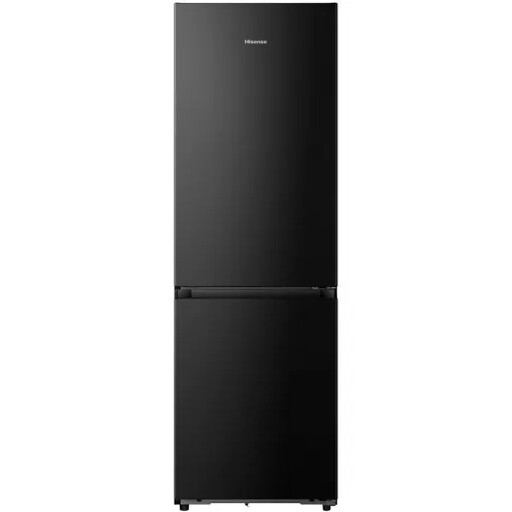
Why this choice suits this profile: Its 330 L format, 115 L bottom freezer and Super Cool, Deep Freeze and holiday mode functions meet the needs of a family household that regularly uses its food supplies.
The spec sheet clearly distinguishes the capacities, the 165 kWh/year consumption and the 35 dB noise level. The reversible door and 595 mm width also make installation planning easier.
Class C, Total No Frost, Wi-Fi ConnectLife, freezing capacity of 10 kg per 24 hours and a 0 °C chill zone.
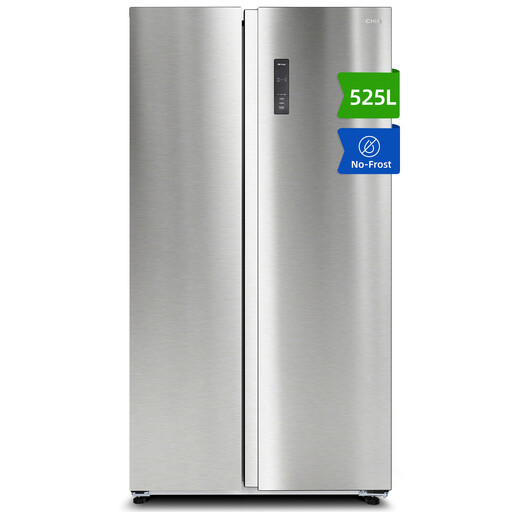
Why this choice suits this profile: With 333 L for the fridge and 192 L for the freezer, this model is aimed at households that store large quantities of fresh and frozen goods.
The capacity is clearly split between the two compartments. Before ordering, however, check the 83 cm width and access conditions: this isn't a standard 60 cm appliance.
525 L, No Frost, inverter compressor, touch control, multi-air flow and stated noise level of 37 dB.
We've selected a comprehensive, real-time updated list of products that meet these demanding criteria and European safety standards.
For two people, 170 to 280 litres can work if you shop regularly. For a family, aim for 300 to 400 litres, depending on the space available and how much frozen food you keep. The usable capacity and how it's split matter more than the total figure quoted.
Having Wi-Fi alone doesn't determine energy consumption. Check the kWh/year value on the energy label. Smart features can make it easier to monitor temperatures or activate certain modes, but they don't replace proper installation or clean door seals.
The lifespan depends on the model, ventilation, room temperature and maintenance. Respect the recommended clearances, avoid blocking the air vents and clean the door seals regularly. After moving the appliance, keep it upright as much as possible and follow the waiting time stated in the manual before plugging it back in.