Buying priorities
Start by dividing the capacity between fresh and frozen food, then check the storage layout, cooling system and compatibility with your kitchen.
| Priority |
What to check |
Your needs |
| Fresh and frozen capacity |
Compare the fridge and freezer capacities separately. Check these figures on the energy label or product information rather than relying on the total capacity alone. |
I want to store several days’ worth of fresh and frozen food without running out of space in either compartment. |
| Organisation and visibility |
Look at the drawers, shelves, bins and separate compartments. Check that the door opening and access to each area suit the packaging you use. |
I want to see quickly what I have already bought, organise different categories and avoid buying duplicates when I shop. |
| Cooling and frost |
A No Frost system reduces frost and the need for defrosting. Also check whether you can control the temperature; Anses recommends between 0 and +4 °C at the coldest point of the fridge. |
Between large shops, I want to keep food in good condition without losing useful space to frost. |
| Size and practicality |
Compare annual energy consumption between appliances of a similar size. Measure the width, depth, ventilation clearances, delivery route and, if necessary, the water connection. |
I am looking for genuinely useful extra capacity without choosing an appliance that cannot be installed in my kitchen. |
Configurations compared for planned shopping
This composite selection presents configurations sold in France according to how well they suit different storage scenarios. The order is based on the type of need, not sales, price or an independent comparative test.
| Rank |
Model name |
Key features |
Why consider it |
Supplier or platform |
| 1 |
LG GBV22NCCPY |
387 L freestanding fridge freezer: 277 L fridge, 110 L freezer, Total No Frost, 35 dB, class C. |
An example of a well-balanced fridge freezer for several days’ shopping, with clear separation between fresh and frozen food. |
Joybuy |
| 2 |
Bosch KGN86VIEA |
Freestanding model with 479 L of fridge space and 152 L of freezer space, 1,860 x 860 x 810 mm, No Frost, class E. |
An example of a fridge freezer with ample frozen-food storage for a kitchen that can accommodate an appliance 86 cm wide. |
Bosch France |
| 3 |
Electrolux ENS3LE18S |
271 L integrated fridge freezer, 73 L freezer capacity, 1,780 mm installation space, two freezer drawers, Low Frost. |
An example for a fitted kitchen where installation-space compatibility comes first, with freezer capacity to be confirmed as sufficient before purchase. |
Electrolux France |
| 4 |
Samsung RF65DG960ESL |
646 L multi-door model: 396 L fridge, 250 L freezer, 91.2 cm wide, 368 kWh/year, water connection for the dispenser. |
An example designed for very large food stocks and a kitchen with suitable space, ventilation and water connection. |
Joybuy |
Joybuy products
Joybuy options for organising fresh and frozen food during planned shops, including integrated and freestanding fridge freezers, a multi-door model and an additional freezer.
 Image unavailable
Hisense RB3B250SAWC 252 L integrated
For several days’ shopping with fresh and frozen food kept separate, this fridge freezer offers 176 L of fridge space, 76 L of freezer space and three freezer drawers. No Frost, four shelves, two salad drawers, temperature display and alarms are listed; before buying, check the installation-space dimensions, furniture-door compatibility and ventilation clearances.
Joybuy
 Image unavailable
AEG NSC6M18FES 249 L integrated
This model offers 186 L of fridge space and 62 L of freezer space, with five shelves, a salad drawer, three freezer drawers and TwinTech Total No Frost. It suits moderate frozen-food requirements; confirm the installation space, door-fitting system, annual energy consumption and compatibility with your furniture unit.
Joybuy
 Image unavailable
CHiQ JR263LGE 262 L Low Frost
For a compact kitchen, this 54 cm-wide fridge freezer offers 187 L of fridge space and 75 L of freezer space, with adjustable shelves, a salad drawer and three freezer drawers. Low Frost reduces frost without being a complete No Frost system; manual defrosting is still required and the appliance is designed for an ambient temperature of 16 to 38 °C.
Joybuy
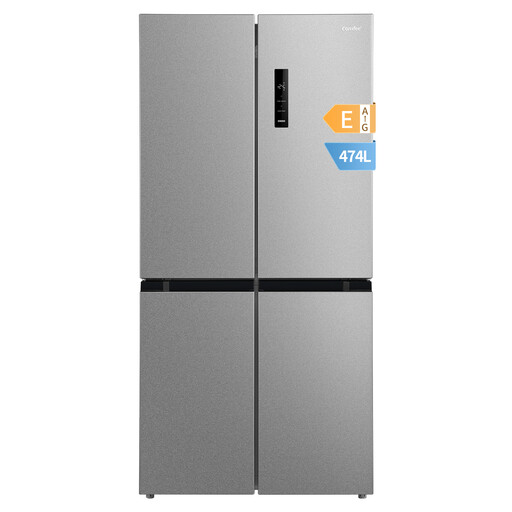 Image unavailable
COMFEE RCF470LS2EU(E) 474 L multi-door
This multi-door model offers a total capacity of 474 L, four doors, a three-temperature drawer and a Flip Tray system for creating a larger freezer area. Check the separate fridge and freezer capacities and annual energy consumption, as well as the available width, door-opening clearance and ventilation.
Joybuy
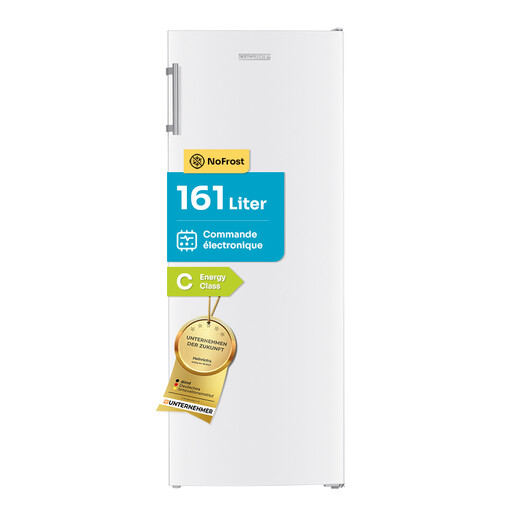 Image unavailable
Heinrich’s 161 L No Frost upright freezer
This upright freezer provides 161 L of dedicated frozen-food storage, with three drawers, two shelf compartments, No Frost, an LED display and an alarm. It is an addition to your main fridge: check the dimensions, installation requirements, annual energy consumption and how much of the capacity you are likely to use.
Joybuy
Frequently asked questions
Does a larger fridge automatically reduce food waste?
No. ADEME states that around 25 kg of food is thrown away per person in France each year and recommends, among other things, managing shopping and supplies more effectively. A larger appliance provides more space, but it does not replace taking stock of what you have or organising food so that items to be used first are clearly visible.
What temperature should a fridge be able to maintain?
Anses states that the ideal temperature is between 0 and +4 °C at the coldest point. Check whether the appliance has an indicator or allows you to monitor the temperature, and avoid overfilling it so that cold air can circulate properly.
Is No Frost enough to keep food fresher for longer?
No. According to Gifam, fan-assisted cooling or No Frost distributes cold air evenly and prevents frost, reducing the need for manual defrosting. You still need to cover food, as this type of cooling can dry it out if it is not protected.
How should you dispose of an old fridge when replacing it in France?
The ‘1-for-1’ take-back scheme allows you to return a used product when buying a new product of the same type, subject to the arrangements applicable to the retailer and product. For a refrigeration appliance, also check the repair and take-back options available before replacing it.


