Which households is it for?

Households looking to reduce refrigeration energy use

You use a refrigeration appliance continuously and want to avoid replacing an energy-hungry model with something unnecessarily large or packed with features. Compare kWh/year, usable capacity and functions before considering convenience features. ADEME points out that fridges and freezers run continuously.

Households using both fresh and frozen food

You need fridge space for everyday use as well as freezing capacity, but only have room for one appliance in the kitchen. A fridge freezer can work well if the split between the two compartments reflects what you actually buy. UFC-Que Choisir recommends checking usable capacities rather than looking at the total capacity alone.

Households storing lots of frozen food

You buy in bulk, cook ahead or regularly keep more frozen food than a fridge freezer can hold. A separate freezer may be suitable if you have enough space and the climate class, and access to the drawers or chest, are right for your home, according to UFC-Que Choisir.

Buying priorities

Fridge-only

Worth considering: if you mainly store fresh food and do not need a substantial amount of freezer space.

Bear in mind: a small freezer compartment is not a substitute for a separate freezer when you buy large quantities of frozen food.

Fridge freezer

Worth considering: if you use fresh and frozen food every week but only have room for one appliance.

Bear in mind: check the fridge and freezer capacities separately, along with the model’s kWh/year.

Separate freezer

Worth considering: if the amount of frozen food you store consistently exceeds the capacity of a fridge freezer.

Bear in mind: it adds another appliance that runs continuously and requires a suitable installation space.

Priority What to check Your needs
Annual energy use Compare kWh/year between appliances with similar capacities and intended uses. The energy label also shows the A to G rating, capacities and noise level. Since 1 March 2021, the European scale has run from A to G. I want to reduce the electricity used without confusing the average for a format with the performance of a specific model. ADEME provides indicative figures of 180 kWh/year for a fridge, 315 kWh/year for a fridge freezer and 300 kWh/year for a freezer; these figures do not compare like-for-like capacities.
Usable capacities Check the fridge and freezer capacities separately. For a fridge, UFC-Que Choisir gives a guideline of 100 to 150 L for one person, followed by around 50 L for each additional person. My shopping consists mainly of fresh food, frozen food or a mixture of both. I therefore choose the compartment split before looking for the largest total capacity.
Comfort and installation Check the noise level in dB(A), cooling type, dimensions, clearances and climate class. For a chest freezer, also measure access to the lid and the floor space required. In an open-plan kitchen, noise levels matter; UFC-Que Choisir describes models below 40 dB(A) as the quietest. If I choose fan-assisted cooling, I wrap foods that are sensitive to dry air, as recommended by Beko.

Mistakes to avoid

  • Choosing based only on the energy rating letter

    The A to G label is useful, but it also shows annual energy consumption, fridge and freezer capacities, as well as noise levels. Comparing two letters without considering litres can mean comparing appliances with very different capacities or intended uses.

    Compare kWh/year, the litres of each compartment and noise levels between appliances of a similar format and capacity. The label’s QR code provides access to the product’s EPREL record.

  • Buying an appliance that is too large or has too many features

    ADEME states that size and extra features, such as an always-on ice-making function, can increase energy consumption. A large appliance only makes sense if its capacity genuinely matches the household’s needs.

    Estimate the fresh and frozen capacities you need before comparing models, then rule out convenience features you will not use.

    Excess capacity or unused features can increase electricity consumption over time.

  • Buying a chest freezer without checking the room

    A chest freezer requires considerable floor space. UFC-Que Choisir recommends considering the climate class, which specifies the room temperatures compatible with the appliance.

    Measure the width, depth, space needed for movement and access to the lid. Check the climate class on the product listing before installation.

  • Assuming No Frost is suitable for every use

    Fan-assisted cooling limits frost, but Beko explains that the drier air can cause unwrapped food in the fridge compartment to dry out.

    Choose No Frost if reducing the need for defrosting is important, use suitable containers or packaging for sensitive foods, and always compare the precise model’s kWh/year.

Refrigeration appliance brand guide

Bosch

A range covering fridge-only models, fridge freezers, freezers and large-capacity appliances. Bosch notably offers A to C-rated fridge freezers, XXL models and No Frost appliances.

  • Bosch states that it offers spare parts for up to 15 years for the relevant range.
  • Specifications vary by model: Bosch’s KGN492IAF is listed with 311 L of fridge capacity, 129 L of freezer capacity, 29 dB(A), an A rating and No Frost; this does not represent the entire range.

Whirlpool

A range of fridge-only models and fridge freezers, including No Frost appliances and large-capacity integrated solutions.

  • Whirlpool states that it offers No Frost on both fridge-only models and fridge freezers.
  • Whirlpool’s WHSP70T121 integrated model combines 394 L, an E rating, 32 dB and Total No Frost: large capacity and No Frost convenience alone do not determine an appliance’s energy rating.

Beko

A range of fridges, fridge freezers, integrated appliances and freezers, with static, fan-assisted or ventilated/No Frost cooling.

  • The variety of cooling types can be useful if defrosting or food organisation is a decisive factor.
  • According to Beko, ventilated/No Frost cooling limits frost but can dry out unwrapped food. Also compare the chosen model’s kWh/year, capacities and noise level.

Joybuy products

Joybuy options matching the main formats discussed: fridge freezers for mixed use, fridges for households mainly storing fresh food, and separate freezers for keeping a stock of frozen food.

CHiQ JR263LGE 262 L fridge freezer

CHiQ JR263LGE 262 L Low Frost fridge freezer

For a household needing both fresh and frozen food storage in a slim 54 cm-wide appliance.

187 L of fridge capacity, 75 L of freezer capacity and stated consumption of 215 kWh/year; stated noise level of 39 dB(A).

The Low Frost system requires manual defrosting. Climate class N-ST is specified for 16 to 38 °C; also check the dimensions of 1760 × 540 × 550 mm and the ventilation space required.

Joybuy

Haier HTW5618ENMG 360 L fridge freezer

Haier HTW5618ENMG 360 L 3-door fridge freezer

For a household regularly storing substantial quantities of fresh and frozen food.

235 L of fridge capacity, 125 L of freezer capacity, an E rating and stated consumption of 271 kWh/year; Total No Frost and a stated noise level of 35 dB(A).

Its 360 L capacity may be excessive for a small household. Check the installation clearances, the dimensions of 185 × 59,5 × 66,7 cm and whether the SN/N/ST/T climate class is suitable for the room.

Joybuy
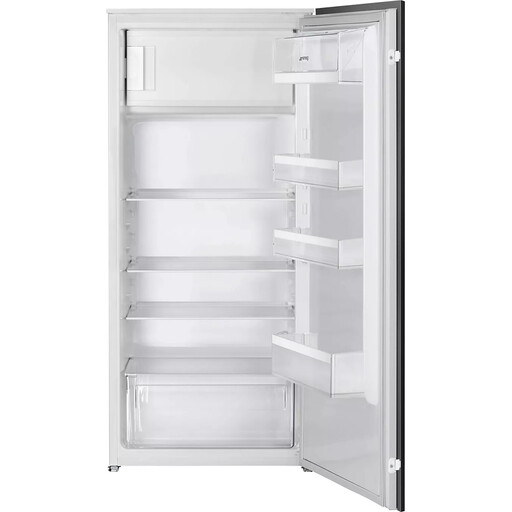
SMEG S4C122E 188 L integrated fridge freezer

SMEG S4C122E 188 L integrated fridge freezer

For a fitted kitchen and a mainly fresh-food setup with occasional freezer use.

174 L of fridge capacity, 14 L of freezer capacity, stated consumption of 146 kWh/year and a stated noise level of 35 dB.

The 14 L freezer compartment is limited and requires manual defrosting. Installation requires a 56 × 122,5 × 55 cm niche and a sliding-door system; furniture door not included.

Joybuy
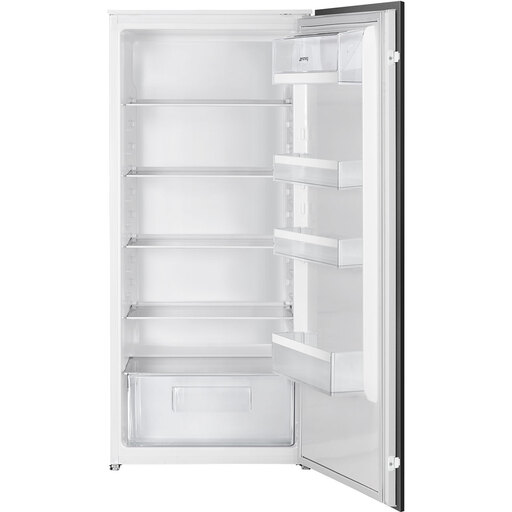
SMEG S4L120E integrated single-door fridge

SMEG S4L120E integrated single-door fridge

For a household that mainly buys fresh food and does not want to pay for an unnecessary freezer compartment.

208 L of fridge capacity, stated consumption of 101 kWh/year, automatic defrosting and a stated noise level of 34 dB.

No freezer compartment is specified. Check the niche, ventilation, dimensions and front-panel compatibility carefully before buying.

Joybuy
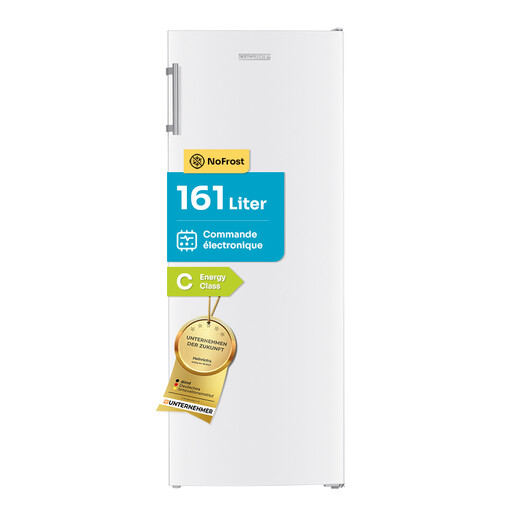
Heinrich´s 161 L No Frost upright freezer

Heinrich´s 161 L No Frost upright freezer

For storing a separate supply of frozen food with dedicated drawers and shelves.

161 L capacity, C energy rating, No Frost, LED display, alarm and reversible door; Fast Freeze function specified down to -22 °C.

Check the kWh/year on the energy label before comparing running costs, as well as the dimensions and climate class for your room. This appliance is not a substitute for a fridge for storing fresh food.

Joybuy

Frequently asked questions

How do I read a fridge or freezer energy label in France?

Since 1 March 2021, the scale used for household refrigeration appliances has run from A to G, according to the European Commission. The label also shows kWh/year, the capacities of the fridge and freezer compartments, as well as noise level and its class. Compare all these details together, particularly when capacities differ.

Does the energy label have to be visible in French advertising?

Yes. For products that are required to carry an energy label, the ministries responsible for ecological transition state that this information must be displayed clearly in relevant advertising. Check that the advert shows the A to G label and consult the product listing if the capacities or kWh/year are difficult to read.

Is a fridge freezer always more economical than a separate freezer?

No. ADEME publishes indicative averages of 315 kWh/year for a fridge freezer and 300 kWh/year for a freezer, but these figures do not relate to identical capacities or uses. First choose according to your fresh and frozen food needs, then compare the kWh/year of models with similar capacities.

Is No Frost worth it if I want to reduce energy consumption?

No Frost is primarily a convenience feature that reduces frost build-up. Beko states that fan-assisted cooling is drier and can dry out certain foods if they are not packaged properly. Check the exact model’s kWh/year: the No Frost label alone does not show that it uses less energy than another appliance.

What noise level should I choose for an open-plan kitchen?

Check the noise level in dB(A) and its class on the label. UFC-Que Choisir describes fridges rated below 40 dB(A) as the quietest; nevertheless, check the precise model’s noise level if it will be close to a living area or bedroom.