Households that do a big weekly shop
If you bring home a lot of fresh food in one go, you need enough space to store it without blocking air circulation. Que Choisir includes this type of loading in its fridge-freezer testing protocol.


For a weekly shop, a fridge-freezer with a bottom freezer is a good starting point, provided its separate compartment capacities suit the amount of fresh and frozen food you store. A multi-door model is worth considering if you need more space and have room for its larger dimensions. If frozen food consistently takes up too much room in a fridge-freezer, compare it with the option of a separate freezer too. In every case, look at how the model performs after being filled rather than judging it by the number of doors or the names of its features alone.
If you bring home a lot of fresh food in one go, you need enough space to store it without blocking air circulation. Que Choisir includes this type of loading in its fridge-freezer testing protocol.
If you buy frozen food or freeze large batches of meals, check the usable capacity and layout of the freezer drawers. If you also freeze fresh food, compare the model’s stated freezing capacity.
A larger model can make it easier to separate your food, provided you have enough room in your kitchen and along the delivery route. Check the appliance dimensions rather than relying on its total capacity alone.
Consider it if: you want to keep fresh and frozen food in one appliance for your weekly shop.
Bear in mind: the freezer compartment may be too small for a large stock of frozen food, even if the total capacity seems sufficient.
Consider it if: your household needs plenty of storage and easy access to several compartments.
Bear in mind: it is a larger appliance, so check the installation requirements and the model’s energy consumption.
Consider it if: your regular stock of frozen food exceeds the space available in a fridge-freezer’s freezer compartment.
Bear in mind: you will need to install two appliances and consider the electricity consumption of each.
| What to consider | What to check | Who might prioritise it? |
|---|---|---|
| Space for fresh and frozen food | Compare the usable capacity of each compartment separately, along with the space available in the freezer drawers. | I want to put away the whole weekly shop without finding that the freezer compartment is too small. Around 40% of consumers would prioritise this balance of storage space. |
| Cooling performance after loading | Check the freezing capacity in kg/24 h and, where available, test results for the model after a large amount of food has been added. | When I fill both compartments at once, I want to know how quickly the appliance returns to its set temperatures. This would be a priority for around 30% of consumers. |
| Storage and access | Look at the layout of the drawers and shelves, and check that the doors can open fully once the appliance is installed. | If I store food for several days, I want to find what I need without having to empty an entire compartment. Easy access to stored food would come first for around 20% of consumers. |
| Space, noise and energy use | Measure the space available and the delivery route; compare the model’s kWh/year and noise level on its energy label. | In a kitchen where every centimetre counts, I need to balance storage, size and day-to-day running. Around 10% of consumers would put these considerations first. |
A large appliance may still have too little space for frozen food. Que Choisir describes the classic fridge-freezer as a format where around a third of the capacity is given over to the freezer; the actual split varies by model.
Compare the usable capacity of each compartment, then check whether the drawers can fit the packaging you usually buy.
Extra capacity is no use if the appliance will not fit through your doors or its doors cannot open properly in the kitchen.
Measure the space, delivery route and clearance needed in front of the doors before you order.
A frost-management feature alone does not demonstrate temperature stability after a big shop or show how quickly the model freezes food.
Compare the specifications of the exact model and, where available, test results covering loading and freezing.
A fridge or freezer that is no longer working needs to be disposed of through a suitable route that can handle its refrigerants and components. ADEME recommends options including returning it to the retailer or delivery team when replacing it, or taking it to an appropriate collection point.
Arrange for it to be taken away or dropped off before your new appliance is delivered.
A brand worth considering for bottom-freezer fridge-freezers if the balance between compartments matters more to you than total capacity alone.
Worth considering if you are looking at a multi-door model and have space for a wide appliance.
Its fridge-freezers and larger models are worth comparing based on how much space you need for frozen food.
A brand to consider if your kitchen needs a built-in fridge-freezer with specific niche dimensions.
These models let you compare fridge-freezers and larger fridge-freezers for big shops and storing frozen food. Start with the stated capacity, then check the compartment layout and installation requirements of the model you are interested in.
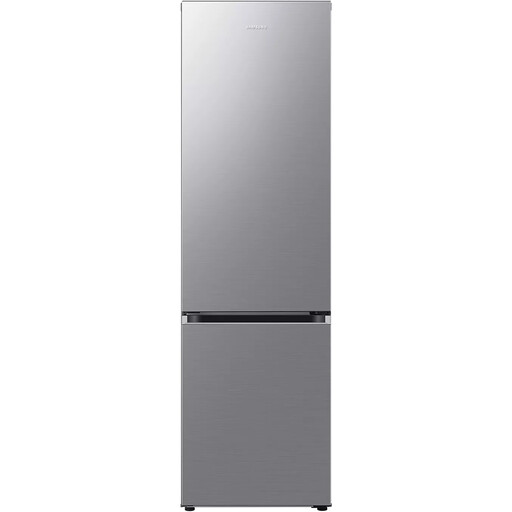 Image unavailable
A fridge-freezer worth considering if you want to keep fresh and frozen food in one appliance. Check the space available in the freezer and the installation dimensions before choosing.
 Image unavailable
Worth considering if the layout of the compartments matters for your weekly shop. The product listing names Total No Frost, Wi-Fi and My Zone features; also compare the usable capacity of each zone with the amount you store.
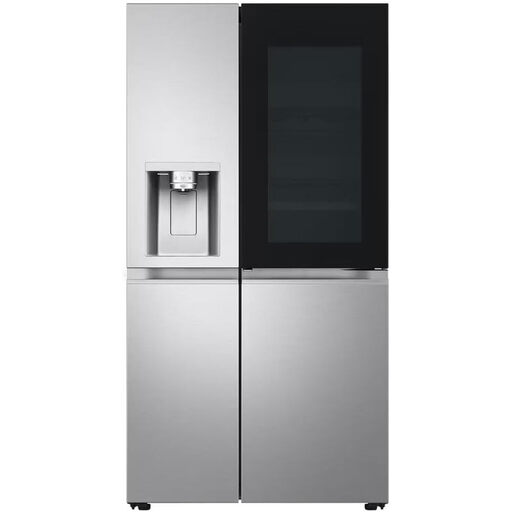 Image unavailable
Compare this model if you need plenty of room for fresh and frozen food. Measure the space, required clearance and delivery route; also check the stated power-cut storage time if this is a concern.
 Image unavailable
A multi-door model to consider if you prefer separate compartments for your shopping and frozen food. Total No Frost and Smart Inverter feature in its product title; measure the appliance and check the separate compartment capacities before choosing this format.
 Image unavailable
Worth considering if you need to store a large amount of fresh and frozen food. If you often freeze large quantities of fresh food, check the model’s freezing capacity in kg/24 h; also make sure it will fit along the route to your kitchen.
Start by estimating separately how much space you need for fresh and frozen food. Que Choisir suggests an average of 100 to 150 L for one person, then 50 L for each additional person. Use this as a starting point and compare it with your usual shopping and the freezer’s actual capacity.
Compare how well the model returns to its set temperatures after loading and, if you freeze fresh food, its freezing capacity in kg/24 h. Que Choisir’s testing protocol includes a weekly shop and more intensive freezing; check for test results for the model where available.
No. No Frost relates to frost management, but it does not by itself prove that the temperature will remain stable after a large amount of food has been added. Also look at usable capacities, freezing information and tests of the exact model.
Compare the figures on the energy labels for the exact models, including annual energy consumption and noise level. The European Commission’s EPREL database also lets you look up declared information for the models concerned that are sold in the European Union.
Use an appropriate disposal route rather than leaving it with your ordinary rubbish. ADEME advises that an appliance that is still usable can be repaired or passed on. When replacing it, ask about collection by the retailer or delivery team, or take it to an appropriate collection point.