What should you consider before buying?
First work out how much space you need for fresh and frozen food. Then consider annual energy consumption and the room available for your chosen appliance.
| What matters |
What to check |
Who it matters to |
| Annual energy consumption |
Check the kWh/year figure for the exact model and compare appliances of a similar size and capacity. ADEME notes that an appliance’s size and certain features can affect its energy consumption. |
When an appliance runs all year round, I want to avoid paying for capacity and features I won’t use. Around 40% of consumers may rank annual energy consumption as their top concern. |
| Fresh and frozen food capacity |
Compare the usable litres in each compartment. UFC-Que Choisir suggests 100 to 150 L as a starting point for one person, plus around 50 L for each additional person. Adjust this to suit your shopping habits. |
If I buy a mix of fresh and frozen food, I need enough space in each compartment without choosing an oversized appliance. For around 40% of consumers, this balance may be the top priority. |
| Frozen food storage |
Work out how much capacity you need before adding another appliance. Also check where it will go, how easy it is to access the contents and whether its climate class is suitable for the room. |
When I stock up on groceries or batch-cook at home, a fridge-freezer’s freezer compartment may not offer enough storage. Around 20% of consumers may prioritise greater freezer capacity. |
Appliances for fresh and frozen food on Joybuy
This range includes a single-door fridge for fresh food and fridge-freezers that let you divide storage between fresh and frozen items. Before choosing, compare their capacity with your needs.
 Image unavailable
Candy CFQQ5T817EPS, four-door, 467 L
With separate compartments for fresh and frozen food, this model offers a total capacity of 467 L and is listed as having Total No Frost. Check that this capacity suits the amount you need to store and that you have enough room for the appliance. Compare its kWh/year figure with those of similar-capacity models.
View on Joybuy
 Image unavailable
Haier HTW5618ENMG, three-door, 360 L
This 360 L fridge-freezer is suited to households looking to keep fresh and frozen food separate, without choosing the larger total capacity of the Candy model above. The listing mentions Total No Frost, an E energy rating and Wi-Fi. Check you have enough room for it and compare the annual energy consumption of similar-sized models.
View on Joybuy
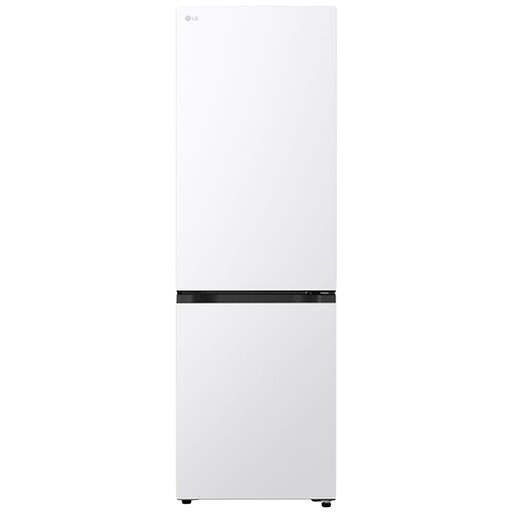 Image unavailable
LG GBBSJ1CCSW, 333 L
With a stated capacity of 333 L, this fridge-freezer offers less total space than the two models above, and its title lists an energy rating of C. Before buying, confirm how the usable capacity is divided between refrigeration, cooling and freezing, then check the dimensions and clearance required.
View on Joybuy
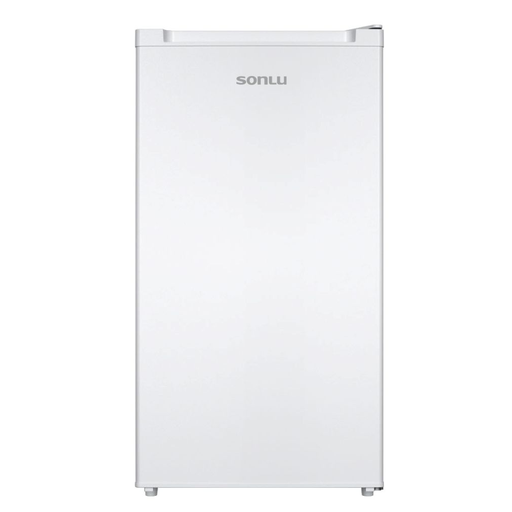 Image unavailable
Sonlu CS-100L, 82 L
This 82 L single-door fridge, listed with an E energy rating, is suited to households mainly storing fresh food. It has no freezer compartment, so choose a different configuration if you need to store frozen food. Check that its dimensions will fit your space too.
View on Joybuy
 Image unavailable
Sonlu CC-520WE, 444 L
With a stated total capacity of 444 L, this fridge-freezer may suit a household that stores larger quantities of fresh and frozen food. The listing mentions an E energy rating, a frost-free function and a noise level of 40 dB. Above all, check the usable capacity of each compartment and the dimensions before choosing this size.
View on Joybuy
Frequently asked questions
What capacity fridge do I need?
UFC-Que Choisir suggests 100 to 150 L as a starting point for one person, plus around 50 L for each additional person. Adjust this guideline to suit how often you shop, and work out separately how much space you need for frozen food.
Are energy labels compulsory for these appliances?
Yes. In France, the relevant electric refrigeration appliances sold to consumers must carry an energy label. The French Ministry for the Ecological Transition states that fridges and freezers are covered by this requirement. Check the energy consumption of the specific model rather than relying on its rating alone.
What temperature should I set my fridge to?
Anses recommends keeping the coldest part of the fridge between 0 °C and 4 °C. Check the temperature after installation and whenever the conditions in which you use the appliance change.
Is No Frost enough to judge energy consumption?
No. A function that prevents ice from building up doesn’t replace comparing the kWh/year figures for similar-sized models with similar capacities. Also check how much space you need in each compartment.
Should I choose a bigger appliance just in case?
Not necessarily. ADEME notes that a larger size and extra features can increase your energy bill. Start with the quantities you actually store, then compare the annual energy consumption of models with similar capacities.


