Households that store fresh and frozen food
If you regularly store both, check the usable litres in each fridge-freezer compartment rather than looking only at its total capacity.


Start by looking at how much space you really need for fresh and frozen food. A fridge may be enough if you already have a freezer or rarely need to freeze food; a fridge-freezer combines both functions, while a separate freezer is a better fit if you need more storage. Then compare the usable capacity of each compartment and the kWh/year figures for appliances serving the same purpose. If your current appliance still meets your needs, you could also have it assessed before replacing it.
If you regularly store both, check the usable litres in each fridge-freezer compartment rather than looking only at its total capacity.
If you prepare meals in advance or keep a lot of frozen food, compare the available capacity with the space and energy use that an additional appliance would involve.
If your appliance is old or broken, compare the capacity you need and the annual energy use of a possible replacement with the option of having your existing appliance assessed.
Consider this if: fresh food is your priority and you don’t need extra freezer capacity.
The trade-off: it won’t replace a freezer if you want to build up a supply of frozen food.
Consider this if: you use both the fridge and freezer compartments every week and want them in a single appliance.
The trade-off: the split of total capacity between the two compartments may not suit your habits.
Consider this if: you already have a fridge but need more room for frozen food.
The trade-off: you’ll need to allow for the space and ongoing energy use of a second appliance.
Before replacing an appliance that’s still the right size for you, an assessment can help you explore repair as an option. For refrigeration appliances that run continuously, ADEME recommends considering their size and energy use. According to the French Government, energy label figures are measured under standardised conditions.
| Criteria | What to check | Who does this matter to? |
|---|---|---|
| Capacity split | Compare the net litres for refrigeration and freezing separately, then check the appliance dimensions. | When I store as much fresh food as frozen, I want each compartment to suit the way I use it, rather than relying on the total capacity alone. Around 33% of consumers put this balance first. |
| Freezer storage | Assess the freezer capacity you already have and the space needed for a separate appliance. | If I cook ahead or keep lots of frozen food, a small compartment may not meet my needs. This extra storage is the priority for around 25% of consumers. |
| Energy use and getting the capacity right | Compare kWh/year figures for appliances with the same purpose and similar capacities; check the energy class too. | I’d rather avoid paying for capacity or features I don’t need in an appliance that runs all year round. For around 25% of consumers, keeping energy use in check comes ahead of other criteria. |
| Repair or replace | Ask for an assessment and check whether the current size still meets your needs. | If my appliance breaks down but still suits me, I want to know whether it can be repaired before replacing it. Around 17% of consumers put this question first. |
Take the Bosch KGN36NWCK, for example: it has 232 L of fridge space and 115 L of freezer space. What matters is the capacity of each compartment for the way you use it.
Make a note of the capacity you need for fresh and frozen food, then compare the figures separately in the specifications for the models you’re considering.
According to ADEME, refrigeration appliances run continuously, and their size and features can affect energy use. An energy class alone isn’t enough to compare appliances with different capacities.
Compare the kWh/year figures for appliances that serve the same purpose and offer similar capacities. The figures on the label are measured under standardised conditions, so they won’t predict your exact energy use at home.
The feature can vary by model and compartment. For example, Beko specifies Semi No Frost for the freezer only on its BCHA306E4SN. On its own, this feature doesn’t tell you how much energy the appliance uses.
Check which compartment the feature applies to in the specifications for the exact model, then look at its capacity and kWh/year figures.
In France, the ministry responsible for the ecological transition states that a repair bonus may be deducted by an approved repairer, depending on the eligible products, faults, work and terms.
Get an assessment and check whether the appliance, fault and repairer are eligible before comparing repair with replacement.
These ranges offer useful points of comparison between configurations. The features mentioned don’t apply to every model from a brand.
The range includes freestanding and built-in fridge-freezers.
The range covers several fridge and freezer formats, including some models with No Frost.
The brand offers fridge-freezers and appliances with BioFresh compartments, among other options.
The range includes freestanding and built-in fridge-freezers with different cooling systems.
These appliances combine refrigeration and freezing, with different formats and total capacities. If you’re looking for a fridge only or a large, separate freezer, first consider what you need your appliance to do before comparing these fridge-freezers.
 Image unavailable
Worth considering if you want to store fresh and frozen food in one appliance. The title lists a total capacity of 344 L and energy class E. Check the capacity of each compartment, the kWh/year figures and the dimensions before choosing.
 Image unavailable
Worth a look if you want a large-capacity fridge-freezer and have room for a four-door model. The title lists a total capacity of 467 L and Total No Frost. Compare the capacity of each compartment separately, along with the dimensions and kWh/year figures, against other appliances for the same purpose.
 Image unavailable
Consider this if your kitchen needs a built-in fridge-freezer. The title lists a total capacity of 249 L and TwinTech No Frost. Check the niche dimensions, door fixing system, separate compartment capacities and kWh/year figures before comparing it with other models.
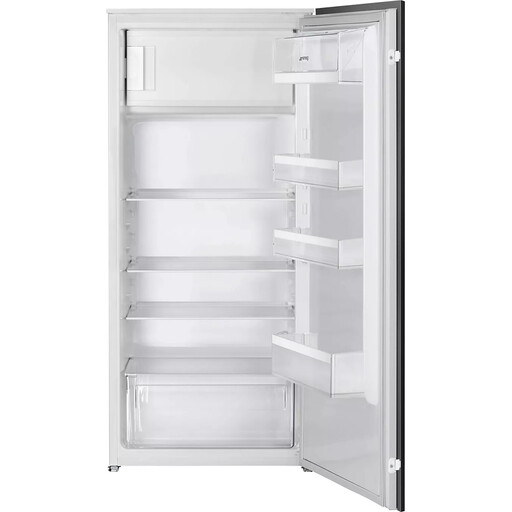 Image unavailable
Worth a look if you want a built-in appliance with the freezer compartment at the top. The title lists a total capacity of 188 L and class E. Check the freezer compartment’s actual capacity and defrosting method, and make sure it fits your niche.
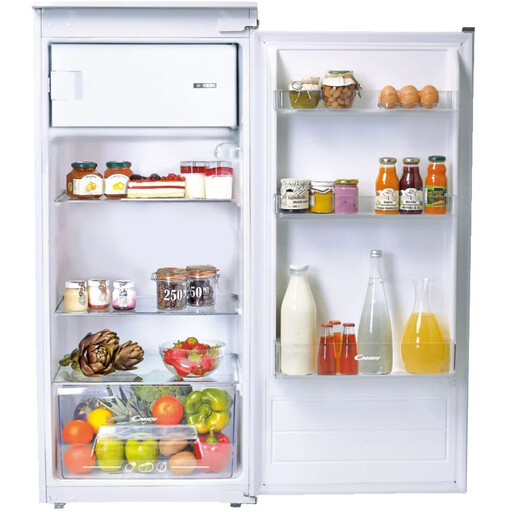 Image unavailable
Compare this if you mainly need space for fresh food and are less reliant on a freezer. The title lists a total capacity of 179 L. Check the capacity of each compartment, the installation type and whether the dimensions will fit your space.
Compare the kWh/year figures and usable capacity of each compartment. Check the noise level too if it matters for where the appliance will be placed. According to the French Government, the stated energy use is measured under standardised conditions. It helps you compare models, but won’t predict your household’s exact energy use.
No. Check the kWh/year figures too, and take into account the type and capacity of the appliances you’re comparing. ADEME points out that a larger appliance or one with more features may use more energy, so the class alone won’t tell you whether the capacity is right for you.
This feature is worth considering if you want to reduce frost build-up or defrosting in the freezer compartment. Its application varies between models and sometimes between compartments, as the Beko BCHA306E4SN illustrates. Check the specifications for the exact model, and don’t assume the feature means lower energy use.
Consider a repair assessment if your current appliance is the right size and format for you and the fault can be diagnosed. In France, the ministry responsible for the ecological transition says that a repair bonus may be deducted by an approved repairer. Check whether the product, fault and repair work are eligible before taking this into account.