Which criteria should you prioritise?
First decide how much space you need for fresh and frozen food, then make sure the appliance will be easy to access in the room you have in mind.
Fridge with a freezer compartment
Worth considering: if space is limited and you only freeze small amounts occasionally.
The drawback: a small compartment may not be large enough for portions you prepare regularly, as UFC-Que Choisir points out.
Fridge-freezer
Worth considering: if you want to keep fresh ingredients and frozen portions in one appliance.
The drawback: the split between fridge and freezer space needs to suit what you store; total capacity alone doesn’t tell the whole story.
Upright freezer
Worth considering: as a complement to a fridge, if you want to organise portions in drawers and access them easily.
The drawback: check how much usable space each drawer offers before choosing this format.
Chest freezer
Worth considering: as a complement to a fridge, for storing a large amount of frozen food in a suitable room.
The drawback: according to UFC-Que Choisir, a chest freezer takes up more floor space. Its open storage space also means you’ll need to organise your food so you can find it again.
| Criterion |
What to check |
Consumers concerned |
| Capacity split |
Compare the usable litres of the fridge and freezer compartments separately; the EU energy label shows their capacities. |
To prepare several meals without needing multiple appliances, you’ll need enough room for both ingredients and portions to freeze. Around 27% of consumers would prioritise this balance. |
| Freezer capacity |
Check the freezer capacity and how easily you can access food in drawers or baskets. If the appliance will be outside the kitchen, check its climate class too. |
When you shop less often or build up a stock of portions, being able to find food easily matters just as much as having room to store it. Around 33% of consumers would make this their priority. |
| Size and access |
Measure the height, width and depth, the clearance needed for doors or the lid, and the delivery route. |
In a narrow kitchen, you need to be able to install and open the appliance without blocking the way. Around 20% of consumers would put this constraint first. |
| Energy use and maintenance |
For appliances of a similar size and capacity, compare kWh/year, noise levels and defrosting type, rather than looking at the energy class alone. |
If the appliance is near a living area, I want to know how noisy it is and plan ahead for any maintenance caused by frost build-up. Around 20% of consumers would prioritise these factors. |
Fridges and freezers on Joybuy
These models cover three of the options outlined above: a fridge-freezer for keeping fresh and frozen food in one appliance, and chest or upright freezers for adding dedicated storage. Before you choose, compare each format with your usual stock and the space available.
 Image unavailable
Haier HTW5618ENMG, 3-door 360 L fridge-freezer
For keeping fresh ingredients and frozen portions in one appliance.
The model name indicates a capacity of 360 L, three doors, Total No Frost, energy class E, Wi-Fi and My Zone. Check the manual for the temperatures in each zone and the space required for installation.
View on Joybuy
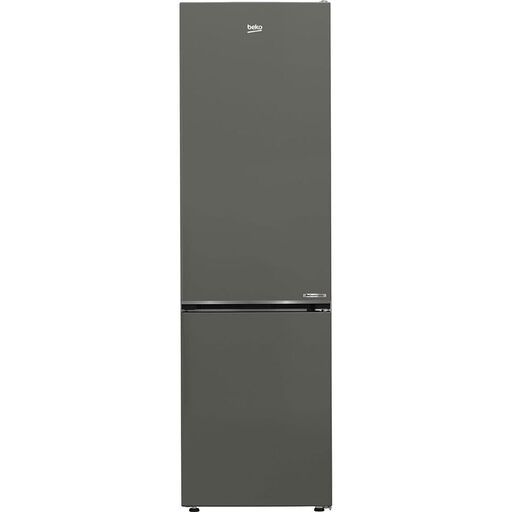 Image unavailable
Beko B5RCNE406HG, 355 L freestanding fridge-freezer
For households looking to combine refrigeration and freezing in one freestanding appliance.
The model name indicates a capacity of 355 L, Total No Frost and energy class C. Measure the space and check the capacity of each compartment, along with the temperatures specified in the model documentation.
View on Joybuy
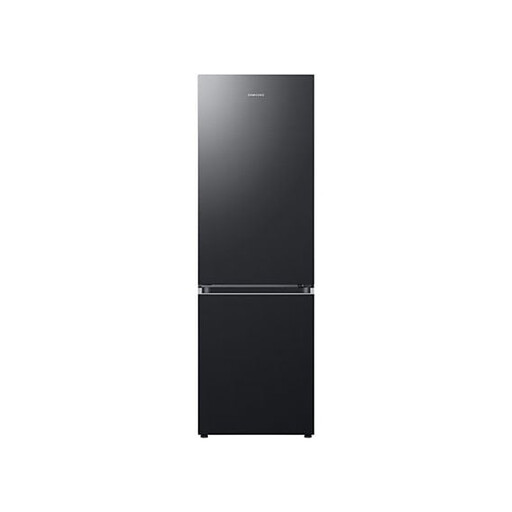 Image unavailable
Samsung RB34C704DB1, 344 L fridge-freezer
For storing fresh and frozen food in one fridge-freezer.
The model name indicates a capacity of 344 L and energy class D. Before comparing it with another fridge-freezer, check the capacity of each compartment, the dimensions and the energy-use figures.
View on Joybuy
 Image unavailable
AUCMA, 291 L convertible chest freezer
For building up a freezer reserve in a chest freezer, if you have the floor space and can keep its contents organised.
The product name indicates a capacity of 291 L, energy class E, a removable basket, LED lighting and five-level digital control. It describes an appliance that switches between fridge and freezer modes, not two compartments that operate at the same time. Check the temperatures for each mode in the manual.
View on Joybuy
 Image unavailable
Heinrich´s, 161 L upright freezer
For organising frozen portions in an appliance separate from your fridge.
The product name indicates a capacity of 161 L, three drawers, No Frost, an alarm and energy class C. It lists a temperature range of -14 °C to -22 °C: check the manual for the right temperatures for your food, and measure the space before installation.
View on Joybuy
Frequently asked questions
What temperature should you aim for when storing sensitive foods and prepared meals in the fridge?
Anses recommends a temperature of between 0 and +4 °C in the coldest part of the fridge. Use the manual to find this area, check its temperature and store meat, fish and cooked meals there.
Should you wait until the use-by date is nearly up before freezing food?
No. Anses recommends freezing food as soon as you buy or prepare it, rather than waiting until its use-by date is nearly up. Freezing at home at -18 °C stops bacteria from multiplying, but most micro-organisms survive.
How should you defrost prepared portions?
Anses recommends defrosting them in the fridge, in a microwave using the defrost setting, or quickly by cooking or reheating. Defrosted food should be eaten promptly, within three days at the latest, and must not be refrozen.
What should you compare on a fridge or freezer energy label?
For domestic appliances sold in the European Union, compare the A to G energy class, annual consumption in kWh, compartment capacities and noise level. The European Commission explains that the label’s QR code links to further information in EPREL. Most importantly, compare appliances with a similar purpose and capacity.
Can you install a chest freezer in a cellar or utility room?
Yes, provided the room temperature is within the model’s specified climate class and the appliance is installed according to the manual. UFC-Que Choisir recommends checking this for chest freezers kept outside the kitchen. Also measure the space and the clearance needed to open the lid.


