What should you check before choosing?
Start with the space you actually have and how you’ll divide up the food you store. Then compare the energy use, noise and features of the models that could work for you.
| Criteria |
What to check |
Consider your needs |
| Capacity |
Compare the usable litres in the fridge and freezer separately, then check how easy the drawers are to access. UFC-Que Choisir’s guide — 100 to 150 L for one person, then 50 L for each additional person — gives a figure of 200 to 250 L for three, which you can adjust to suit your household’s habits. |
I mainly need space for fresh food, or I regularly stock up on frozen food: how the litres are divided matters more to me than the total capacity alone. |
| Installation |
Measure the height, width and depth, as well as the delivery access routes. Check the manual for ventilation clearances, the hinge side and the angle needed to remove shelves and drawers. |
In my kitchen, I need to be able to open the door and use every compartment without obstructing the walkway. |
| Energy |
For appliances of a similar type and capacity, check the current A to G energy rating, declared consumption in kWh/year and capacities. The European Commission’s EPREL database lets you look up a model’s declared information. |
I want to compare energy consumption without comparing two appliances of very different sizes or relying on the rating letter alone. |
| Noise |
Check the exact model’s declared noise level in dB(A) and its noise class. UFC-Que Choisir’s guide puts particularly quiet fridges below 40 dB(A). |
My kitchen opens onto a living area, so the stated noise level matters to my decision as much as the space it takes up. |
| Frost and maintenance |
Check the cooling system in each compartment, the defrosting instructions and how to access the manual. A ‘No Frost’ claim should be checked against the specific compartment and model it refers to. |
If I want to reduce the need for defrosting, I check exactly which feature is listed for the freezer compartment. |
A guide to some brands
These examples highlight the differences in capacity and dimensions to consider. Their features don’t apply to every appliance from the same brand.
Bosch
Bosch’s French product pages let you compare a fridge freezer and an upright freezer, including their dimensions and capacities.
- Bosch lists the KGN36NWCK fridge freezer as offering 232 L of fridge space and 115 L of freezer space, with dimensions of 186,2 × 59,5 × 66,3 cm.
- Bosch’s GSN58AWCV upright freezer offers 366 L of freezer space, but on its own it needs an area measuring 191 × 70 × 78 cm.
Whirlpool
The freestanding WHK 25404 XBR5E fridge freezer is an example of a tall model with capacity figures broken down by compartment.
- Whirlpool lists 249 L for the fridge and 106 L for the freezer.
- At a stated height of 203,5 cm, this model requires you to check the available space, clearances and delivery access.
Beko
The B1RCNA344W is another example of how capacity can be divided between the two compartments in a fridge freezer.
- Beko lists 209 L of fridge space and 92 L of freezer space for this model.
- If you’re planning to place the appliance near a wall, check its installation diagram and the space needed to open the door and remove the drawers.
Fridge freezers to explore on Joybuy
These models combine fridge and freezer storage in one appliance. Compare their stated capacities with the space you have and your storage habits. You’ll still need to check the installation dimensions and access to the compartments for each model.
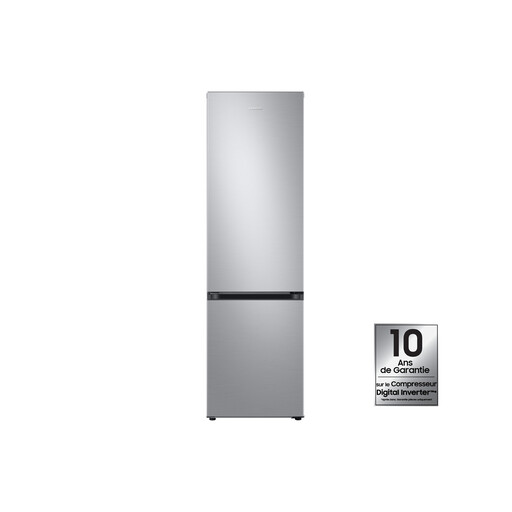 Image unavailable
Samsung RL38C602CSA, 390 L, C rating, grey
If you store plenty of fresh and frozen food, check how the stated 390 L is divided before choosing this fridge freezer. Also check its height, clearance requirements and how the door will open in your kitchen.
View on Joybuy
 Image unavailable
Haier HTW5618ENMG, 3 doors, 360 L, Total No Frost
Its three doors and stated capacity of 360 L may make it worth comparing if easy access to frozen food and capacity are priorities. The model name also lists an E rating, Wi-Fi and My Zone. Check the manual for the features you’re interested in and the space needed to open the doors.
View on Joybuy
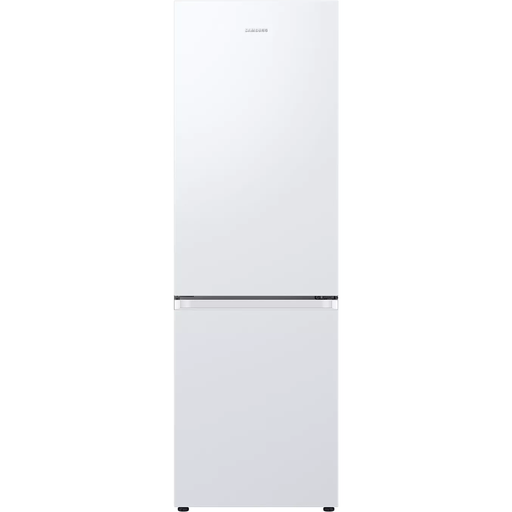 Image unavailable
Samsung RB38C600EWW, 390 L, E rating, white
To decide whether its 390 L capacity suits a three-person household, check the fridge and freezer capacities separately. Also check the dimensions, clearances and door-opening space before planning where to install it.
View on Joybuy
 Image unavailable
CHiQ JR263LGE, 262 L, Low Frost, 54 cm
Its stated width of 54 cm is worth considering if space in your kitchen is limited, but you’ll still need to check ventilation and door clearance. The model name also specifies a height of 176 cm, a 70/30 split and a black finish. Check the usable capacity of each compartment against your shopping habits.
View on Joybuy
 Image unavailable
CHiQ JR227LSE, 227 L, 54 cm, silver
If your household doesn’t freeze much food, check whether the stated 153 L for the fridge and 74 L for the freezer suit your storage habits. The model name lists Low Frost, a reversible door and an E rating. Confirm the height, consumption in kWh/year and installation requirements before comparing it with other models.
View on Joybuy
Frequently asked questions
What capacity should you allow for three people?
UFC-Que Choisir’s guide gives an indicative figure of 200 to 250 L for three people, based on 100 to 150 L for one person and an additional 50 L for each extra person. Adjust this to suit how often you shop and how much frozen food you store, then compare the capacities of the two compartments separately.
How can you tell if a fridge freezer will fit between two units?
Measure the space and access routes, then compare them with the appliance dimensions and the clearance requirements in its manual. Also check that the door opens far enough to remove shelves and drawers. Fitting into the space doesn’t necessarily mean the appliance will be practical to use.
Is the energy rating enough to compare two models?
No. For fridges of a similar type and capacity, also compare their declared annual consumption in kWh and their capacities. The official Your Europe website explains that the old ratings with a ‘+’ haven’t been used for the fridges concerned since 2021. The European Commission’s EPREL database lets you look up a model’s declared information.
Does a reversible door mean you can always place the appliance against a wall?
No. Changing the hinge side doesn’t guarantee that the door will open far enough to remove the drawers. Check the installation diagram and manual for the specific model.
When should you consider a separate freezer?
Consider one if your frozen food regularly exceeds the capacity of a fridge freezer’s freezer compartment and you have room for two appliances. Compare the space they take up, their installation requirements and their declared energy consumption, rather than looking only at the extra freezer capacity.


