Weekly fresh meal prep
You shop less often and mainly store fresh ingredients, leftovers and containers of food to eat soon. Look at the usable space on the shelves and in the drawers, not just the stated total capacity.


Choose based on which compartment is genuinely short of space: a fridge-freezer suits you if both your refrigeration and freezing needs are growing, while a separate freezer is best if you have a persistent shortage of space for frozen portions. If it’s only your food shopping and fresh meal-prep containers that are piling up, look at fridge capacity instead. Before adding another appliance, check whether better organisation would do the trick.
You shop less often and mainly store fresh ingredients, leftovers and containers of food to eat soon. Look at the usable space on the shelves and in the drawers, not just the stated total capacity.
You cook in batches and want to keep portions for longer. The freezer’s usable capacity matters more to you than the fridge capacity or the fridge-freezer’s total capacity.
You want more storage without adding appliances that run around the clock. Measure the available space and compare annual energy consumption before deciding whether you need a second appliance.
Worth considering: when both fresh shopping and portions to freeze need more room, but there isn’t space for two appliances.
The trade-off: the balance between the two compartments may not suit meal prep focused on freezing.
Worth considering: when fresh ingredients and meals are filling up the fridge, but you have enough freezer space.
The trade-off: more fridge space won’t solve a lack of room in the freezer.
Worth considering: if the freezer is regularly full of portions to freeze, while the fridge still meets your needs.
The trade-off: you’ll need space for another appliance and have to run it.
Worth trying: if the lack of space seems mainly down to the shape of your containers or occasional peaks in how much you store.
The trade-off: reorganising your containers won’t create more capacity if one compartment is consistently full.
| Priority | What to check | What consumers say |
|---|---|---|
| Fresh and frozen capacity | Compare the usable litres in the fridge and freezer separately, then check the layout against the containers you use. | If my food shopping, fresh meal-prep containers or frozen portions are piling up, I want to increase the capacity of the compartment that’s genuinely short of space. Around 40% of consumers would make this their priority. |
| Energy use and space | Check the kWh/year and the dimensions of the exact model; compare models with similar formats and capacities that meet the same need. | Before running a second appliance around the clock, I want to know whether it will fit and whether I’ll use it regularly. Around 30% of consumers would make this their priority. |
| Storage and defrosting | Check the layout of the shelves and drawers, and the defrosting system in each compartment. | If I often store containers of different sizes, I want to fit them in without awkward stacking and know what maintenance is required. Around 20% of consumers would put these factors first. |
| Avoiding an unnecessary purchase | Check how full the appliance gets over several shopping trips and try a more suitable storage arrangement before adding another appliance. | If I only run short of space on certain days, I’d rather check whether I can make better use of the fridge and freezer I already have. For around 10% of consumers, avoiding another appliance would be the priority. |
A large combined capacity can hide a freezer that’s too small for your portions, or a fridge that’s too narrow for your shopping and containers. The European Commission’s product information lists the capacity of each compartment separately.
Make a note of what you store over a typical week, then compare the usable litres in each compartment of the model you’re considering.
A second appliance takes up space and runs continuously. ADEME advises against buying appliances when there’s no established need for them.
Monitor several shopping and meal-prep cycles before choosing extra freezer capacity; then compare the space it takes up and its kWh/year.
An additional appliance uses extra electricity while it’s running.
The defrosting system depends on the model number and sometimes the compartment. Bosch lists the KGN36VXCT as featuring Total NoFrost, while the KGV36VLEAS is listed without No Frost. Beko describes the BCHA306E4SN as Semi No Frost for the freezer only.
Before choosing a model for this feature, check which feature is listed for which compartment on the exact model’s product page.
The product dimensions alone won’t tell you whether it will fit through the access points or into the space you have planned for it.
Measure the delivery route and check the instructions for the required clearances. If you’re replacing an appliance, also arrange for it to be taken away or collected.
These ranges offer useful points of comparison for capacity, layout and maintenance. Check the specifications for each model number.
Bosch fridge-freezers offer different capacity splits and defrosting systems, depending on the model.
The range includes freestanding fridge-freezers and built-in appliances, with different storage areas and cooling systems.
Samsung fridge-freezers come in a range of capacities. Compare the space for fresh and frozen food rather than looking at the total capacity alone.
These models combine a fridge and freezer in one appliance. Compare their stated capacity with the space you need in each compartment. If only the freezer is full, also consider whether a separate appliance would suit you better.
 Image unavailable
Worth considering if you want to store fresh shopping and frozen portions in one appliance; check how much space is allocated to each compartment.
Stated total capacity: 333 L. Energy rating C.
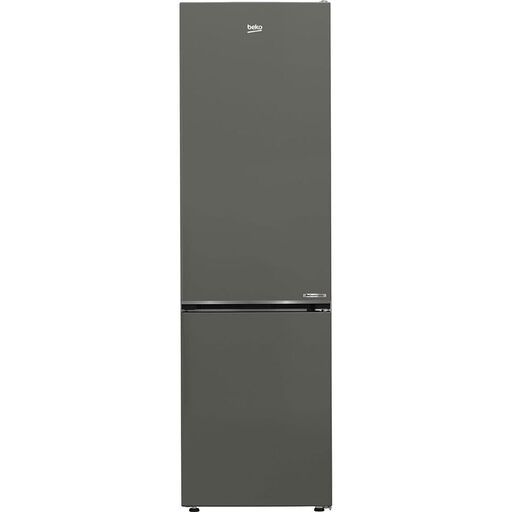 Image unavailable
Worth considering if your prepared meals take up space in both the fridge and freezer; check how the layout of each compartment suits your containers.
Stated total capacity: 355 L. Energy rating C; Total No Frost is listed in the product name.
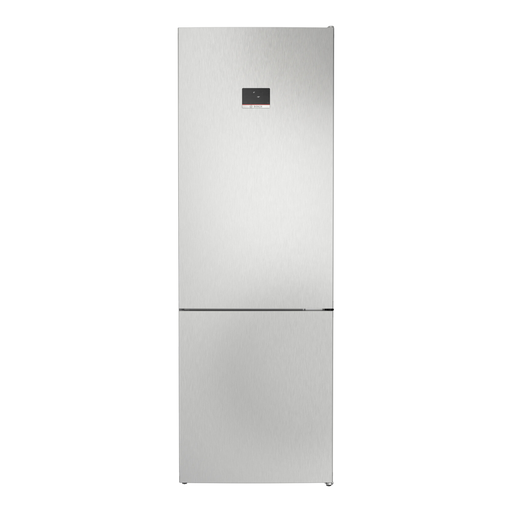 Image unavailable
Worth considering if you need more space for both fresh shopping and food to freeze; make sure the separate capacities suit both uses.
Stated total capacity: 440 L. Energy rating D. If ease of freezer maintenance is important to you, check the defrosting system for this model.
 Image unavailable
Worth comparing if you’re looking for a multi-door appliance for storing food shopping and prepared portions; measure the access points and the space available before choosing this format.
Stated total capacity: 467 L. Energy rating E; Smart Inverter is listed in the product name. Check the fridge and freezer capacities separately.
 Image unavailable
Worth considering if you regularly store fresh ingredients and frozen portions; see how the three doors and compartments fit your habits.
Stated total capacity: 360 L. Energy rating E; Wi-Fi and My Zone features are listed in the product name.
Check both, and consider the kWh/year alongside the capacity and format you need. The European EPREL database lists annual energy consumption and compartment capacities, so the energy rating alone doesn’t tell you everything about a model’s consumption.
Check which feature applies to which compartment on the exact model number. Bosch says Total NoFrost on the KGN36VXCT avoids the need to defrost the freezer manually, but lists the KGV36VLEAS without No Frost.
Yes. The relevant refrigeration appliances sold in France must carry energy labels under European requirements. Check the label for the exact model’s kWh/year and capacity rather than relying on a feature that’s common across a range.
In France, the statutory guarantee of conformity applies to goods sold by a business to a consumer, according to the Ministry of the Economy. Check who the seller is and distinguish this mandatory guarantee from any commercial extensions. Check delivery and installation arrangements separately.
Arrange for it to be taken away or collected before your new appliance arrives. The Ministry for Ecological Transition classifies refrigeration appliances as electrical and electronic equipment, which may contain components that could harm the environment.