To store your household’s food shopping, first work out how much space you need for fresh and frozen food, then check that the appliance can be delivered and installed. A combi fridge-freezer is suitable if one appliance meets your needs and fits the available space. Consider a multi-door model if easy access to different foods matters more and you have room for it. Two separate appliances are better suited to households with a consistently greater need for freezer space, provided you can make room for both.
Who are these options for?
Households doing a large weekly food shop
If you put away fresh food, drinks and meals for several people all at once, look at the usable shelf space and how easy it will be to find what you need. Que Choisir suggests starting with 100 to 150 L for one person, then adding 50 L for each additional person. Your actual shopping habits are what matter most.
Households that regularly freeze meals
If prepared portions and frozen food take up several drawers, compare freezer capacity separately from the total volume. The drawer layout should also suit the containers you use.
Families with limited kitchen space or access
A large capacity is no use if the appliance can’t be brought through to the kitchen or its doors can’t open properly. Some multi-door models from Bosch, Samsung and Haier are close to or over 90 cm wide. Measure the delivery route and the space for the model you’re considering.
What should you check before choosing?
The format determines how easy the appliance is to access and how much room it takes up; its capacity determines how much of your food shop it can hold. So a ‘large-capacity’ appliance isn’t a third type of layout: check its compartments before comparing it with a combi or multi-door model.
Combi fridge-freezer
Consider this if: one appliance can hold your fresh and frozen food and fits the space available.
Bear in mind: each compartment needs to have enough room for the way you shop, even if the overall capacity looks generous.
Multi-door
Consider this if: you want to organise your shopping across several zones and often need to access different foods.
Bear in mind: with larger models, it’s particularly important to check the width, access route and door clearance.
Separate fridge and freezer
Consider this if: your freezer needs consistently exceed what one appliance can provide and you have room for two.
Bear in mind: you’ll need to install and power two appliances, then check their capacities and energy labels separately.
| Consideration |
What to check |
What shoppers say |
| Space for fresh food |
Compare the usable fridge capacity and the shelf space available for the containers you usually use. |
When my shopping includes lots of fresh food, drinks and large dishes, I want to be able to put it all away without cramming it in. Around 36% of consumers would prioritise this space for their everyday shopping. |
| Space for frozen food |
Check the freezer capacity and drawer sizes; confirm whether there’s a convertible zone on the specific model. |
If I regularly freeze portions, a large total capacity won’t make up for drawers that are too small. Around 29% of consumers would prioritise freezer capacity. |
| Access through the kitchen |
Measure the space, delivery route and clearance needed to open the doors. |
In a kitchen with narrow access, I need to be able to get the appliance in and open its doors without blocking the way. Around 21% of consumers would put this ahead of extra capacity. |
| Noise, energy use and maintenance |
Check the energy label for annual energy consumption, capacity and noise; also check the defrosting method. |
If my kitchen opens onto a living area, I pay attention to noise and the upkeep of an appliance that runs every day. Around 14% of consumers would put these considerations first. |
What mistakes should you avoid?
-
Choosing by total capacity alone
Two spacious appliances can have very different amounts of room for fresh and frozen food. The total capacity alone won’t tell you which compartments will suit your shopping.
Compare the usable capacity of each compartment, then check that the drawers and shelves fit your containers.
-
Measuring the kitchen but not the delivery route
An appliance may fit in its final position but still be impossible to get through a doorway or corridor. You’ll also need enough room to open the doors once it’s installed.
Measure the delivery route and the appliance, including its packaging where that information is available, then check the clearance needed.
-
Assuming a larger model is automatically the right choice
The width and features of a multi-door model won’t necessarily suit how you divide your space between fresh and frozen food. The European energy label shows details such as annual energy consumption, capacity and noise for the specific model.
Compare these details and the interior layout with those of a combi fridge-freezer that also meets your capacity needs.
-
Packing food in too tightly after installation
Overfilling the fridge can restrict air circulation. Anses recommends a temperature of between 0 °C and 4 °C at the coldest point in the fridge.
Leave enough space to arrange food according to the different cooling zones and check the actual temperature.
Brands to consider
These examples of product ranges can help you compare layouts and dimensions. Always check the specifications of the exact model you’re considering.
Bosch
Bosch offers combi and multi-door models, among others. They’re worth considering if you’re looking for a bottom freezer and clearly stated capacities for each compartment.
- Bosch lists 405 L of fridge capacity, 200 L of freezer capacity and 38 dB(A) for the KFN96AXEA.
- Bosch states that this model is 90.5 cm wide. Check the access route and available space, and don’t assume these specifications apply to the whole range.
Samsung
Samsung’s multi-door range may appeal to households looking to organise food across several zones.
- Samsung says that on some models, one compartment can switch between fridge and freezer settings.
- The configuration varies by model, so check the usable capacities and dimensions before deciding whether an extra feature is right for you.
LG
LG multi-door models that list the capacity of each compartment make it easier to compare the total volume with your needs for fresh and frozen food.
- LG’s product information for the GML844PZ6F lists a total capacity of 506 L, including 286 L of fridge space and 220 L of freezer space.
- LG lists 40 dB and 392 kWh/year for this model. Check these details against its energy label rather than judging energy use by capacity alone.
Haier
Haier’s large multi-door models are worth a look if food organisation matters as much as storage space.
- Haier lists a capacity of up to 700 L for the HCW99F18DHMB, a four-door model.
- Its stated dimensions of 905 × 738 × 1825 mm mean you’ll need to check the delivery route and available space.
Fridge-freezers to consider on Joybuy
These models offer different capacities and layouts for keeping fresh and frozen food in one appliance. Compare the space in each compartment and the dimensions with your shopping habits and kitchen. Separate fridge and freezer appliances are also worth considering if you have a specific need for more freezer space.
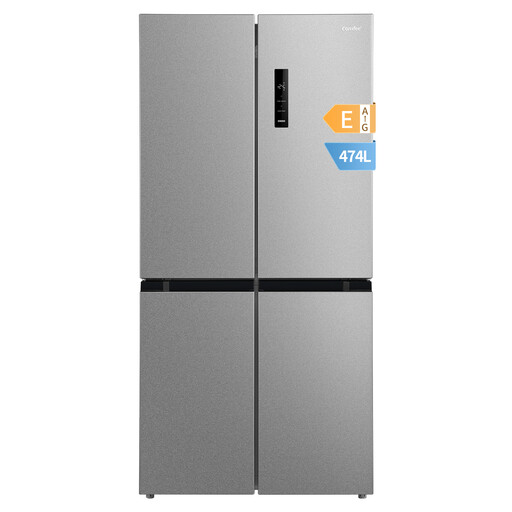 Image unavailable
COMFEE' RCF470LS2EU(E), 474 L, four doors
Worth considering if you want to organise the family food shop behind four doors. The title lists a capacity of 474 L, a Vario Box, a three-temperature drawer and an E energy rating. Compare the usable fridge and freezer capacities with your needs.
View on Joybuy
 Image unavailable
Samsung RF50C530EB1, 495 L
Worth a look if you want one appliance for a large amount of fresh and frozen food. The title lists a capacity of 495 L and an E energy rating. Check the door layout and the space allocated to each compartment on the model being sold.
View on Joybuy
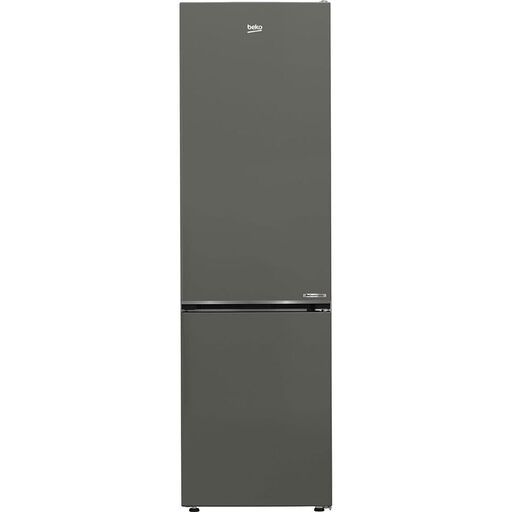 Image unavailable
Beko B5RCNE406HG, 355 L combi fridge-freezer
Worth comparing if you prefer a combi fridge-freezer that separates fresh and frozen food. The title lists a capacity of 355 L, Total No Frost technology and a C energy rating. Check the usable capacity of each compartment and the height needed for installation.
View on Joybuy
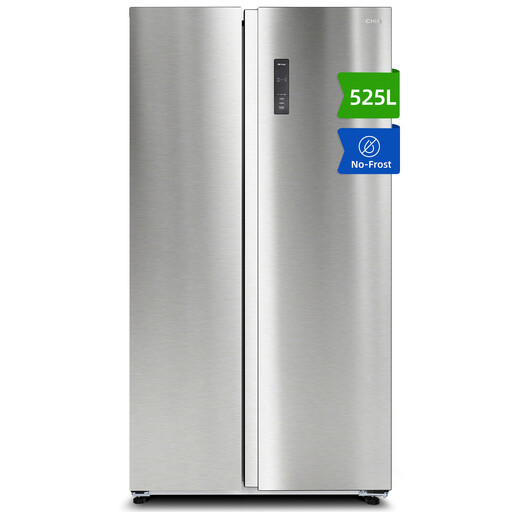 Image unavailable
CHiQ JR525WSE, 525 L side-by-side
Worth considering if you want dedicated capacity for both types of food. The title lists 333 L of fridge space, 192 L of freezer space, No Frost, 37 dB and an E energy rating. Measure the access route and check the door clearance before choosing this format.
View on Joybuy
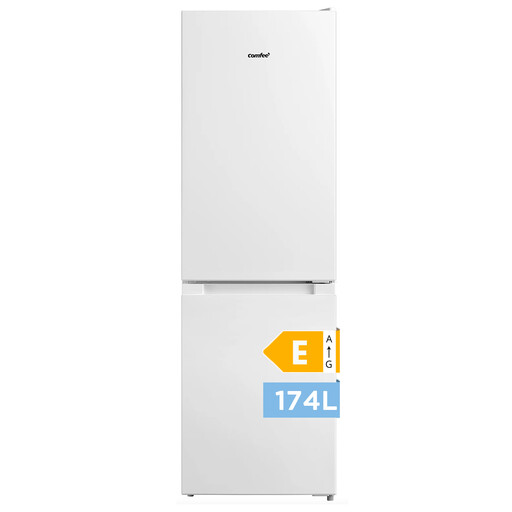 Image unavailable
COMFEE' RCB169WH2(E), 174 L combi fridge-freezer
Worth comparing if available space matters more than a large food-shopping capacity. The title lists a capacity of 174 L, a 70/30 split, a height of 150 cm, Low Frost, 39 dB and an E energy rating. Check that each compartment is big enough for your household.
View on Joybuy
Frequently asked questions
What capacity do you need for several people?
Start with your usual food shop, then work out separately how much space you need for fresh and frozen food. Que Choisir suggests 100 to 150 L for one person, then 50 L for each additional person. Adjust this to how often you shop and what you freeze.
Is total capacity enough to compare two models?
No. Two fridge-freezers with a similar total capacity can divide their space differently between compartments. The European energy label shows storage capacities; also look at the drawers, shelves and space needed for your dishes.
What should you measure before ordering a large fridge?
Measure the final space, the clearance needed to open the doors and the full delivery route. Compare these measurements with the dimensions of the model you’ve chosen and, if listed, its packaging.
How can you avoid overfilling the fridge?
Choose a layout that leaves space between food and lets you make use of the different cooling zones. Anses recommends a temperature of 0 °C to 4 °C at the coldest point. Check it regularly and avoid packing food in too tightly.


