What should you check before deciding?
First, work out whether your current appliance still meets your needs. If you’re considering a replacement, decide what type of storage you need, then compare the energy use of appliances with similar capacities.
Keep your appliance
Consider this if : it works and its compartments still meet your needs.
Bear in mind : keeping or repairing it won’t guarantee lower energy use; a fault needs to be assessed.
Choose a fridge or fridge-freezer
Consider this if : choose a fridge for fresh food only, or a fridge-freezer if you also need to store frozen food in the same appliance.
Bear in mind : with a fridge-freezer, the total capacity doesn’t tell you how many litres are allocated to each compartment.
Choose a separate freezer
Consider this if : your long-term need for frozen food storage is separate from your need for a fridge.
Bear in mind : its energy use and the space it takes up are in addition to those of a fridge you keep.
| Consideration |
What to check |
Who this matters to |
| Annual energy use |
Compare the kWh/year shown on the energy label for appliances with the same purpose and a similar capacity; use the A–G rating as additional information. |
If I replace an appliance that runs all the time, I want to know whether the new one meets the same need with a lower stated annual energy use. Around 36 % of consumers would make this comparison their priority. |
| Capacity and format |
Check the fridge and freezer capacities separately, then choose between a standalone appliance, a fridge-freezer and a separate freezer. |
When my storage habits change, I want enough room for fresh and frozen food without choosing more capacity than I need. This would be the main consideration for around 29 % of consumers. |
| Keeping or repairing |
Have any fault assessed and check whether a repair is possible before replacing an appliance whose capacity still suits your needs. |
If my appliance still meets my needs, I’d rather find out whether I can carry on using it before buying another one. Avoiding a premature replacement would come first for around 21 % of consumers. |
| Installation and use |
Check the dimensions and installation requirements in the manual, as well as the noise level shown on the energy label. |
In a kitchen where space or noise matters, I don’t want to choose an appliance that’s difficult to install or disruptive in everyday life. Around 14 % of consumers would prioritise this. |
Brands to consider
These ranges offer formats worth comparing. Your choice depends on the specifications of the individual model, not just the brand name.
Bosch
Bosch Home Appliances France offers freestanding and integrated fridge-freezers, with a range of compartment layouts.
- The range includes formats that let you compare built-in options and how the capacity is divided.
- Check the capacity, kWh/year and stated features for each model: the range’s variety doesn’t prove that any particular model is energy-efficient.
Whirlpool
Whirlpool France offers freestanding and integrated fridge-freezers for storing fresh and frozen food.
- Depending on the model, the range includes features such as No Frost or an open-door alarm.
- Compare the compartment capacities, dimensions, kWh/year and noise level of a specific model with those of appliances serving a similar purpose.
Fridge-freezers available on Joybuy
These appliances combine refrigeration and freezing. To decide whether one is right for a replacement, compare its compartments with your needs and check the energy use on the exact model’s energy label.
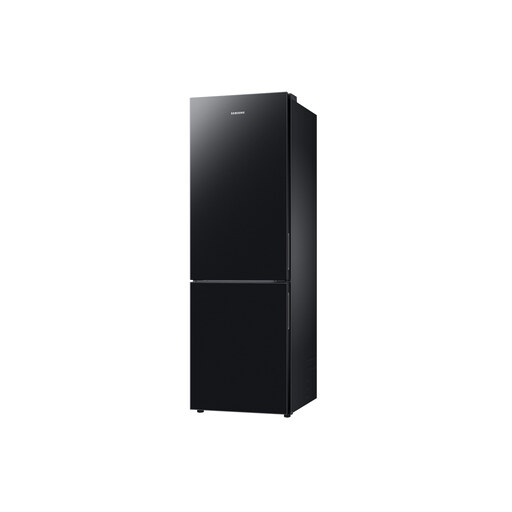 Image unavailable
Samsung RB33B612EBN, black 344 L fridge-freezer
Worth considering if you want fresh and frozen food storage in one 344 L appliance. The product details list it as class E; check the label for the exact model and the installation requirements before comparing its energy use with your current appliance.
View on Joybuy
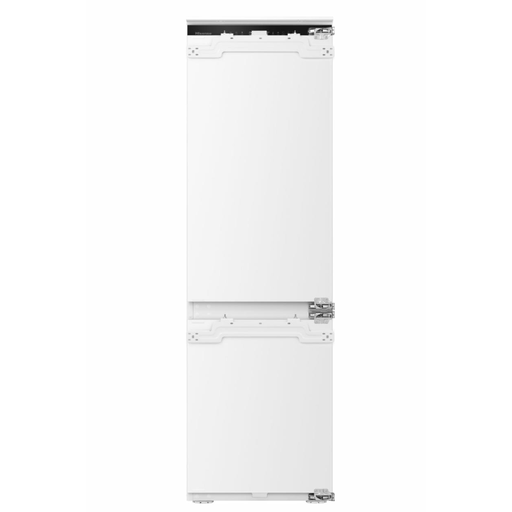 Image unavailable
Hisense RB3B250SAWC, 252 L integrated fridge-freezer
Consider this if you need both types of storage in an integrated format. The product name lists No Frost and a C rating; check the capacity of each compartment, the energy label and that the housing is compatible with the installation instructions.
View on Joybuy
 Image unavailable
Candy CFQQ5T817EPS, 467 L four-door fridge-freezer
This large format is worth considering if your storage needs justify 467 L. The product name lists Total No Frost and an E rating; check the capacity of each compartment, the available space and the energy label for the exact model.
View on Joybuy
 Image unavailable
LG GBBSJ1CCSW, 333 L white fridge-freezer
Worth considering if you need fresh and frozen food storage in an appliance listed at 333 L and rated C. Check the compartment layout and the energy use in the documentation and on the label for the exact model before comparing it with other appliances.
View on Joybuy
 Image unavailable
Sonlu CC-520WE, 444 L fridge-freezer
This total capacity is designed for substantial storage needs, but check that it’s right for both fresh and frozen food. The product name lists frost-free technology, 40 dB and an E rating; check the installation dimensions and the label for the exact model, and don’t assume that the stated noise level guarantees quiet operation.
View on Joybuy
Frequently asked questions
How do I compare the energy use of two refrigeration appliances?
Compare appliances that serve the same purpose and have similar capacities. Based on the European Commission’s information about energy labels, note the kWh/year and the capacity of each compartment; the A–G rating is an additional guide. Scan the QR code on the label to view the model’s entry in EPREL.
Is a better energy rating on its own a good reason to replace my appliance?
No. On its own, it doesn’t show that replacing your appliance will reduce energy use enough in your circumstances. ADEME points out that size and usage affect actual energy consumption; also compare the kWh/year, the capacity you need and any available information about your current appliance.
Can I get a repair assessed before buying another appliance?
Yes. An assessment is useful if a fault may be repairable or the appliance still meets your needs. If the appliance is out of warranty and the fault is eligible, check the Repair Bonus terms with ecosystem and whether you can use a QualiRépar repairer. This support doesn’t mean a repair will reduce electricity use.
Can I use the durability rating to compare fridges?
Don’t assume that fridges carry this rating: the ministry responsible for ecological transition describes its initial rollout for televisions, followed by washing machines. For a refrigeration appliance, check the energy label, product details and repair information for the model in question.
What should I do with my old fridge or freezer after replacing it?
Take it to an appropriate recycling scheme for refrigerating electrical appliances. ADEME suggests handing it to the retailer or delivery team when a replacement is delivered, or taking it to the designated area for electrical equipment at a recycling centre. These appliances contain refrigerants that require specialist treatment.


