What should you compare?
Start by checking whether your current fridge freezer is really the cause for concern, then compare models with capacities suited to how you use them. You can then weigh up their annual consumption and installation requirements.
| Criterion |
What to check |
Who this matters to |
| Annual consumption |
Compare the kWh/year figures for models that meet the same storage needs with the measured or cautiously estimated consumption of your current appliance. The A to G rating is no substitute for this comparison. |
If my priority is to reduce the electricity used by an appliance that runs continuously, I want to know the difference in consumption before replacing it. Around 39% of consumers are said to consider this their main concern. |
| Capacity and layout |
Check the fridge and freezer capacities in litres separately, then measure the space available. The European Commission lists these volumes among the comparable details on the label. |
If I’m short of freezer space, a large total capacity won’t help if the freezer compartment is still too small. Capacity is said to be the top priority for around 31% of consumers. |
| Noise and features |
Check the stated dB(A) level and find out which compartment a feature such as No Frost applies to. Compare the specific model’s kWh/year figure too. |
In an open-plan kitchen, I want to minimise noise; if easy defrosting matters to me, I need to know which compartment the feature applies to. Around 15% of consumers are said to put ease of use at the top of their list. |
| Keep or replace |
Check the settings and condition of your appliance. If a repair might be possible, ask for a quote before deciding. When buying a new one, confirm the arrangements for taking away the old appliance. |
A higher bill isn’t enough to convince me that the fridge is the problem: I want to look into maintenance or repairs before buying a replacement. This is said to be the priority for around 15% of consumers. |
The right configuration depends on how much storage you need. A fridge freezer combines fresh and frozen food storage in one appliance, but its capacity is divided according to the specific model. A fridge with a separate freezer may suit different freezing needs. In that case, compare the capacities, space required and kWh/year figures for both appliances, without assuming you’ll save energy. If your fridge freezer is too large for your needs, consider a smaller capacity, provided it still meets your needs without requiring an extra appliance.
Fridge brands to consider
The ranges below provide models to compare; they don’t guarantee the consumption or suitability of every model.
Bosch
Bosch offers freestanding and built-in fridge freezers in a range of capacities and configurations.
- Depending on the model, Bosch product details let you check compartment volumes and features such as No Frost.
- Check the annual consumption, dimensions and features of the specific model rather than assuming they apply across the range.
Whirlpool
Whirlpool offers freestanding and built-in fridge freezers, among other models, with different names for its cooling features.
- Whirlpool product details list features specific to each model, helping you compare capacity and energy rating.
- A feature name such as Dual No Frost doesn’t tell you the kWh/year figure on its own: check the label for the specific model.
Electrolux
Electrolux offers built-in fridge freezers whose product details include capacity and annual consumption.
- According to Electrolux product details, the LNG7TE18S4 and ENV9GB18S models show 216 and 125 kWh/year respectively, with stated total capacities of 256 and 250 L.
- These figures apply to these two models, not the whole brand. Check their dimensions and the capacity of each compartment too.
Beko
Beko lists fridges and freezers by features including installation type, capacity and noise level.
- Beko’s categories can help you find configurations to suit your kitchen and storage needs.
- To compare consumption, check the energy label for each model you’re considering.
Fridge freezers on Joybuy
These fridge freezers combine refrigeration and freezing in one appliance. Their stated capacities and energy ratings can help you narrow down the size options. Before choosing one to reduce your consumption, compare the energy label for the exact model with that of your current appliance.
 Image unavailable
Samsung RB33B612EBN, 344 L black fridge freezer, class E
Worth considering if you want fresh and frozen food storage in one appliance. The title lists a capacity of 344 L and class E; check the label for the kWh/year figure and the capacity of each compartment.
View on Joybuy
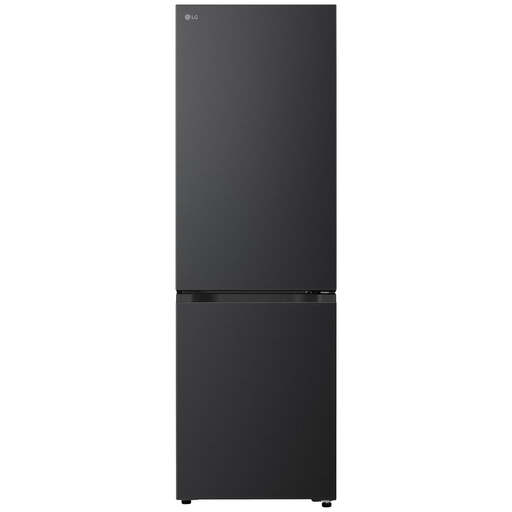 Image unavailable
LG GBBS312CEV, 333 L black fridge freezer, class C
Consider this model if its capacity suits your storage needs in both compartments. The title lists a capacity of 333 L and class C; check the kWh/year figure, how the capacity is divided and the clearance required for installation of this model.
View on Joybuy
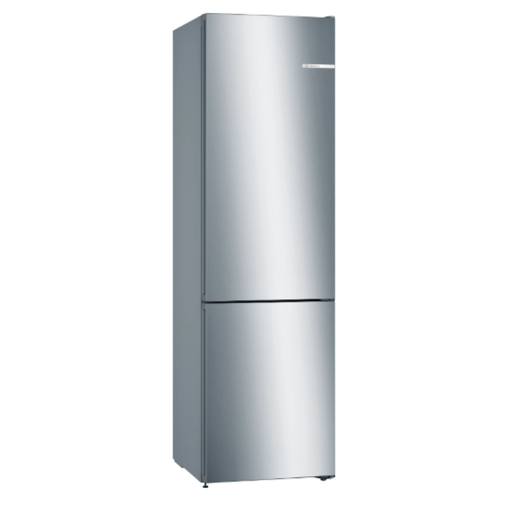 Image unavailable
Bosch KGN39VLEB, 368 L fridge freezer, class E, stainless steel finish
Compare this model if you’re looking for a 368 L fridge freezer rather than a more compact option. The title lists class E; check the kWh/year figure, the capacity of each compartment and the noise level if the appliance will be close to your living space.
View on Joybuy
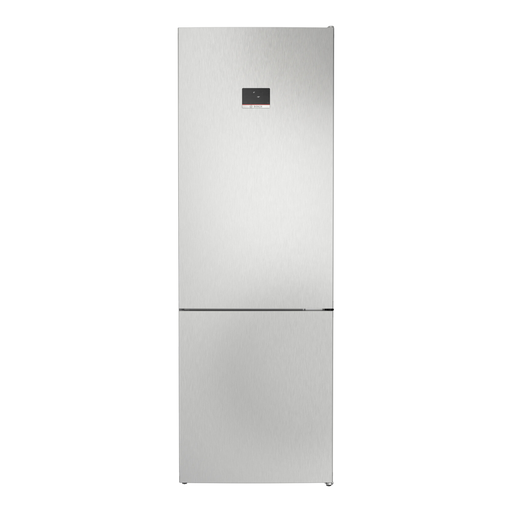 Image unavailable
Bosch KGN497LDF, 440 L grey fridge freezer, class D
Consider this model if your needs justify a 440 L fridge freezer and you have enough space for it. The title lists class D; check the dimensions, compartment capacities and kWh/year figure before comparing its consumption with that of a smaller appliance.
View on Joybuy
 Image unavailable
Bosch KGN33NLEB, 282 L fridge freezer, class E, stainless steel finish
Worth considering if a 282 L fridge freezer meets your fresh and frozen food storage needs. The title lists class E; check the capacity of each compartment, the kWh/year figure and the noise level if the fridge will be installed near your living space.
View on Joybuy
Frequently asked questions
Is the energy rating enough to choose a fridge that uses less electricity?
No. Also compare the kWh/year figures for models that meet the same storage needs. According to the European Commission, the label for refrigeration appliances also shows capacity and noise level. A rating letter alone doesn’t tell you the annual consumption of two appliances with different capacities.
How can I tell whether replacing my fridge freezer will reduce its consumption?
Compare the measured or cautiously estimated annual consumption of your fridge freezer with the kWh/year figure on the label of the model you’re considering. The difference is only an indication: settings, room temperature, how often the door is opened and the condition of your old appliance can all affect its actual consumption.
Is No Frost essential when replacing a fridge freezer?
No. Choose this feature if you want to reduce manual defrosting, and check the product details to see which compartment or compartments it applies to. Its presence doesn’t mean the appliance uses less energy: compare the kWh/year figures separately.
What should I do with my old fridge after replacing it?
Arrange for the retailer to take it away or use an appropriate electrical equipment collection service, and confirm the arrangements before delivery. The Ministry for Ecological Transition points out that these appliances may contain components that need special handling; don’t put them out with general waste.


