Which features should you compare?
First, choose a configuration that works in your kitchen. Then compare the usable capacity and annual energy consumption of models that meet the same needs.
Freestanding fridge-freezer
Consider this if: you’re replacing a freestanding fridge-freezer and have a suitable space for it.
Bear in mind: a wider or deeper model may restrict movement and prevent the doors from opening fully.
Integrated fridge-freezer
Consider this if: the appliance needs to fit into a housing unit and take a compatible cabinet door.
Bear in mind: the housing unit, fixing system and ventilation requirements specified for the model will determine how it can be installed.
Separate fridge and freezer
Consider this if: your needs call for two appliances and you have two suitable spaces for them.
Bear in mind: add their annual energy consumption figures together to assess the total.
| Feature | What to check | Who is it for? |
|---|
| Energy consumption |
The kWh/year figure and energy rating for the exact model, compared with appliances of a similar capacity and configuration. |
If I’m replacing an appliance that’s always switched on, I want to know its annual energy consumption without buying more capacity than I need; around 33% of consumers make this a priority. |
| Capacity and layout |
The usable capacity of each compartment and how much space you really need for groceries and frozen food. |
When I put away the weekly shop, I need enough room in both the fridge and freezer; this is the top priority for around 27% of consumers. |
| Noise and size |
The stated noise level, full dimensions, access routes and door clearance. |
In an open-plan kitchen or a narrow alcove, capacity alone isn’t enough to help me choose; around 20% of consumers prioritise how well the appliance fits and how noisy it is. |
| Frost and everyday use |
The cooling system in each compartment and the features that suit your habits, without overlooking the kWh/year figure. |
If defrosting is a hassle or I open the appliance frequently, I first look at how it keeps food cool; for around 20% of consumers, this is the main consideration. |
Fridge-freezers available on Joybuy
These models offer a range of capacities and configurations to consider when replacing your fridge-freezer. Before deciding, compare the annual energy consumption on the label for the exact model.
 Image unavailable
Haier HTW5618ENMG, 3 doors, 360 L
Worth considering if you’re looking for a three-door fridge-freezer with Total No Frost. The product name lists a capacity of 360 L and an energy rating of E. Compare the compartment sizes with your shopping needs, and check the kWh/year figure on the label for the exact model.
View on Joybuy
 Image unavailable
Candy CFQQ5T817EPS, 4 doors, 467 L
Consider this if you need a large capacity for your shopping and your kitchen can accommodate a four-door model. The product name lists Total No Frost and an E rating. Measure the space and compare the kWh/year figure before opting for this capacity.
View on Joybuy
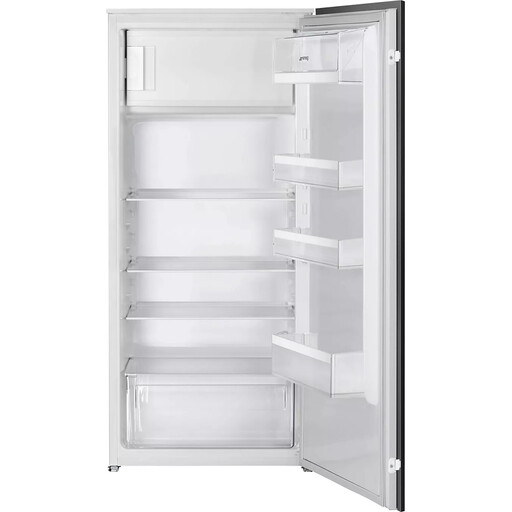 Image unavailable
SMEG S4C122E integrated, 188 L
Worth considering if you’re replacing an integrated appliance and a top-freezer layout suits your needs. The product name lists a capacity of 188 L and an E rating. Check that the housing unit and fixing system are compatible, then check the annual energy consumption for the exact model.
View on Joybuy
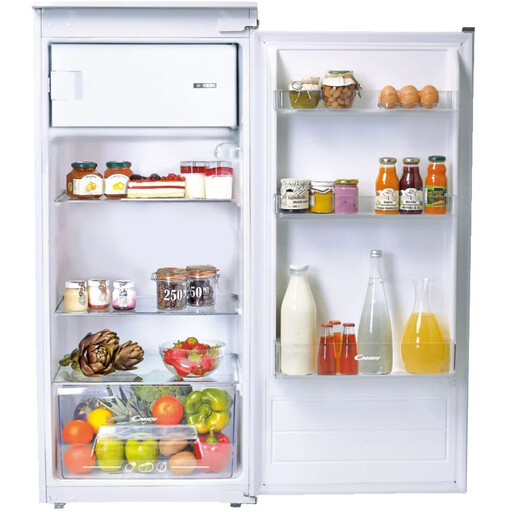 Image unavailable
Candy CIO 225 EE/N, 179 L
Worth comparing if you’re looking for a compact, one-door fridge-freezer. The product name lists a capacity of 179 L. Check the freezer capacity and kWh/year figure, and make sure you confirm the installation type before buying, as the installation details conflict.
View on Joybuy
 Image unavailable
Bosch KGN33NLEB, bottom freezer, 282 L
Worth considering if you prefer a bottom freezer and a total capacity of 282 L. The product name lists an E rating. Check the kWh/year figure, noise level and installation type for the exact model if these factors will determine your choice.
View on Joybuy
Frequently asked questions
Where can I find the energy consumption figure to compare?
Check the energy label and product information for the exact model. The annual consumption in kWh is more useful when considered alongside the capacity of the compartments. For appliances covered by the rules in the European Union, Commission Delegated Regulation (EU) 2019/2016 sets out the requirements for energy labelling.
Is the kWh/year figure enough to choose?
No. Compare it across appliances with a similar configuration and usable capacity. ADEME points out that size and features affect energy consumption. An appliance that doesn’t meet your storage needs isn’t a good choice based on this figure alone.
Should I choose a No Frost model?
Choose this feature if reducing frost build-up matters to you. Que Choisir distinguishes between several cooling systems; No Frost doesn’t replace the need to compare the specific model’s annual energy consumption, capacity and noise level.
What usable capacity do I need?
As a starting point, Que Choisir suggests 100 to 150 L for one person, then an extra 50 L for each additional person. Adjust this guideline to how often you shop and how much frozen food you keep, checking the capacity of each compartment separately.
How do I choose a fridge-freezer for an open-plan kitchen?
Check the stated noise level and the space needed for installation before comparing the models you’re interested in. Que Choisir points out that the figure on the label isn’t always enough to predict how intrusive the noise will seem.


