What to compare before replacing an appliance
Start with what you need the appliance to do, then compare models with the right function and capacity. Energy label figures let you compare appliances under defined conditions; on their own, they cannot predict your household’s energy use.
| What matters |
What to check before buying |
Who it matters most to |
| Energy use for refrigeration |
Check the kWh/year and compartment capacities. Compare appliances with a relevant configuration and capacity. |
If I’m wondering whether my current fridge or fridge-freezer needs replacing, I’ll start by comparing its energy needs and condition with those of an equivalent model. Around 33% of consumers prioritise the energy use of their fridge or freezer. |
| Storage capacity |
Check the litres allocated to fresh and frozen food separately, as well as the appliance’s dimensions and installation type. |
If my needs for fresh and frozen food change, I want to choose a configuration without adding unnecessary capacity. Around 27% of consumers prioritise getting the right amount of storage. |
| Dishwasher cycles |
Compare kWh/100 eco cycles, litres per cycle, duration, capacity and how many cycles you actually run. |
If I run the dishwasher often, I’ll consider energy use per cycle and the programme I actually use. Around 20% of consumers give priority to the cost of their dishwasher cycles. |
| Keeping or repairing an appliance |
Check the appliance’s condition, ask for a diagnosis if it has a fault, and compare the repair quote with the total cost of replacing it. |
If my appliance still works or looks repairable, I want to compare my options before replacing it. Around 20% of consumers prioritise keeping or repairing their appliance. |
To estimate running costs, multiply a fridge or freezer’s kWh/year by your electricity rate per kWh. For a dishwasher, use the kWh/100 eco cycles, your annual number of eco cycles and the same rate. These calculations depend on your habits: other programmes, water use and the purchase price are not included.
Joybuy products for these needs
This selection brings together built-in dishwashers and fridge-freezers, so you can compare the capacities and energy-use figures listed for these types of appliance.
 No image available
Samsung DW70H72WCB0U1, built-in dishwasher
Worth comparing if you’re looking for a built-in model for your usual loads of 13 place settings.
Listed width: 60 cm. The product information specifies installation by a qualified professional.
Joybuy
 No image available
Samsung DW80H72YBB0U1, built-in dishwasher
Consider this if you’re looking for a built-in dishwasher for your usual loads of 13 place settings.
Listed energy rating: B. Width: 60 cm. The product information specifies installation by a qualified professional.
Joybuy
 No image available
Haier HTW5618ENMG, 3-door fridge-freezer
Worth comparing if you want to keep fresh and frozen food in one freestanding appliance.
Listed total capacity: 360 L, split between 235 L for the fridge and 125 L for the freezer. The product information lists 271 kWh/year and an energy rating of E.
Joybuy
 No image available
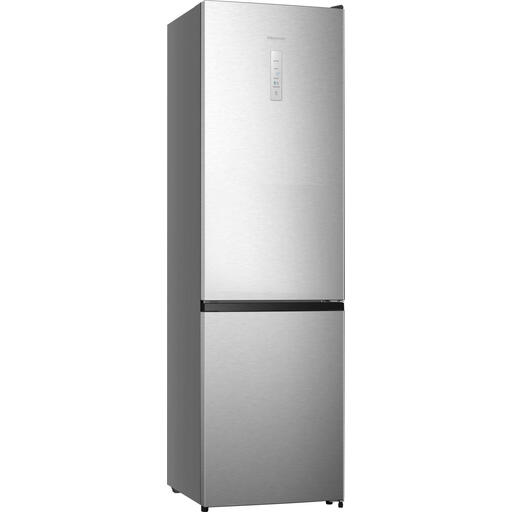
Hisense RB440N4CCB, freestanding fridge-freezer
Worth comparing if you need a freestanding fridge-freezer with separate capacity for fresh and frozen food.
Listed capacity: 336 L, including 238 L for the fridge and 98 L for the freezer. The product information lists 135 kWh/year and an energy rating of B.
Joybuy
 No image available
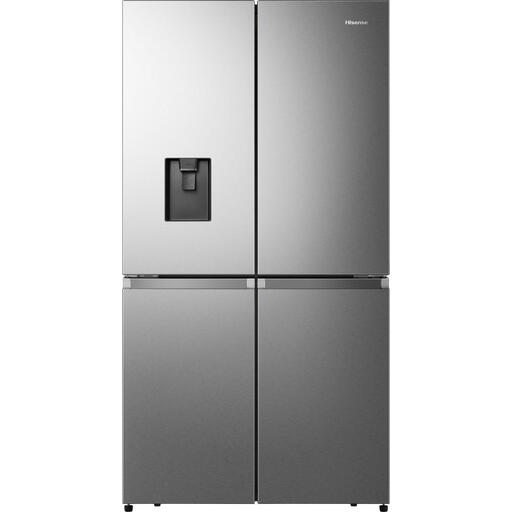
Hisense RQ758N4SWSE, multi-door fridge-freezer
Worth comparing if you need a large capacity and separate storage areas for fresh and frozen food.
Listed total capacity: 606 L, with 390 L for the fridge and freezer compartments or zones with variable temperatures. The product information lists 320 kWh/year and an energy rating of E. The door is not reversible.
Joybuy
Frequently asked questions
How do I compare the electricity costs of a fridge and a dishwasher?
For a fridge or freezer, multiply the kWh/year on the energy label by your electricity rate per kWh. For a dishwasher, multiply the kWh/100 eco cycles by your annual number of eco cycles divided by 100, then multiply by the same rate. This calculation excludes other programmes, water use and the purchase price.
Can I increase the fridge temperature to save energy?
Don’t compromise food safety in the hope of making a saving. Anses recommends a temperature between 0 and +4 °C at the coldest point in the fridge and advises checking it regularly, for example with a thermometer.
Does the energy use shown for the eco programme apply to every cycle?
No. The dishwasher energy label gives the kWh for 100 cycles of the eco programme. It also shows information such as water use per cycle and the duration of that programme. If you use other programmes, don’t assume this figure applies to your actual energy use.
What should I check before replacing a faulty appliance?
Ask for a diagnosis and a quote, then check which warranty applies before comparing repair with replacement. In France, the statutory legal guarantee of conformity covers, subject to its conditions, faults that appear within two years of receiving goods bought from a professional seller.
Does the seller have to display the energy label and take away my old appliance?
For new products covered by energy labelling rules, the label must be displayed at the point of sale, including online. Free ‘one-for-one’ take-back applies, subject to the relevant conditions, to an old product of the same type and quantity as the product being replaced. Check the arrangements when you place your order.
Should I look for a durability index when buying a fridge or dishwasher?
Don’t assume that this type of index applies to these categories. The Ministry for Ecological Transition describes its mandatory introduction for televisions and washing machines, not fridges or dishwashers. For the latter, check the information specific to each model and whether it can be repaired.


