How do you decide what to replace?
Start by considering how you use each appliance and what condition it’s in. Then compare appliances that meet the same need, rather than looking only at their energy labels.
| Priority |
What to check |
What matters to me |
| Fridges and freezers |
ADEME says that fridges and freezers run continuously. Compare the kWh/year of appliances of the same type, then look at their usable capacity and features. |
My appliance is on all year round: does its capacity still match what I need to store? |
| Capacity and space |
Measure the available space and check the format, door opening and installation requirements. Don’t choose a larger capacity than you need based on the energy rating alone. |
I need enough space to store my food, without installing an appliance that’s bigger than necessary. |
| Running costs |
Use the kWh figures shown for comparable appliances, together with the VAT-inclusive price per kWh that applies to your tariff. The French Energy Regulatory Commission distinguishes this price from the standing charge; also take any time-of-use rates into account. |
I want to estimate what using each appliance could add to my bill, without treating an estimate as guaranteed savings. |
| Repairs |
Check the appliance’s condition and whether spare parts are available. In France, ecosystem says that the Repair Bonus applies to certain out-of-warranty appliances if the fault is eligible. |
If my appliance still meets my needs, it’s worth looking into a repair before replacing it. |
| Dishwashers |
Estimate how many cycles you run each year. Compare dishwashers on the same label basis, including kWh/100 cycles and water per cycle. If your kitchen is open-plan, check the noise level too. |
I use my dishwasher often, so the energy used per cycle and the programme I choose matter to how I use it. |
| Cooking appliances |
Before considering a different technology, think about how often you cook, your existing installation and whether your cookware is compatible. These checks don’t replace looking at fridges and freezers that run continuously. |
I cook regularly and want to know whether changing appliances would suit my habits, rather than automatically replacing the one I have. |
A few brands to compare
These ranges offer some formats to consider. Choose based on the specifications of the exact model, not the brand name alone.
Bosch
Bosch offers fridge-freezers, single-door fridges and freezers, among other appliances.
- The different configurations give you options when looking for an appliance that suits your storage needs.
- Check the capacity, dimensions and energy label of the model you choose: the range alone doesn’t show that it will use less energy than another brand’s appliance.
Beko
Beko’s French catalogue includes fridges, freezers and dishwashers, among other appliances.
- These categories let you consider replacing a fridge or freezer separately from replacing a dishwasher.
- Compare the energy figures and dimensions of the models you’re considering rather than making assumptions about running costs based on the brand.
Miele
Miele offers fridge-freezers, including built-in models.
- The distinction between freestanding and built-in models helps you find an option that suits your kitchen.
- Miele states that certain built-in or integrated products require a furniture door panel, which isn’t supplied. Check this requirement and the dimensions before buying.
Appliances to consider on Joybuy
These models relate to two of the decisions covered here: comparing a fridge-freezer that runs continuously, or assessing a dishwasher in light of how often you use it. Their inclusion doesn’t mean you need to replace your appliance.
 Image unavailable
CHiQ JR263LGE, 262 L Low Frost fridge-freezer, 70/30
Worth considering if a 262 L fridge-freezer suits your storage needs. The product title gives a width of 54 cm and a height of 176 cm. Check the installation space and the kWh/year on the exact model’s energy label before comparing it with your current appliance.
View on Joybuy
 Image unavailable
Haier HTW5618ENMG, 360 L three-door fridge-freezer
Compare its 360 L capacity with the amount of storage space you need. The product title mentions Total No Frost, an E energy rating, Wi-Fi and My Zone. Check the dimensions and kWh/year on the exact model’s energy label before estimating its running costs.
View on Joybuy
 Image unavailable
Candy CFQQ5T817EPS, 467 L four-door fridge-freezer
Consider this 467 L model if its capacity genuinely matches your needs. The product title mentions Total No Frost and an E energy rating. Check the dimensions, installation clearances and kWh/year for the exact model before comparing it with other appliances.
View on Joybuy
 Image unavailable
Sonlu CC-520WE, 444 L frost-free fridge-freezer
First check that its 444 L capacity suits your storage needs. The product title gives an E energy rating and a noise level of 40 dB. Check the dimensions and required clearances, then consult the exact model’s energy label to compare its consumption.
View on Joybuy
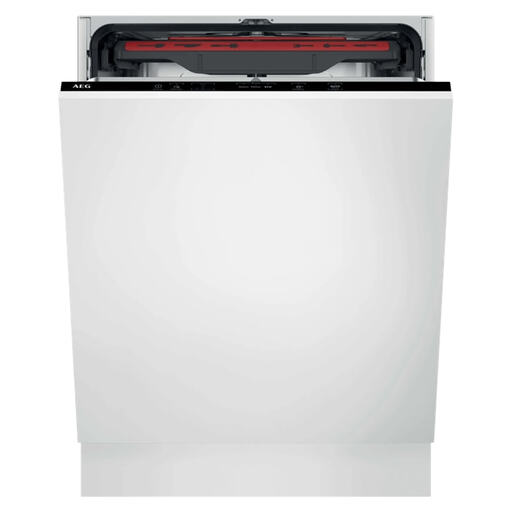 Image unavailable
AEG FSB34707Z, integrated dishwasher, 14 place settings
To assess whether it’s right for you, relate the energy label figures to how many cycles you usually run. The model is listed as having a C energy rating. Its title gives a width of 60 cm, but one description says 68 cm. Confirm the width, niche dimensions and door-panel compatibility before ordering.
View on Joybuy
Frequently asked questions
Which kitchen appliance should you check first if your bill goes up?
Start with your fridge, fridge-freezer or freezer, as ADEME says these appliances run continuously. Check their condition and capacity, then compare them with models of the same type and a similar size. This first check doesn’t mean you have to replace yours.
How can you estimate electricity costs from the energy label?
Multiply the kWh/year figure shown by the VAT-inclusive price per kWh that applies to your tariff. For a dishwasher, use the kWh/100 cycles figure and your annual number of cycles. Keep this calculation separate from the standing charge and account for any time-of-use rates, as set out in the tariff structure described by the French Energy Regulatory Commission.
Is the energy rating enough to choose a new appliance?
No. Also compare the capacity, dimensions, features and energy consumption on a like-for-like basis for the type of appliance. ADEME points out that size and extra features can affect energy use: a rating alone won’t tell you whether a model suits your needs.
Should you check whether an appliance can be repaired before replacing it?
Yes, if it still meets your needs. Check the fault, its overall condition and whether spare parts are available. In France, ecosystem says the Repair Bonus may apply to certain appliances that are out of warranty, provided the fault is eligible under the scheme.
Can you replace a built-in appliance without checking your kitchen?
No. Check the appliance niche dimensions, ventilation, door opening and furniture door fixing for the model you’re considering. Miele notes that certain built-in or integrated products require a furniture door panel, which isn’t supplied.


