Start by assessing the space you need separately for fresh and frozen food, then choose the configuration that genuinely matches your shopping habits. A fridge freezer combines both in one appliance, while a fridge with a small freezer compartment is suitable if you only occasionally buy frozen food. A separate freezer also requires space and runs continuously, so factor in its ongoing energy use. Compare kWh/year, compartment capacities, dimensions and temperature settings rather than looking only at the total capacity.
Which households is it for?
Households doing a mixed weekly shop
You regularly store fresh food, leftovers and some frozen items. The key is to distribute the capacity correctly between the two compartments rather than simply choosing the largest total capacity. Guidance based on UFC-Que Choisir.
Small homes and households that buy little frozen food
If your kitchen is small or you do not cook very often, a compact appliance, a single-door fridge or one with a small freezer compartment may be enough when frozen food is genuinely only an occasional purchase. Guidance based on UFC-Que Choisir.
Households that buy or prepare food in large quantities
If you often freeze bulk purchases or prepared meals, a separate freezer can complement your fridge. Its capacity should nevertheless remain appropriate for your household and habits, as it runs continuously. Guidance based on ADEME and UFC-Que Choisir.
Buying priorities
First choose the right fresh-to-frozen capacity split, then check the installation requirements, annual energy consumption and temperature settings of the specific model.
| Priority |
What to check |
Your needs |
| Usable capacity |
Compare the fridge and freezer capacities separately; also check the height, width, depth and door-opening direction. UFC-Que Choisir gives 100 to 150 L for one person as a guideline, followed by around 50 L extra per additional person. |
After a big shop, I want to be able to store fresh food without paying for freezer capacity I do not use. |
| Temperature and storage |
Check the setting at the coldest point, the storage zones and any fan-assisted cooling or No Frost features. Anses recommends a temperature of 0 to +4 °C at the coldest point for refrigerated food. |
I want to find perishable food easily and maintain a suitable setting without relying solely on the name of a technology. |
| Continuous energy use |
Read the kWh/year on the energy label, comparing appliances with similar capacities and configurations. ADEME points out that fridges, fridge freezers and freezers are used 24 hours a day; include all appliances if you add a freezer. |
My appliance runs all year round, so I want to compare its electricity use with that of a similar-capacity configuration. |
| Stock organisation |
Look at the number of drawers, salad crispers, adjustable shelves and dedicated compartments for the food you buy. More capacity does not replace checking dates and quantities. |
I want to see what is stored and avoid forgetting food at the back of the appliance. |
Mistakes to avoid
-
Choosing the total capacity without distinguishing fresh and frozen storage
A fridge freezer may appear spacious even though one of its compartments does not suit your shopping habits. UFC-Que Choisir’s capacity guidelines relate to usable capacity suited to the household, not just the headline total.
Note down the capacity you need for fresh and frozen food after a big shop, then compare it with the compartment capacities shown on each product page.
-
Adding a separate freezer without accounting for its constant operation
ADEME classifies fridges, fridge freezers and freezers as appliances used 24 hours a day. A second appliance therefore increases the total electricity consumption you need to consider.
Only add a freezer if your frozen-food stock will consistently justify its capacity, then compare the annual consumption of the fridge and freezer together.
Check the kWh/year on the energy label before adding this appliance to your household.
-
Assuming that a larger appliance automatically reduces waste
The size of the appliance does not replace checking dates, organising food or adjusting the quantities you buy. ADEME recommends reviewing the food you throw away and your household’s habits before choosing a solution.
Before choosing an oversized appliance, identify whether the issue is a lack of space, forgotten food, poor visibility or buying more than you need.
-
Relying on No Frost without checking the actual setting
Fan-assisted cooling or No Frost can reduce frost and distribute air more evenly, depending on the model, but this does not prove that the coldest point is set correctly.
After installation, check that the appliance reaches 0 to +4 °C at the coldest point, as recommended by Anses, and place perishable food in the area specified in the manual.
Brand guide
Beko
A brand worth considering when comparing standard-width freestanding fridge freezers, particularly models around 60 cm wide.
- Beko presents the B1RCNA344W as a freestanding fridge freezer.
- Capacity, noise level and energy consumption must be checked for each model, as they do not represent the brand as a whole.
Bosch
Worth considering for fridge freezers that, depending on the model, offer No Frost, separate cooling circuits or dedicated fresh-food compartments.
- On selected VitaFresh XXL models, Bosch highlights Total No Frost and two separate cooling circuits.
- Dimensions, capacities, energy class and availability vary according to the model selected.
Liebherr
A useful benchmark when you want to compare the capacity, noise level and dimensions of a fridge freezer or single-door fridge in detail.
- Liebherr’s French product pages specify capacity and noise levels for each model, such as 371 L and 35 dB for the CNsfc 574i Plus NoFrost.
- The EasyFresh and NoFrost features listed by the brand do not replace comparing kWh/year, installation requirements and the freezer capacity you need.
Whirlpool
A brand worth comparing if fitting the appliance into a fitted kitchen, or choosing a fridge freezer with automatic defrosting and separate compartments, is a priority.
- For the WHC18T323P, Whirlpool states a 250 L capacity, energy class D and a Multi Fresh Box with three temperature settings.
- Check the aperture dimensions, door fitting, noise level and capacity suited to your household for the exact model.
Joybuy products for storing your shopping
Joybuy options for comparing fridge freezers designed for shops combining fresh and frozen food, along with a separate freezer for additional frozen storage.
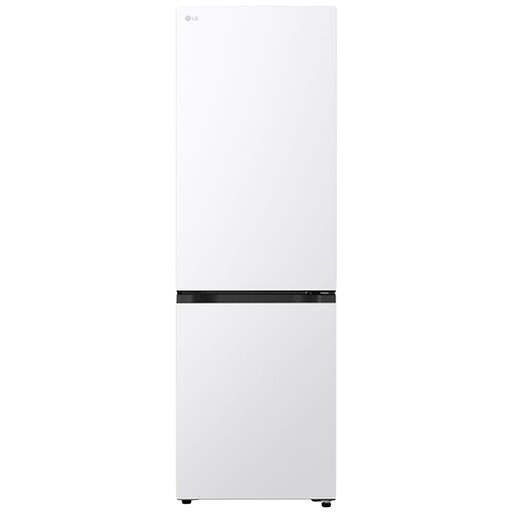 Image unavailable
LG GBBSJ1CCSW 333 L fridge freezer, class C
For weekly shops combining fresh and frozen food, compare its stated capacities separately before making your decision.
Stated capacity of 183 L for refrigeration, 113 L for freezing and a 37 L chilled compartment; Total No Frost, two salad crispers and an adjustable-temperature drawer.
Allow for the stated 5 cm clearance around the appliance and check the temperature at the coldest point after installation.
Joybuy
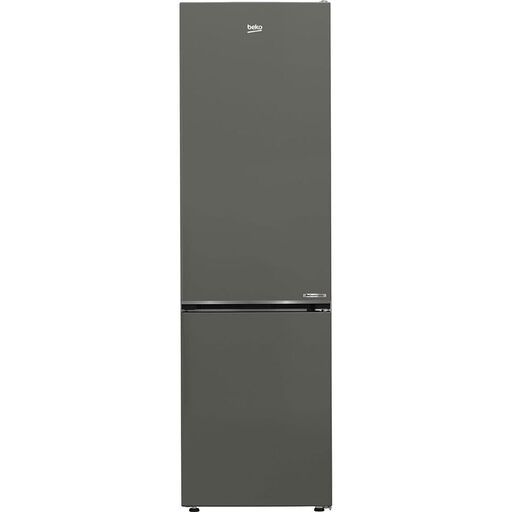 Image unavailable
Beko B5RCNE406HG 355 L fridge freezer, class C
This fridge freezer is worth comparing if your shopping requires separate capacity for fresh and frozen food.
249 L of refrigeration capacity, 106 L of freezer capacity, Total No Frost, a four-star compartment and a stated freezing capacity of 6 kg/24 h.
Its stated dimensions are 210.2 × 76.2 × 66.1 cm; check access routes, placement and the required clearances.
Joybuy
 Image unavailable
CHiQ JR263LGE 262 L Low Frost fridge freezer
An option worth comparing for regular shops with a moderate need for frozen storage in a narrow kitchen.
Stated capacity of 187 L for refrigeration and 75 L for freezing, a width of 54 cm, three freezer drawers and adjustable shelves.
The Low Frost system requires manual defrosting approximately once or twice a year, according to the stated information; it is designed for an ambient temperature of 16 to 38 °C.
Joybuy
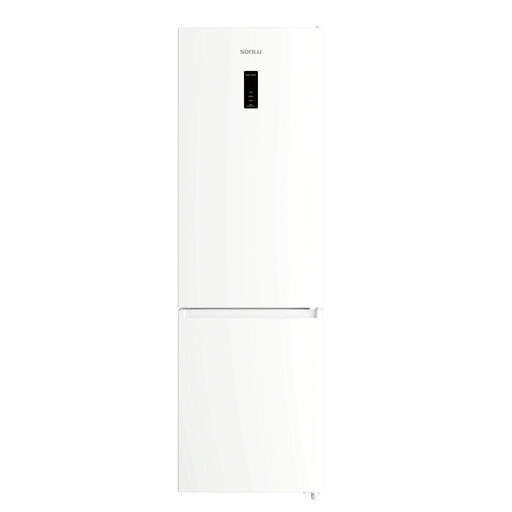 Image unavailable
Sonlu CD-400RW 355 L fridge freezer, class E
Worth comparing if you do large shops and want to keep your fresh and frozen stocks clearly separate.
252 L of refrigeration capacity, 103 L of freezer capacity, a frost-free system, electronic controls and reversible doors, as stated.
Check the kWh/year on the energy label, as well as the full dimensions, noise level and installation clearances.
Joybuy
 Image unavailable
Heinrich’s 161 L No Frost freezer, class C
This freestanding freezer is worth considering as additional frozen storage when the freezer compartment in a fridge freezer is no longer sufficient over the long term.
Stated capacity of 161 L, three drawers, two compartments, No Frost, LED display, alarm and a temperature range of -14 °C to -22 °C.
It does not replace fridge capacity for fresh food; check its dimensions and annual energy consumption before adding an appliance that runs continuously.
Joybuy
Frequently asked questions
What temperature should you aim for in a domestic fridge?
Anses recommends an ideal temperature of between 0 and +4 °C at the coldest point. Choose an appliance with clear temperature controls and use a thermometer to check the temperature if necessary; the cooling technology does not remove the need for this check.
How should you compare the energy consumption of two refrigeration appliances?
Compare the kWh/year shown on the energy label, then make sure the appliances have comparable configurations and compartment capacities. DGCCRF states that the energy label summarises the characteristics of new appliances to help consumers compare them.
Does a family need a separate freezer?
Not necessarily. It becomes worthwhile if frozen food, meals prepared for freezing or bulk purchases consistently exceed the capacity of a fridge freezer. UFC-Que Choisir gives 150 to 250 L as a guideline for two to three people and more than 250 L for four people, adjusted according to eating habits.
Is fan-assisted cooling or No Frost enough to keep food fresh?
No. Depending on the model, these systems can distribute air more evenly and reduce frost, but Anses points out that food preservation also depends on maintaining an actual temperature of 0 to +4 °C at the coldest point and organising the food correctly.
What should you do with your old fridge when buying a new appliance in France?
The “one-for-one” take-back scheme allows you to hand over a used appliance when buying a new product of the same type. France’s Ministry for Ecological Transition explains that the arrangements depend in particular on the product type and shop size: confirm the take-back service and collection conditions with the seller before delivery.


