What should you check before choosing?
First, work out how much space you need for fresh and frozen food. Then compare appliances that meet those needs, looking at the energy rating alongside the other information on the label.
Fridge with one door
Worth considering: if you mainly store fresh food and only a little frozen food.
Keep in mind: depending on the model, the freezer compartment may be small or absent. Check before deciding you don’t need a separate freezer.
Fridge-freezer
Worth considering: if you need two storage areas in one appliance.
Keep in mind: its freezer compartment may not be large enough for substantial stocks of frozen food.
Separate freezer
Worth considering: if you need more freezer space than a fridge-freezer can offer.
Keep in mind: it takes up separate space and, when used alongside a fridge, adds another appliance that runs continuously.
| Factor | What to check | What I need |
|---|
| Capacity and format |
Check the usable capacity in litres of the fridge and freezer separately. UFC-Que Choisir suggests starting with 100 to 150 L for one person, then adding 50 L per extra person; adjust this guide to suit your shopping habits. |
I mainly store fresh food, or I need to make room for stocks of frozen food. |
| Energy consumption |
On the European energy label, compare kWh/year and the A to G rating for appliances with similar functions and capacities, as explained by the European Commission. The letter alone doesn’t show annual energy consumption. |
As my appliance runs all year round, I want to check its stated energy consumption without choosing an unsuitable capacity just to get a lower figure. |
| Noise |
Check the noise level in dB(A) on the label and compare it across models that suit your storage needs. |
If it’s going in an open-plan kitchen or near a living area, the stated noise level matters to me. |
| Installation |
Measure the recess or space, the route through your doors and the clearances specified in the manual. Check that the model’s climate class covers the room’s temperatures. |
I need to be able to install the appliance and open its door at home, including if the room isn’t temperature-controlled. |
Which brands should you look at?
The examples below highlight details to check for specific models; they don’t apply to every range from these brands.
Bosch
A brand to consider if you need an integrated appliance to fit an existing kitchen.
- Bosch provides details including dimensions, capacity, noise level and installation instructions for its KUL22VFD0 integrated fridge.
- Check the chosen model’s documentation to make sure it fits your recess and has the required clearances.
Liebherr
A brand whose energy labels and technical specifications can help you compare appliances by capacity, dimensions and noise level.
- For example, Liebherr lists a total capacity of 296 L and a noise level of 38 dB for the CUe331-26 fridge-freezer.
- These specifications apply to the CUe331-26; check the details for any other model you’re considering.
Beko
A brand to look at if compartment sizes and climate class are key to your choice.
- Beko’s RDSA280K40SN specifications list 204 L of fridge space, 46 L of freezer space, 183 kWh/year and an SN-ST climate class.
- These figures don’t apply to other Beko models: check their own labels and manuals.
Fridge and fridge-freezer options on Joybuy
These options include fridge-freezers for storing fresh and frozen food in one appliance, as well as a fridge with one door for households focused more on fresh food. For each one, check the capacity, available space and installation requirements that matter to you.
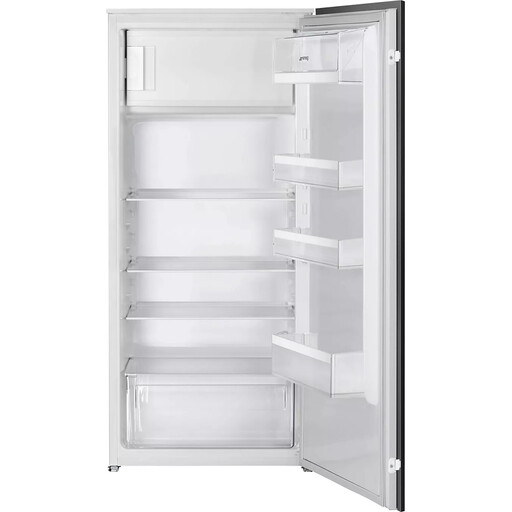 Image unavailable
SMEG S4C122E, 188 L integrated fridge-freezer, class E
A way to combine fridge and freezer storage in an integrated appliance. It has a stated capacity of 188 L and a top-mounted freezer. Check the capacity of each compartment, the recess and the door system before choosing this model.
View on Joybuy
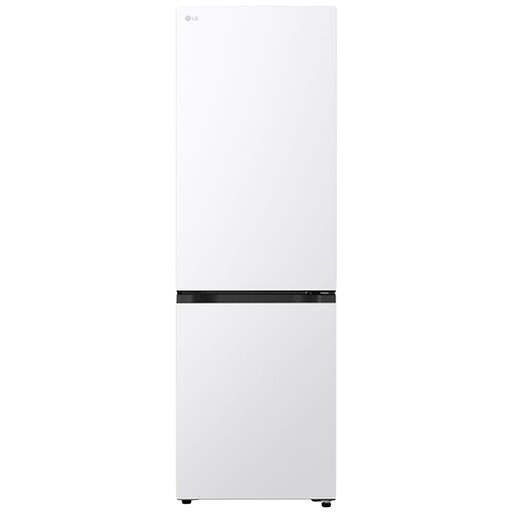 Image unavailable
LG GBBSJ1CCSW, 333 L white fridge-freezer, class C
A 333 L fridge-freezer to consider if you want to keep fresh and frozen food in one appliance. Check the capacity of each compartment, along with the space needed for installation and to open the doors.
View on Joybuy
 Image unavailable
Samsung RB33B612EBN, 344 L black fridge-freezer, class E
Its stated total capacity is 344 L. If you’re replacing an appliance to get more freezer space, check how much capacity is set aside for the freezer, then make sure the dimensions and clearances suit your space.
View on Joybuy
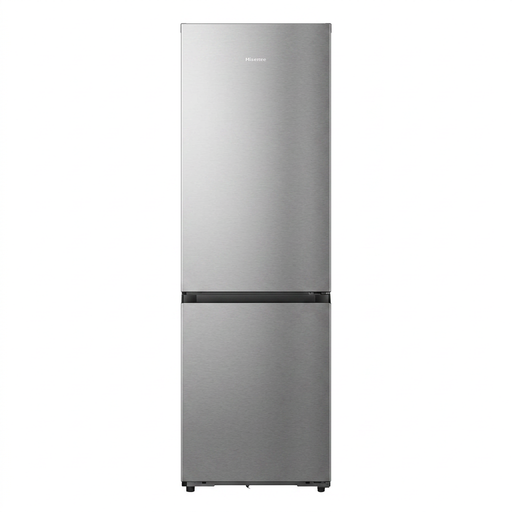 Image unavailable
Hisense RB3K330SAFC, 330 L freestanding fridge-freezer, 35 dB
This freestanding fridge-freezer has a stated capacity of 330 L and a noise level of 35 dB. For an open-plan kitchen, compare its noise level with other formats that meet your capacity needs, then check the installation clearances.
View on Joybuy
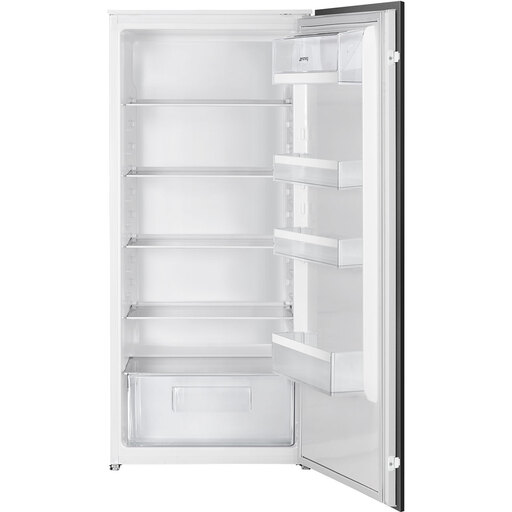 Image unavailable
SMEG S4L120E, integrated fridge with one door
Worth considering if you mainly store fresh food rather than large stocks of frozen food. Check the model’s label for its usable capacity, and consult the manual for the recess dimensions and installation requirements.
View on Joybuy
Frequently asked questions
How do I compare appliances in different formats?
Start by comparing how you’ll use them and the usable capacity of each compartment, then look at kWh/year, noise levels and dimensions. The European Commission says the energy label shows energy consumption, capacity and noise emissions. The same energy rating isn’t enough to compare appliances with different capacities.
Which climate class should I check for a garage, cellar or conservatory?
The temperature range covered by the model must include the room’s minimum and maximum temperatures. As a guide, Bosch gives 10 to 32 °C for SN, 16 to 32 °C for N, 18 to 38 °C for ST and 18 to 43 °C for T. Check the climate class and documentation for the specific appliance.
Do I need to leave space behind and above the appliance?
Yes. Make sure you leave the clearances required for ventilation. UFC-Que Choisir recommends leaving at least 10 cm above and behind the appliance, but for a specific model, particularly an integrated one, follow the installation instructions.
What temperature should I set my fridge and freezer to?
UFC-Que Choisir recommends setting the fridge to between 4 °C and 5 °C and the freezer to -18 °C. Check the manual and the storage instructions for the food you keep inside too, rather than automatically setting the appliance to a colder temperature.
How should I arrange for my old appliance to be taken away?
Arrange collection or disposal before your new model arrives. According to ADEME, a refrigeration appliance can be handed over to the retailer or delivery team when it’s replaced, or taken to the designated area for waste electrical and electronic equipment at a household waste recycling centre.


