Households that store fresh and frozen food
If your regular food shop includes both, compare the usable capacity of each compartment separately. A fridge freezer brings them together, but its internal layout needs to suit what you actually store.


Choose a configuration based on how much space you really need for fresh and frozen food, then measure the available space. A fridge freezer combines both in one appliance; a standalone fridge is suitable if you freeze very little or already have a freezer, while a separate freezer is a good option if you regularly need extra storage. When comparing similar configurations, also check annual energy consumption. If you’re considering a refurbished appliance, look at its condition and the terms of sale.
If your regular food shop includes both, compare the usable capacity of each compartment separately. A fridge freezer brings them together, but its internal layout needs to suit what you actually store.
If bulk buys or meals prepared in advance regularly fill your freezer, compare a separate appliance with a larger fridge freezer. An upright freezer gives you front access, while a chest freezer means you’ll need room to open the lid from above.
In a small kitchen, an alcove or an unheated room, the appliance’s dimensions, door clearance and permitted ambient temperature range matter as much as its capacity. ADEME points out that refrigeration appliances run continuously, so compare their annual energy consumption too.
First, work out which compartment runs short of space after your usual food shop. This will help you decide between a fridge freezer, a standalone fridge and a separate freezer. Then check the installation requirements and energy consumption. Buying new or refurbished involves its own checks.
| Factor | What to check | Who this matters to |
|---|---|---|
| Space for fresh and frozen food | Compare the usable capacity in litres of each compartment with your usual food shop, then look at the layout of the shelves, bins and drawers. | If my frozen food is overflowing but there’s still room in the fridge, a larger total capacity won’t necessarily solve the problem. Around 33% of consumers prioritise how the space is divided between fresh and frozen food. |
| Installation and opening clearance | Measure the space, the delivery route and the clearance needed with the door or lid open. For an unheated room, check the appliance’s permitted ambient temperature range. | In a narrow kitchen or cold cellar, I need to be able to install and open the appliance in the conditions it’s designed for. Space and positioning are a priority for around 27% of consumers. |
| Continuous energy use | Once you’ve decided on the capacity, compare the kWh/year and energy rating of models with similar configurations and usable capacities. | As the appliance will be running all the time, I want to avoid choosing a capacity I won’t use. Electricity consumption is the top priority for around 20% of consumers. |
| Replacing your old appliance | Check the collection arrangements for your old appliance at delivery. For a refurbished appliance, look at the tests carried out, its stated condition and the seller’s identity. | If I’m replacing my fridge, I want to know how the old one will be collected and what’s included when buying a refurbished appliance. Around 20% of consumers prioritise these replacement arrangements. |
The total capacity of a fridge freezer doesn’t tell you how much space is available for fresh or frozen food. For example, Bosch lists the KGN33NWDA as having 189 l of fridge space and 90 l of freezer space. It’s the split between the two, not just their combined capacity, that you should compare with your food shop.
Make a note of what usually fills each compartment, then compare the usable capacities and internal layouts of the models you’re considering.
ADEME highlights that fridges and freezers run continuously, and that choosing an appliance that’s too large or has more capacity than you need can increase energy use. An energy rating doesn’t remove the need to work out what capacity you actually need.
Decide on the capacity you need first, then compare the kWh/year shown on the energy labels of similar models.
The DGCCRF points out that when you buy a new appliance, an equivalent used appliance can be taken back free of charge. It’s worth checking the practical arrangements, especially if your new appliance is being delivered to your home.
Ask the seller when and how your old appliance will be collected, and what delivery requirements you need to meet.
According to the French Ministry of the Economy, a refurbished item is a second-hand product that has undergone full functionality tests and has been repaired if necessary. A simple second-hand listing doesn’t confirm that these checks have been carried out.
Before choosing, ask about the model’s condition, the tests and repairs carried out, the invoice and the identity of the professional responsible for the sale.
The brand’s fridge freezers let you compare dimensions and compartment capacities across specific models.
Its upright and chest freezers are worth considering if you’re planning to store extra frozen food separately, particularly in an unheated room.
The range includes fridge freezers you can compare by capacity, dimensions and noise level.
The brand offers both standalone fridges and fridge freezers, so you can choose the configuration before looking at the features.
These appliances combine refrigeration and freezing in a fridge freezer or multi-door format. Compare their capacity with your food shop and make sure they’ll fit in the space you have available. A standalone fridge or separate freezer may still be a better fit for your needs.
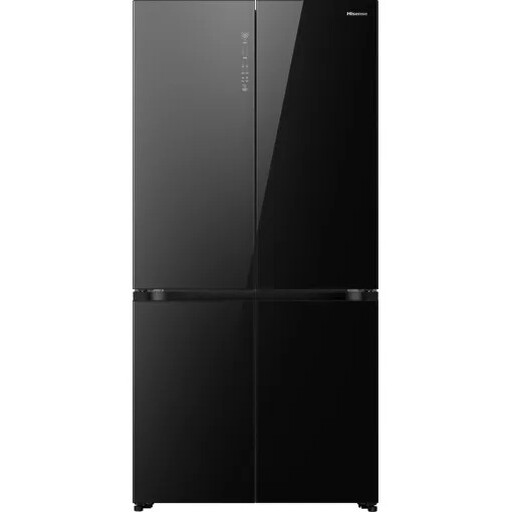 Image unavailable
Worth considering if you want to store plenty of fresh and frozen food in one large appliance.
Listed capacity: 591 l; energy rating: E. Compare the space in each compartment with your food shop, and check the clearance needed to open the doors.
 Image unavailable
Worth comparing if your food shop includes both fresh and frozen food and a four-door configuration would suit your kitchen.
The model name lists a capacity of 467 l, an E energy rating and Total No Frost. Check the space needed with the doors open before choosing this configuration.
 Image unavailable
Worth considering if you want to store fresh and frozen food in one appliance with a bottom freezer.
Listed capacity: 282 l; E energy rating and stainless steel finish. Check the split between the compartments and the door clearance. Don’t confuse this model with the Bosch KGN33NWDA, which has different specifications.
 Image unavailable
Worth comparing if you’re looking for one appliance for both fresh and frozen food.
Listed capacity: 344 l; energy rating: E. Check the clearance needed with the door open and, in the manual for the exact model, which compartments are covered by the frost-free feature.
 Image unavailable
Worth considering if space is tight but you still need separate compartments for fresh and frozen food.
The model name lists 153 l of fridge space, 74 l of freezer space, a width of 54 cm, an E energy rating and Low Frost. Check the kWh/year on the energy label and the space needed to open the door. Low Frost doesn’t mean you’ll never need to defrost it manually.
Compare the usable fridge and freezer capacities separately, then consider the space taken up and the annual energy consumption of all the appliances you need. If you already have a suitable fridge, check whether you only need extra freezer space before buying a separate freezer. Don’t work out the capacity you need based only on the number of people in your household.
No. Also check the kWh/year and compare appliances with similar configurations and usable capacities. ADEME points out that an appliance’s size and having more capacity than you need can increase energy consumption, especially as it runs continuously. Then check the dimensions and compartment layout.
It depends on the permitted ambient temperature range for the exact model. Beko says that some freezers with Freezer Guard can operate at temperatures as low as −15 °C, but this doesn’t apply to every model. Before buying, compare the temperature in the room with the details on the product information and in the manual.
When you buy a new appliance, the DGCCRF’s guidance provides for free collection of an equivalent used appliance. Ask the retailer about the collection arrangements for your order, particularly if your new appliance is being delivered to your home. ADEME also provides information about suitable collection schemes when you’re not replacing an appliance.
In France, the legal guarantee of conformity applies when a refurbished product is sold by a business to an individual, as explained by the French Ministry of the Economy. Before buying, identify the seller responsible, keep your invoice and check the stated condition, along with the tests and repairs carried out.