Who is this choice for?

Households replacing a fridge-freezer

If you need both compartments, compare usable capacity in litres, annual energy consumption and the purchase price rather than focusing only on the energy rating. The European Commission explains that the label for refrigeration appliances shows details including the rating, annual energy consumption and capacity.

Households that don’t need extra freezer space

If you mainly need fridge space and already have enough room for frozen food, check whether an additional freezer compartment would meet a genuine need. ADEME recommends avoiding unnecessary appliances, which can increase energy bills.

Households short of freezer space

If your fridge meets your needs but doesn’t have enough freezer space, compare a more suitable fridge-freezer with a separate freezer, taking into account the space required and the energy consumption of each appliance you use.

What to compare

Fridge

Consider this if: you don’t need a freezer compartment in your new appliance, or you already have a separate freezer with enough capacity.

Bear in mind: it won’t freeze food. If you keep using a separate freezer, it will add to your energy consumption.

Fridge-freezer

Consider this if: you regularly use both compartments and want them in a single appliance.

Bear in mind: check the fridge and freezer capacities separately. The total capacity alone doesn’t tell you how the space is divided.

Separate household freezer

Consider this if: your current fridge meets your needs but you genuinely need more space for frozen food.

Bear in mind: it won’t replace your fridge and you’ll need to make room for it. If both appliances will stay plugged in, compare their annual energy consumption.

What matters What to check before you buy Who should pay closest attention?
Annual energy consumption Compare the kWh/year and energy rating on the label for the exact model. If you’re considering two appliances, add together their stated energy consumption. If I want to keep track of the energy use of an appliance that runs continuously, I compare the kWh/year of models that meet the same needs. Around 30% of consumers put annual energy consumption first.
Usable capacity Check fridge and freezer capacity in litres separately, as well as the external dimensions. When replacing an appliance, I look for enough space for my usual shopping without paying for capacity I won’t use. Around 30% of consumers prioritise choosing the right capacity.
Freezer capacity Compare the freezer capacity with your actual needs and, if you’re adding another appliance, with the capacity you already have. If I store lots of frozen food, I check that there’s enough freezer space without adding an unnecessarily large appliance. Around 20% of consumers prioritise this capacity.
Installation and maintenance Check the dimensions and installation type, the noise level shown on the label, and the defrosting system for the exact model. If I have a specific space in my kitchen, I check the installation requirements and maintenance considerations before choosing. Around 20% of consumers prioritise these practical details.

Mistakes to avoid

  • Choosing based on the energy rating alone

    The label shows the energy rating, annual consumption and capacity. A model is only suitable if its compartments also meet your needs.

    Work out how much space you need for each purpose, then compare the kWh/year of suitable appliances.

  • Adding a freezer without including your existing fridge in the calculation

    A separate freezer doesn’t replace fridge space. If both appliances are in use, their energy consumption adds up.

    First check how much extra freezer capacity you need, then add together the kWh/year shown on both labels.

    A second appliance takes up space and adds another item that needs to run continuously, as well as the purchase cost.

  • Assuming NoFrost means lower energy consumption

    NoFrost means you don’t need to defrost the models that have this feature manually, but its presence alone doesn’t let you compare the energy consumption of two appliances.

    If this feature matters to you, check that it’s included on the exact model and compare the kWh/year separately.

  • Ordering without checking the installation type

    An integrated appliance and a freestanding model are installed differently, and the dimensions must fit the space you have available.

    Measure the space and check it against the model’s dimensions and installation instructions before you buy.

Brands to consider

Bosch

Two documented freestanding fridge-freezers let you compare models with the same stated capacities.

  • Bosch lists 218 l of fridge space and 103 l of freezer space for the KGN362LAF and KGN362WDF.
  • The stated energy ratings differ: A for the KGN362LAF and D for the KGN362WDF. Check the kWh/year on the label for the model you choose; these details don’t represent the entire range.

Liebherr

The Ksfd1820 and FNd 522i are examples of two separate appliances: a one-door fridge and a freestanding freezer.

  • The manufacturer lists capacities of 399 l for the Ksfd1820 and 277 l for the FNd 522i, which also features NoFrost.
  • These large capacities won’t be necessary for every household. If you use both appliances, take their individual energy consumption into account.

Beko

The B5RCNE416HG freestanding fridge-freezer is a documented example for households looking for generous fridge and freezer space.

  • Beko lists an energy rating of C, 297 l of fridge space, 118 l of freezer space and 213,53 kWh/year for this model.
  • These specifications apply to this particular model. Compare them with the label and the capacity you need.

Haier

The HDPR1618ANPK freestanding fridge-freezer is an A-rated model presented with connected features.

  • Haier’s product details list NoFrost and control via the hOn app.
  • The manufacturer’s claims about energy consumption or food preservation aren’t backed by an independent comparison here. Check the specifications for the model and consider whether its features are useful for you.

Electrolux

The ENS3SE18S is an integrated fridge-freezer to consider if your kitchen is designed for this type of installation.

  • Electrolux lists 179 l of fridge space, 70 l of freezer space, energy consumption of 216 kWh/year and an E rating.
  • The capacity and installation type differ from those of freestanding models. Check the dimensions of the space you have planned for it.

Appliances available on Joybuy

These appliances cater for separate freezer needs and combined fridge-freezer use. Compare their capacities and energy consumption to find the right fit for your setup.

Heinrich’s 161 l freezer, C rated, No Frost

Heinrich’s 161 l freezer, C rated, No Frost

Worth considering if your fridge already meets your needs and you need extra freezer space; this appliance doesn’t keep fresh food chilled.

Stated capacity: 161 l. C rated. No Frost listed.

View on Joybuy
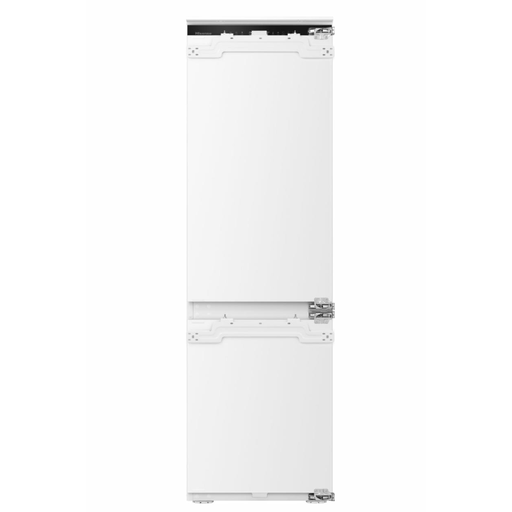
Hisense RB3B250SAWC, C-rated integrated fridge-freezer

Hisense RB3B250SAWC, integrated fridge-freezer

Worth considering if you need both compartments and have a space designed for an integrated appliance.

Fridge: 176 l. Freezer: 76 l. C rated. Stated energy consumption: 150 kWh/year. No Frost listed.

View on Joybuy
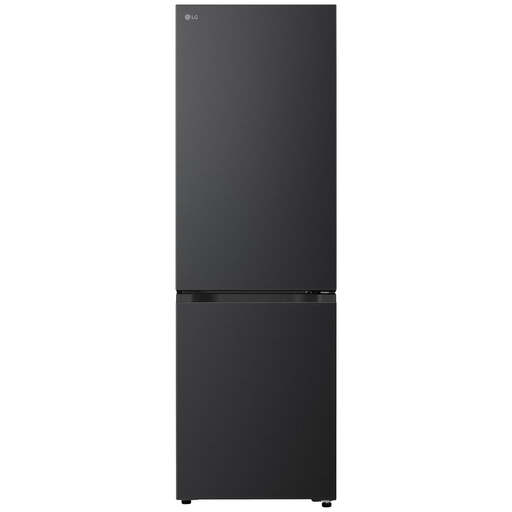
LG GBBS312CEV, C-rated 333 l fridge-freezer

LG GBBS312CEV, 333 l fridge-freezer, C rated

Worth considering if you want fridge and freezer space in one appliance and the stated split suits the way you use it.

Fridge: 183 l. Freezer: 113 l. Stated energy consumption: 169 kWh/year. No Frost listed.

View on Joybuy
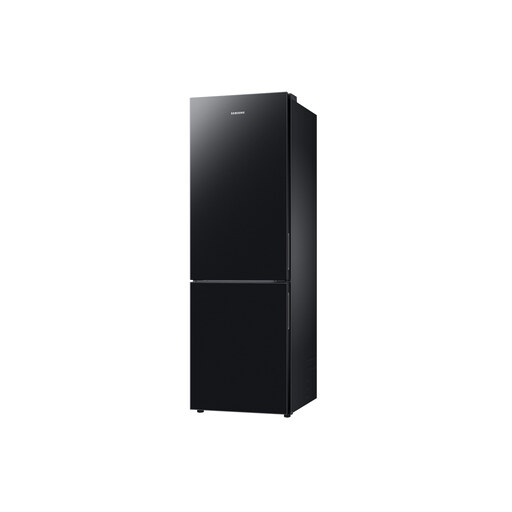
Samsung RB33B612EBN, 344 l freestanding fridge-freezer, E rated

Samsung RB33B612EBN, 344 l fridge-freezer, E rated

Worth considering if you’re looking for a freestanding fridge-freezer. Check that its separate capacities meet your needs.

Fridge: 230 l. Freezer: 114 l. Stated energy consumption: 254 kWh/year. Stated dimensions: 59,5 × 185,3 × 65,8 cm. Reversible door listed.

View on Joybuy
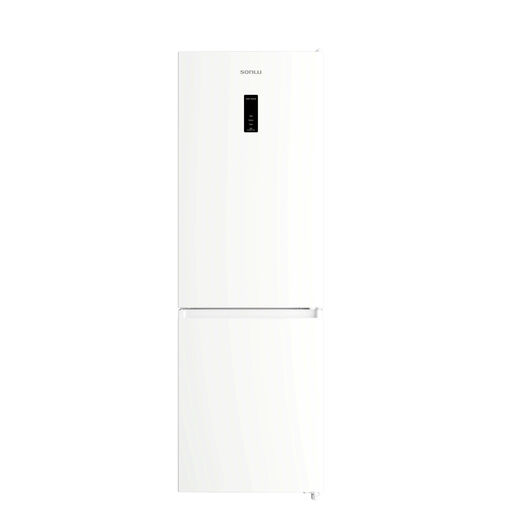
Sonlu CD-350RW, 310 l fridge-freezer, E rated

Sonlu CD-350RW, 310 l fridge-freezer, E rated

Worth considering if you need both compartments and the stated capacity and width suit the space you have available.

Fridge: 211 l. Freezer: 99 l. Stated width: 60 cm. Reversible door and frost-free system listed.

View on Joybuy

Frequently asked questions

What should I look for on the energy label of a new refrigeration appliance?

The European label shows details including the A to G energy rating, annual energy consumption in kWh, compartment capacities and noise level. Compare the kWh/year of models with capacities that meet your needs; the QR code links to information about the model in EPREL. This labelling applies to household fridges, freezers and fridge-freezers.

How can I compare the purchase price with the cost of electricity?

For two options that meet the same need, multiply the kWh/year shown on each label by your electricity rate per kWh, then by the period you have in mind. Add the purchase price and, if you’ll be using two appliances, their respective energy consumption. The result depends on your tariff and actual usage, so it isn’t a guaranteed bill.

How can I install and use the appliance while keeping food safe?

Check the dimensions and installation instructions for the exact model. For fridges, Anses recommends checking the temperature regularly and says the ideal storage temperature is between 0 and +4 °C at the coldest point. It also advises against overfilling the appliance, to help air circulate. This is general guidance and not tailored advice.

What warranty and old-appliance collection options should I expect in France?

When a private individual buys from a professional seller, the legal guarantee of conformity allows them to make a claim for two years from the date the goods are delivered, subject to the legal conditions. This is separate from a commercial warranty, which is optional. When a new appliance is sold, free like-for-like take-back applies to an equivalent used appliance. Ask the seller how this works in practice, particularly for delivery.