People who prepare meals to freeze
If you cook ahead, check that your portions will fit in the freezer without hiding food you’ve already stored. UFC-Que Choisir points out that ease of use also matters when choosing a freezer.


Start by thinking about the fresh and frozen food you actually keep between shops, then compare the usable capacity of each compartment. A freezer compartment may be enough if you only freeze a small amount; a fridge freezer combines both uses, while a separate freezer is worth considering if your portions regularly exceed the space available — provided you have room to install and power it.
If you cook ahead, check that your portions will fit in the freezer without hiding food you’ve already stored. UFC-Que Choisir points out that ease of use also matters when choosing a freezer.
Shopping for several days at a time can mean needing space for both fresh and frozen food. UFC-Que Choisir recommends considering how often you shop and how much frozen food you eat when choosing a format.
Measure the space and delivery route before you choose. Also check that the doors or drawers can open properly and that the freezer compartment meets your needs.
Worth considering : if you regularly store fresh food and portions or frozen food, but want just one appliance.
Check : the usable capacity of each compartment and how easy the drawers are to access.
Worth considering : if you only need to freeze a small amount and space is limited.
Check : the capacity and specifications of the compartment on the specific model; its presence alone doesn’t tell you how much usable space it offers.
Worth considering : if your frozen stock often exceeds the space in your current appliance or future fridge freezer.
Check : where it will go, how easy the inside is to access, whether its climate class suits the installation location and its annual energy consumption.
UFC-Que Choisir links your choice of format to how often you shop and how much frozen food you eat. When comparing appliances, consider your needs for fresh food, frozen portions, kitchen space and energy consumption separately.
| What matters | What to check | Who it matters to |
|---|---|---|
| Space for portions and frozen food | Compare the usable freezer capacity, storage layout and space needed for your containers. | If I freeze portions as well as storing frozen food, I want to be able to put everything away and find it easily. Around 40 % of consumers prioritise freezer capacity. |
| Space for fresh food | Check the fridge capacity, shelves and drawers against your usual shopping habits. | When I shop for several days at a time, I want to store fresh food without taking up space reserved for frozen food. Around 30 % of consumers prioritise fresh food storage. |
| Size and layout | Measure the space and delivery route, then check the dimensions and how the doors or drawers open. | If my kitchen is short on space, I want to be able to install and use the appliance without blocking walkways. Around 20 % of consumers prioritise size and layout. |
| Energy consumption and use | Compare the kWh/year and compartment capacities of the appliances you’re considering; if you choose two appliances, add their stated energy consumption together. | If I’m thinking of adding a freezer, I want to compare its energy consumption with a solution that meets the same needs. Around 10 % of consumers prioritise energy consumption. |
The space for fresh food isn’t the same as the space available for frozen portions. A large total capacity doesn’t necessarily mean both compartments will suit what you need to store.
Compare the stated usable capacities of the fridge and freezer separately, then check them against the food and containers you usually store.
The presence of a built-in compartment doesn’t, by itself, tell you how much usable space there is for portions prepared in advance.
Check the specifications of the specific model’s compartment before choosing it for storing portions regularly.
Its format, access to food and installation conditions also matter, particularly if it’s going in a pantry or another room.
Measure the space, check the drawers or baskets, and compare the kWh/year as well as the climate class for the intended location.
An additional appliance also needs its own space and power supply.
The KGN36NLEA and KTL15NWEB models are examples of a fridge freezer and an under-counter fridge with a built-in freezer compartment, respectively.
The RB53DG703ES9EF fridge freezer is an example of a wider model to compare with the space available in your kitchen.
The FNe 4204 Pure NoFrost is an example of a separate upright freezer to consider if freezing becomes a priority.
The models featured are fridge freezers, so you can compare options that combine fresh and frozen food storage in one appliance.
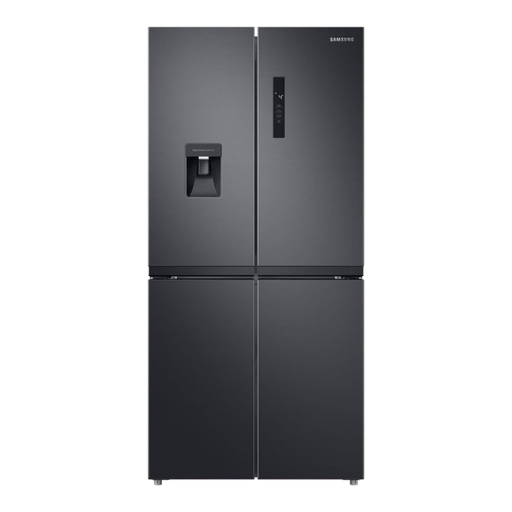 No image available
Worth considering if you’re looking for an appliance that combines refrigeration and freezing.
Total capacity stated in the product name: 488 L. Class E is also stated in the product name.
 No image available
Worth considering if you’re looking for a fridge freezer designed for integrated installation.
The name lists a capacity of 249 L, TwinTech No Frost and class E. This model is designed for built-in installation with a sliding door: check that it’s compatible with your kitchen.
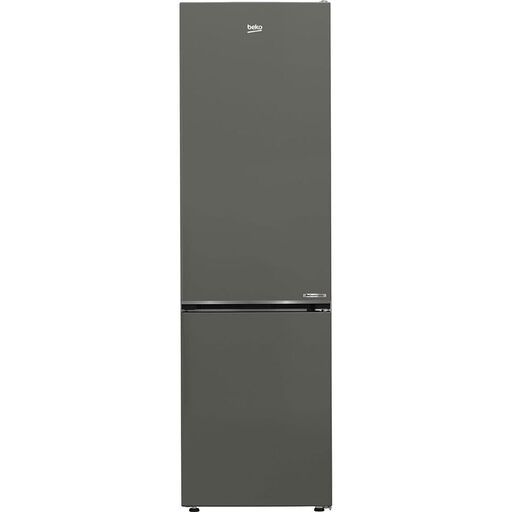 No image available
Worth considering if you want to compare a freestanding fridge freezer for fresh and frozen food.
The name lists a capacity of 355 L, Total No Frost and class C. Check the model’s dimensions and the space available before installation.
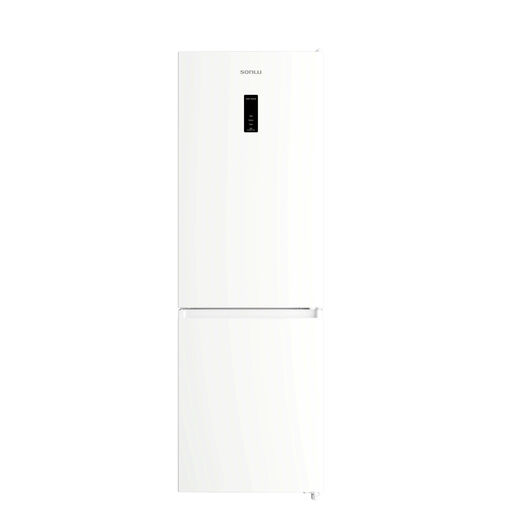 No image available
Worth considering if you want to compare a freestanding fridge freezer whose name gives the capacity of each compartment separately.
The name lists 211 L for the fridge, 99 L for the freezer and a width of 60 cm. It also mentions a reversible door and electronic temperature control.
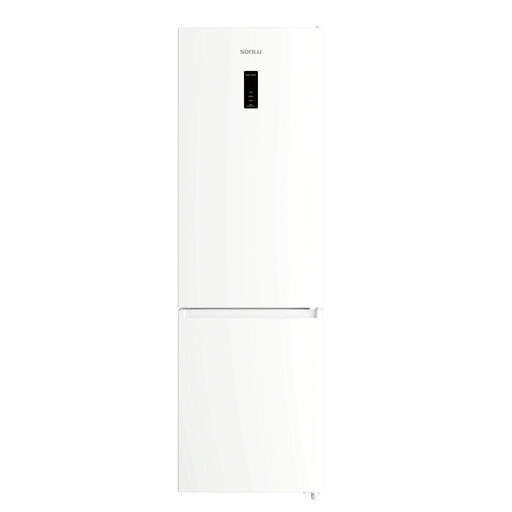 No image available
Worth considering if you want to compare a freestanding fridge freezer with separate capacities listed for the fridge and freezer.
The name lists 252 L for the fridge, 103 L for the freezer and a width of 60 cm. It also mentions a reversible door and electronic temperature control.
Storage time isn’t determined by the appliance’s capacity. Anses recommends putting food in the fridge no more than two hours after preparation and keeping the coldest part between 0 and +4 °C. Its advice to eat food within three days applies in particular to ready meals bought in shops; it isn’t a universal storage time for every home-cooked recipe.
No. Its capacity alone won’t guarantee less food waste. ADEME recommends taking stock of what you have, planning meals and tidying the fridge regularly; these habits help you keep track of the food you already have.
The European energy label shows, among other things, kWh/year and the capacity of the frozen and unfrozen compartments. Compare appliances suited to the same needs and, if you’re considering two appliances, add together their stated annual energy consumption before comparing it with that of a single fridge freezer.
When you buy from a professional seller, the statutory legal guarantee of conformity applies independently of any optional commercial warranty extension. The French Ministry of the Economy states that an energy label is compulsory for the new fridges covered by the rules, including those sold online. When you buy a new appliance, the retailer must offer to take back an old appliance of the same type on a “one-for-one” basis.