Which criteria should you compare?
Fridge only
Choose this if: you mainly buy fresh food and don’t need a regular supply of frozen food.
Bear in mind: the capacity for chilled food won’t meet any need you have for freezing.
Fridge-freezer
Choose this if: you want to store fresh and frozen food in the space taken up by a single appliance.
Bear in mind: the capacity is divided between compartments, so check that each one suits the amount you store.
Separate freezer
Choose this if: your current freezer capacity isn’t enough for your shopping or prepared portions.
Bear in mind: you’ll need to make room for it and factor in the electricity used by an appliance that runs continuously.
Reorganise your existing storage
Consider this if: the lack of space could be down to food or packaging taking up unnecessary room in your fridge.
Bear in mind: this option won’t give you any extra freezer capacity.
The percentages below reflect consumers’ main priorities when choosing an appliance to regularly store shopping and home-cooked meals.
| Criterion |
What to check |
Who it matters most to |
| Space for fresh food |
Usable fridge capacity and storage layout; whether or not there’s a freezer compartment. |
If I mainly store fresh food between shops, I want a suitable capacity without giving up space for a freezer I won’t use much. Around 33% of consumers concerned prioritise capacity for fresh food. |
| Balance of fresh and frozen storage |
The capacity in litres of each compartment and the appliance’s external dimensions, rather than its total capacity alone. |
If I want to keep fresh and frozen food in the same place, I check that each zone can hold the amount I usually store. Around 27% of consumers prioritise having both functions in one appliance. |
| Freezer capacity |
Freezer volume, access via drawers or an open compartment, floor space and the installation requirements specified for the model. |
If I freeze prepared portions or larger shops, I compare an upright and a chest freezer based on the space available and how easy it is to access the food. Around 20% of consumers prioritise extra freezer capacity. |
| Size and electricity use |
External dimensions and annual consumption in kWh shown on the label, for an appliance with a capacity suited to how you’ll use it. |
If available space and electricity use are especially important to me, I compare the dimensions and kWh/year of appliances that meet my needs. Around 20% of consumers prioritise this balance. |
Joybuy products to suit your needs
This selection includes fridge-freezers and a chest freezer that can switch between chilling and freezing, so you can compare different ways to store food at home.
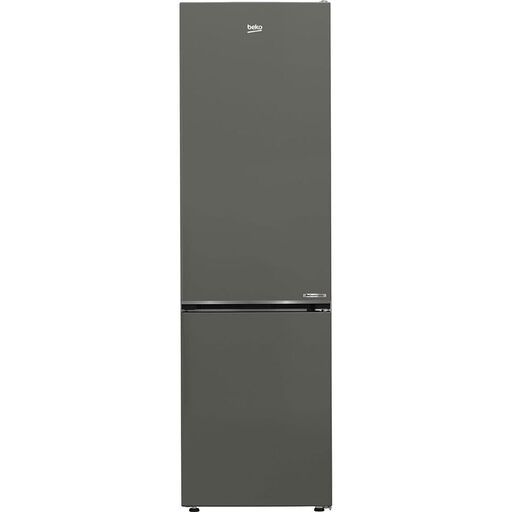 Image unavailable
Beko B5RCNE406HG, 355 L fridge-freezer, Total No Frost, C rated
Worth considering if you want to combine chilled and frozen storage in one appliance.
Stated capacity: 355 L. Total No Frost and energy rating C are listed in the product name.
View on Joybuy
 Image unavailable
Haier HTW5618ENMG, 3-door 360 L fridge-freezer, E rated
Worth considering if you’re looking for an appliance that combines fresh and frozen storage in a three-door design.
Stated capacity: 360 L. The product name lists Total No Frost, an E energy rating, Wi-Fi and My Zone.
View on Joybuy
 Image unavailable
AUCMA, 291 L convertible chest freezer, E rated
Worth considering if you want a separate storage space that can switch between chilling and freezing.
Stated capacity: 291 L. The product name lists a removable basket, a five-level digital control and a defrost drain. It doesn’t provide both compartments at the same time like a fridge-freezer.
View on Joybuy
 Image unavailable
Samsung RF50C530EB1, 495 L multi-door fridge, E rated
Worth considering if you’re looking for a large, multi-door appliance for storing food at home.
Stated capacity: 495 L. The product name lists a black finish and an E energy rating.
View on Joybuy
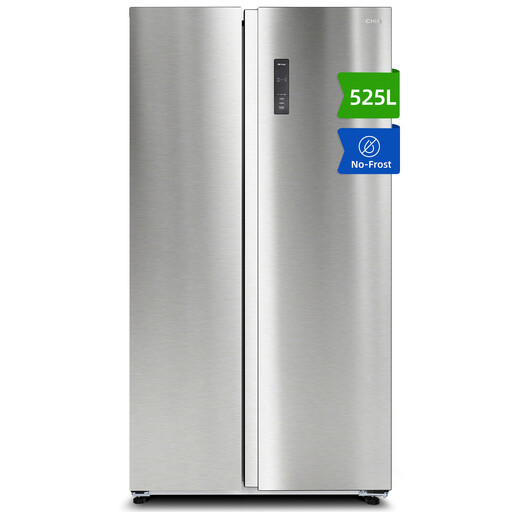 Image unavailable
CHiQ JR525WSE, 525 L side-by-side fridge-freezer, E rated
Worth considering if you want a side-by-side design with the fridge and freezer capacities listed separately.
The product name lists 333 L for the fridge and 192 L for the freezer, plus No Frost technology, Multi-Airflow and an Inverter compressor.
View on Joybuy
Frequently asked questions
How can I estimate the capacity I need if I don’t know what size is right for my household?
Start with the amount of fresh and frozen food you have after a typical shop, then compare the capacity in litres of each compartment. Que Choisir gives an average guide of 100 to 150 L for one person, then 50 L for each additional person for the fridge. This isn’t a universal threshold: how often you shop, the meals you prepare and the space you have available can all affect what you need.
Which energy information should I compare on a cooling appliance?
For appliances covered by European regulations, the energy label uses a scale from A to G and includes information such as kWh/year, fridge and freezer volumes, and noise levels. The European Commission says the QR code links to the EPREL database. For an unusual appliance, check that it falls within the scope of the relevant rules before comparing its label with that of a standard appliance.
How should I store meals prepared in advance?
Anses recommends storing food in the coldest part of the fridge, between 0 and +4 °C, not overfilling the appliance and refrigerating prepared food within two hours. Freezing food at home at −18 °C stops bacteria multiplying, but doesn’t destroy most micro-organisms. Anses therefore recommends freezing food before its use-by date has passed.
What should I check before installing a freezer in a cellar or garage?
Check the ambient temperature range specified for the model, the dimensions of the space and whether there’s room to open the door or lid. Que Choisir highlights the importance of the climate class. Liebherr and Whirlpool state that certain specific models can operate at temperatures down to −15 °C; this feature doesn’t apply to every freezer.
Who is responsible if an appliance breaks down, and what happens to the old one?
In France, when a private consumer buys from a professional seller, the legal guarantee of conformity applies through the seller and is separate from any optional commercial warranty. The Ministry of the Economy states that you have two years from delivery of the goods to take action. When a new appliance is sold, the DGCCRF says the free take-back of an old equivalent appliance is covered by the so-called “one-for-one” rule. Check the practical arrangements with the seller.


