Households that plan meals and shops
If you plan your meals around the food you already have, choose storage that makes everything easy to find. ADEME recommends checking what you have in stock before you shop to avoid buying duplicates.


Choose according to how much space fresh and frozen food actually takes up in your usual shop. A fridge-freezer combines both uses, provided its split suits you; a separate freezer is better suited to regular freezing needs that your existing compartment can’t accommodate. Before adding another appliance, compare the usable capacity of each compartment, the space available and the annual energy consumption shown on the energy labels.
The right capacity depends more on what you store between shops than on the total capacity alone.
If you plan your meals around the food you already have, choose storage that makes everything easy to find. ADEME recommends checking what you have in stock before you shop to avoid buying duplicates.
If you need to store leftovers, containers and portions to freeze, look at the space available for fresh food and frozen food separately. Also check that the shelves, compartments and drawers suit the containers you usually use.
If bulk buys or batch-cooked meals regularly fill the entire freezer compartment, a separate appliance could meet your needs, provided you have a suitable place for it. Beko, for example, presents chest freezers as an option for households with room for a large-capacity appliance.
First, choose the configuration that suits your storage habits, then compare the features of models in that category.
Consider this if: you mainly store fresh food and leftovers to eat soon, and don’t regularly need extra freezer space.
Limitation: on its own, this option won’t meet a significant need for frozen food storage.
Consider this if: you need space for fresh shopping and a regular supply of frozen food in one appliance.
Limitation: the split between the two compartments varies by model. A sufficient total capacity may hide a compartment that’s too small for your needs.
Consider this if: your fridge already meets your fresh food needs, but batch-cooked portions or frozen food regularly overflow its freezer compartment.
Limitation: you’ll need to find space for an extra appliance which, as ADEME points out, runs continuously.
Consider this if: you have significant, ongoing needs for both fresh and frozen food.
Limitation: both appliances take up space and use electricity, so assess each one before choosing this configuration.
| Factor | What to check | Consider your needs |
|---|---|---|
| Usable capacity | Compare the fridge and freezer capacities separately, rather than looking only at the total. The European Commission says these capacities are among the details shown on the energy label. | Do I mainly store fresh food, or do the portions I freeze regularly take up more space than expected? |
| Storage | Look at the layout of the shelves, compartments and drawers, then check whether your usual containers and groceries will fit. Keep supplies visible so you can check what you have before shopping, as ADEME recommends. | Do leftovers disappear at the back of the fridge? I want to see what needs using before I shop again. |
| Temperature | Check the temperature settings available and how easy the compartments are to access. For fridges, ANSES recommends a temperature between 0 °C and 4 °C in the coldest part. | When the appliance is full or opened frequently, I want to be able to check its temperature rather than assume the displayed setting is enough. |
| Energy consumption | Check the annual consumption in kWh alongside the energy rating, appliance type and usable capacities. The European Commission says the label also shows the noise level; ADEME reminds us that these appliances run continuously. | If I’m choosing between two capacities, I’d rather consider what I’ll actually store before opting for a larger capacity or a second appliance. |
| Installation | Measure the space and check the clearance required for the specific model. If it’s going in an unheated room, also check the ambient temperature range specified in the manual. | Will my kitchen have enough room to open the door and use the storage compartments? For a garage or cellar, I need to check that the model is suitable for the room’s conditions. |
Two fridge-freezers with the same total capacity can offer different amounts of space for fresh and frozen food. The compartment you need most may end up being too small.
Take stock of a typical week’s shopping, leftovers and batch-cooked portions. Then compare the capacity of each compartment, shown on the energy label according to the European Commission.
An extra appliance takes up space and runs continuously, as ADEME points out. An occasional need doesn’t necessarily mean it will be useful all year round.
Check whether your current compartment fills up regularly, then consider where you’d put the freezer and its annual energy consumption.
A label such as NoFrost or the name of a compartment doesn’t remove the need to check the temperature and organise your food. On its own, it doesn’t guarantee that every product will be stored safely in all conditions.
Assess these features for the specific use described by the manufacturer, then check the settings, capacities and layout of the model. For the fridge compartment, follow ANSES’s recommendation of 0 °C to 4 °C in the coldest part.
The permitted ambient temperature range depends on the model. A feature advertised for one range doesn’t apply to every freezer.
Before choosing a location, compare the room’s conditions with the temperature range shown in the technical specifications or manual for the exact model.
These examples can help you compare specific configurations; the features mentioned don’t apply to every appliance from a brand.
The KGN36VLED is an example of a fridge-freezer for which Bosch lists the capacity of each compartment.
The RB34T600CSA is an example of a fridge-freezer to consider when available depth is a key factor.
The CBNsdc 765i and FNe 5006 offer two different points of comparison: a fridge-freezer and an upright freezer.
Beko’s chest freezers are worth considering if you’re looking at a separate appliance for storing large quantities and have enough room.
These five fridge-freezers combine fresh food storage and freezing in one appliance. Their stated capacities and formats offer options for different storage needs. If you’re looking for a separate freezer only, this selection won’t suit that configuration.
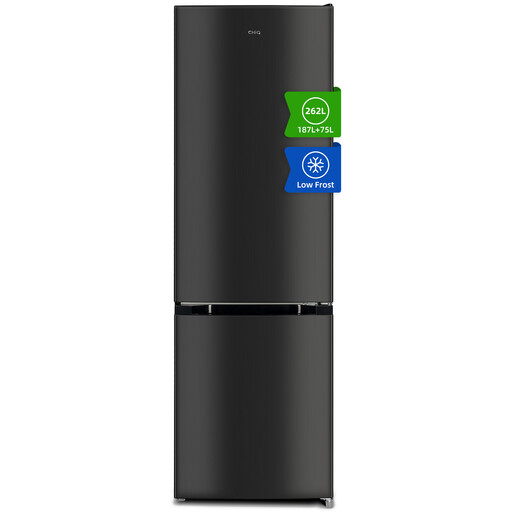 Image unavailable
If you want fresh groceries and frozen food in one appliance and kitchen width is a consideration, this fridge-freezer is listed as 54 cm wide and 176 cm tall. Its product title specifies a 70/30 split and Low Frost; check that the split and installation space suit your needs.
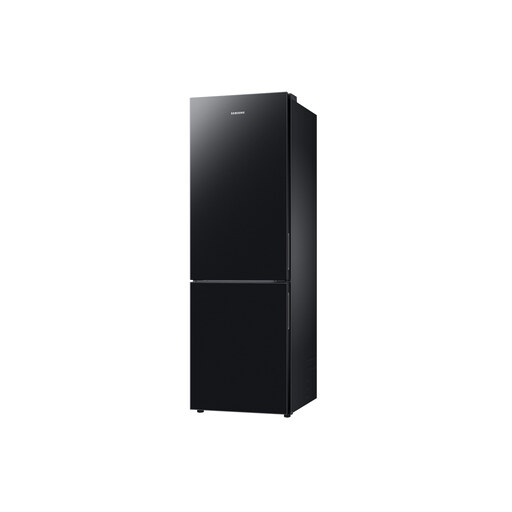 Image unavailable
This fridge-freezer is listed at 344 L and may be worth considering if you want to store fresh and frozen food in one appliance. Its product title specifies an E energy rating; to assess whether it suits you, also compare the capacity of each compartment, annual energy consumption and installation dimensions.
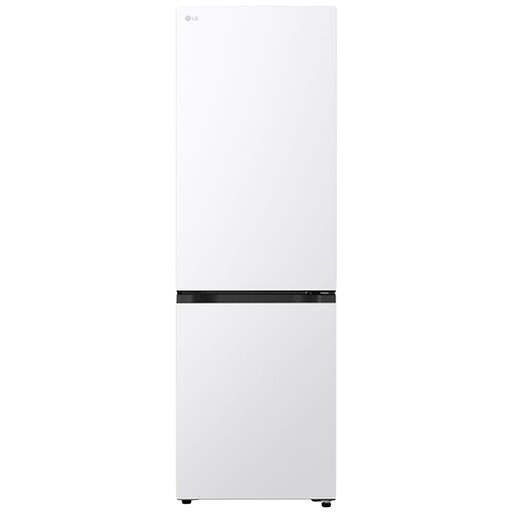 Image unavailable
This fridge-freezer is listed at 333 L and can be compared with other formats if you store both fresh meals and frozen food. Its product title specifies a C energy rating; check the annual energy consumption and the space allocated to each compartment before choosing based on the rating alone.
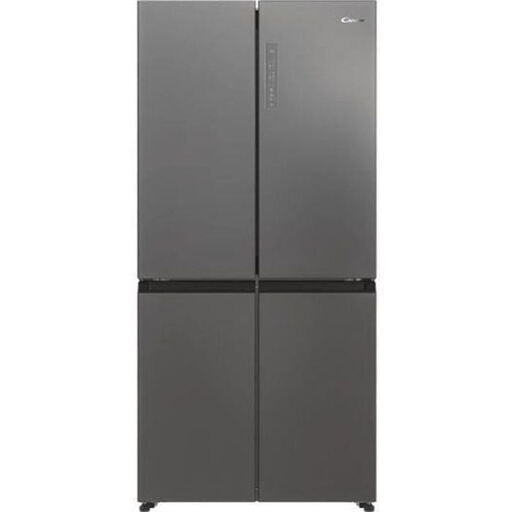 Image unavailable
This four-door model is listed at 467 L and may be worth considering if your shopping and meal prep regularly take up a lot of space. Its product title mentions Total No Frost and an E energy rating; measure the space and compare the capacity split and annual energy consumption before choosing this format.
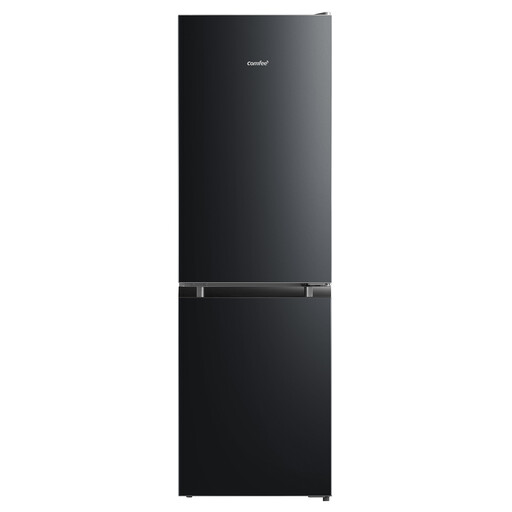 Image unavailable
This fridge-freezer is listed at 174 L and may be suitable if you don’t need much space for shopping or portions to freeze. Its product title mentions Low Frost; check the capacity of each compartment and the energy label to compare it with other sizes.
Compare their annual consumption in kWh when their type and usable capacities meet the same need. According to the European Commission, the energy label also shows the energy rating, storage capacities and noise level, so the rating alone doesn’t tell you everything you need to know.
ANSES recommends keeping the coldest part of the fridge between 0 °C and 4 °C. Check the temperature, particularly if the appliance is very full or opened frequently; an internal thermometer can help you monitor the actual temperature.
Only if the model’s specified ambient temperature range is suitable for the conditions in that room. Check the manual or technical specifications before installing it in a garage or cellar: suitability stated for certain models doesn’t apply to every freezer.