Households that shop less often and cook in batches
You need room for your shopping and prepared meals, with space for both chilled and frozen food. UFC-Que Choisir’s volume guidelines should be adjusted to suit how often you shop.


If you regularly store fresh and frozen food, start by comparing the usable capacity of each compartment in a fridge freezer with your shopping habits. A separate freezer is worth considering if your need for frozen storage consistently exceeds the capacity of a fridge freezer. A compact appliance is a good fit if you have limited storage needs. In every case, check annual energy consumption, noise levels and dimensions against your kitchen before choosing.
You need room for your shopping and prepared meals, with space for both chilled and frozen food. UFC-Que Choisir’s volume guidelines should be adjusted to suit how often you shop.
As ADEME points out, a cooling appliance runs continuously. If your kitchen is open-plan, compare the stated annual energy consumption and noise levels of models with the capacity you need.
Before choosing between appliances, check the space available, the clearances specified in the manual and the delivery route. If you’re replacing an appliance, arrange for the retailer to take the old one away too.
The right format depends first on how much room you need for fresh and frozen food, then on the space available in your kitchen. These three configurations suit different storage habits.
Consider it if: you regularly use both the fridge and freezer compartments and want them together in one appliance.
Bear in mind: the split between the two compartments is fixed by the model you choose.
Consider it if: you regularly freeze more food than a fridge freezer that fits your kitchen can hold.
Bear in mind: you’ll need space for two appliances and should check their combined energy consumption.
Consider it if: you buy smaller amounts and have limited space.
Bear in mind: shopping less often or preparing more meals in advance can quickly fill its compartments.
| Criterion | What to check | Who it matters to |
|---|---|---|
| Fresh and frozen capacity | Compare the usable litres in each compartment, then match them to how often you shop and the meals you prepare. | If I do a big weekly shop or prepare several meals in advance, I want to fit everything in without choosing excessive capacity. Around 31% of consumers prioritise having enough space. |
| Space and delivery | Measure the appliance, access points and required clearances; check with the retailer what delivery and take-back services are included. | In a narrow kitchen or a home with restricted access, I need to be able to get the appliance in and install it. This is the top priority for around 25% of consumers. |
| Energy use and noise | On the labels of new appliances, compare kWh/year and dB(A) between models with similar capacities and configurations. | If my kitchen is open-plan, I want to consider noise as well as the electricity used by an appliance that runs continuously. Around 25% of consumers prioritise these practical considerations. |
| Configuration and maintenance | Check how much space is set aside for frozen food and, if defrosting matters to you, the technology specified for each compartment. | I want an arrangement that suits the way I store food, without choosing an easier-care feature at the expense of the capacity I need. This is the main consideration for around 19% of consumers. |
A large total capacity doesn’t guarantee enough room in the compartment you use most. An appliance that’s too large will also take up more space.
Work out how much fresh and frozen storage you need separately, then compare this with the usable capacity of each compartment.
The energy rating letter isn’t enough to compare appliances of different sizes or configurations. ADEME points out that size and buying more capacity than you need can affect your electricity bill.
Check the kWh/year on the label and compare models with similar capacities and intended uses.
Seeing No Frost on a model doesn’t tell you whether its capacity, noise level or energy consumption will suit your household.
Check which compartments the feature applies to, then look at their capacity, the kWh/year and the appliance’s dimensions too.
A fridge freezer that fits your kitchen may still be difficult to get through a doorway, up the stairs or into a lift.
Measure the entire route and check with the retailer what’s included in delivery, installation and removal of your old appliance.
Bosch offers freestanding and integrated fridge freezers, with features that vary by model.
The range includes fridge freezers and fridges, some with BioFresh compartments or NoFrost technology.
Samsung offers fridge freezers and multi-door appliances, with a range of capacities and configurations.
The range includes fridges and freestanding or built-in fridge freezers, with different cooling configurations.
These appliances combine refrigeration and freezing. The first three offer more total capacity, while the last two suit more limited storage needs. Compare the internal layout and check the dimensions before choosing a model.
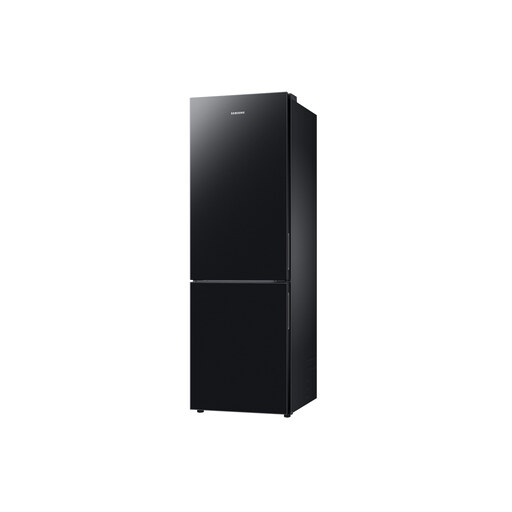 Image unavailable
Worth considering if you want a fridge freezer that combines fresh and frozen storage, and this capacity suits your shopping habits.
Stated total capacity: 344 l; energy rating E. Check the available space, delivery access and required clearances.
 Image unavailable
The three-door design may appeal if you want to organise fresh and frozen food in one appliance.
Stated total capacity: 360 l; Total No Frost, My Zone, Wi-Fi and energy rating E are listed in the name of the model on offer. Check its dimensions and the clearances required.
 Image unavailable
This capacity is worth considering if you shop less often or store a lot of food, provided you’ll make use of the space.
Stated total capacity: 467 l; Total No Frost and energy rating E. The product details give a width of 83,3 cm and non-reversible doors. Measure the space and delivery route.
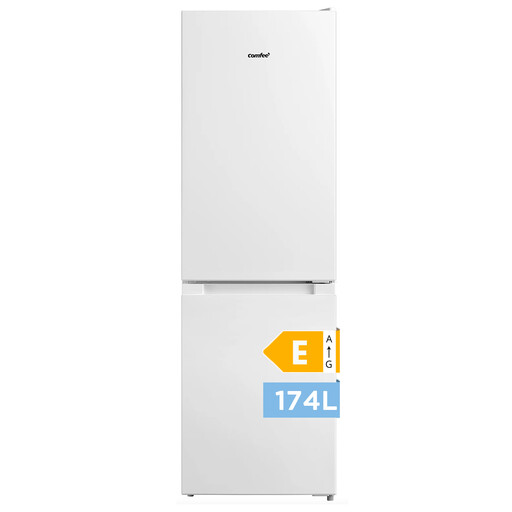 Image unavailable
Consider this model if you need less capacity but still want separate compartments for fresh and frozen food.
Stated height: 150 cm; Low Frost, reversible door, 39 dB and energy rating E. Check the kWh/year on the exact model’s label before comparing its energy use.
 Image unavailable
This model may suit you if you’re looking for a compact capacity with a separate space for frozen food.
Stated capacities: 153 l for refrigeration and 74 l for freezing; 54 cm wide, Low Frost and energy rating E. Check the height, installation clearances and kWh/year before choosing.
As well as the energy rating, compare annual energy consumption in kWh, compartment capacities and noise levels. The European Commission says this information appears on the labels of fridges and freezers. To assess the kWh/year, compare appliances with similar capacities and configurations.
No. The number of people in your household doesn’t determine the capacity you need. UFC-Que Choisir suggests 100 to 150 l for one person, then 50 l for each additional person. Adjust this to how often you shop, the meals you prepare and how much frozen food you store.
When buying an appliance of the same type, ask the retailer about their take-back arrangements. The French Ministry for Ecological Transition explains the ‘one-for-one’ take-back principle. Before ordering, confirm with the retailer where your old appliance will be collected from and how to prepare it for collection.
Measure the space and the entire route to the kitchen, then confirm the services included and the delivery date or timeframe. In France, the Consumer Code requires the retailer to deliver the goods on the date or within the timeframe stated to the consumer. Check separately what the retailer will do to position the appliance.