Who is this choice for?

Households that store fresh food

If your shopping is mainly made up of fresh food, look for a suitable fridge capacity without giving too much space to a freezer you rarely use. The available formats suit different ways of organising your food, as described by UFC-Que Choisir.

Households that freeze food between shops

If you store both fresh and frozen food in one appliance, compare the capacity of each compartment separately: the total capacity doesn’t show how the space is divided.

Households that stock up

If you regularly run out of freezer space, a separate appliance could be the answer, as long as you can make room for it and factor in its energy consumption alongside your fridge’s. ADEME points out that these appliances run continuously.

What should you look for?

Fridge

Choose this if: your shopping is mainly fresh food and you don’t need to freeze anything in this appliance.

Bear in mind: it doesn’t have a built-in freezer compartment, so check whether you already have a freezer.

Fridge-freezer

Choose this if: you want to store fresh and frozen food in one appliance and it will fit in your kitchen.

Bear in mind: compare fridge and freezer capacities separately rather than relying on the total capacity alone.

Fridge with a freezer compartment

Choose this if: fresh food is your priority, but you’d also like to freeze a limited amount.

Bear in mind: check the compartment’s capacity and features; don’t assume it offers as much space as a separate freezer.

Separate freezer

Choose this if: your frozen stocks regularly exceed your current appliance’s capacity and you have room for a second appliance.

Bear in mind: add together the annual energy consumption of the appliances you’re considering to compare the complete set-up.

Priority What to check before buying Who should consider it?
Fresh and frozen food capacity Compare the fridge and freezer capacities in litres, as well as the internal layout of the exact model. If I mainly shop for fresh food, I want enough space for it without having more freezer space than I need. Around 30% of consumers prioritise how space is divided between fresh and frozen food.
Freezing capacity Check the freezer compartment’s capacity and, if it’s built in, its freezing features. When I stock up between shops, I look for enough capacity for the food I actually freeze. Around 20% of consumers prioritise having plenty of freezer space.
Kitchen installation Measure the space and the door swing, then follow the clearances specified in the model’s manual. If space is limited in my home, I want to be able to install the appliance and open its doors without blocking access. Around 20% of consumers prioritise where the appliance will go.
Energy consumption Compare the annual energy consumption in kWh of the models you’re considering; if you’re buying two appliances, check both figures. As the appliance runs continuously, I want to compare the energy use of options that meet my storage needs. Around 20% of consumers put energy consumption first.
Occasional freezing Check whether the exact model has a freezer compartment, as well as its capacity and features. Don’t assume these from the model name. If I only freeze small quantities, I want a built-in function without automatically choosing a large freezer compartment. Around 10% of consumers prioritise this occasional use.

Mistakes to avoid

  • Choosing based on total capacity alone

    Two fridge-freezers can divide their capacity differently between the fridge and freezer. So the total capacity alone won’t tell you whether there’s enough room for your shopping.

    Compare the separate capacities and internal layouts of the models you’re interested in.

  • Measuring only the appliance’s width

    A space measured to fit the appliance’s external dimensions alone may not allow for ventilation clearances or for the doors to open.

    Measure the full space and follow the model’s manual, particularly for clearances and installation type.

  • Confusing LowFrost with No Frost

    For the Bosch KGV39VLEAS, Bosch lists LowFrost and confirms that No Frost isn’t included. So don’t assume you won’t need to defrost it manually.

    Check the technology listed for the exact model and follow the care instructions.

    If defrosting is needed, it will also take time to maintain the appliance.

  • Comparing two set-ups using just one appliance’s energy label

    A set-up with a fridge and a separate freezer has two energy consumption figures to consider.

    Compare the annual energy consumption of complete set-ups that meet the same storage needs.

Brands and models to know

Bosch

The KGV39VLEAS is an example of a freestanding fridge-freezer with the fridge and freezer capacities listed separately.

  • Bosch lists a 249 l fridge capacity and a 94 l freezer capacity for this model.
  • Bosch confirms that the KGV39VLEAS doesn’t have No Frost: LowFrost doesn’t mean you won’t need to defrost it manually.

Samsung

The RB38C600ESA/EF is an example of a fridge-freezer for which the manufacturer specifies the capacity of both compartments.

  • Samsung lists a 276 l fridge capacity, a 114 l freezer capacity and No Frost cooling for this model.
  • Any potential savings from connected features depend on the conditions specified by Samsung and aren’t guaranteed to be the same in every household.

Liebherr

The Ke230-26 and KPsle290-26 are examples of a fridge and a fridge with a freezer compartment, respectively.

  • Liebherr lists a 213 l capacity for the Ke230-26 and a total capacity of 250 l for the KPsle290-26, which has a four-star compartment.
  • The KPsle290-26’s total capacity doesn’t tell you how much space is in its freezer compartment, so check the split before comparing capacities.

Beko

The RFNE448E45W is an example of a freestanding upright freezer.

  • Beko describes this model as a frost-free upright freezer.
  • Whether it’s right for you depends on the space available and the energy consumption of the extra appliance alongside your fridge. Compare the complete set-up.

Fridge-freezers on Joybuy

These fridge-freezers let you compare different ways to store fresh and frozen food in one appliance. Check the capacity split, dimensions and annual energy consumption against your needs.

Haier HTW5618ENMG three-door fridge-freezer

Haier HTW5618ENMG, 360 l, three doors

To divide your food between fresh and frozen storage in one appliance, this model lists a 235 l fridge capacity and a 125 l freezer capacity.

Total No Frost, energy rating E and stated annual energy consumption of 271 kWh. The product details also list a freezing capacity of 10 kg/24 h.

Make sure the appliance is on a stable surface with sufficient ventilation around it, as set out in the product details.

View on Joybuy
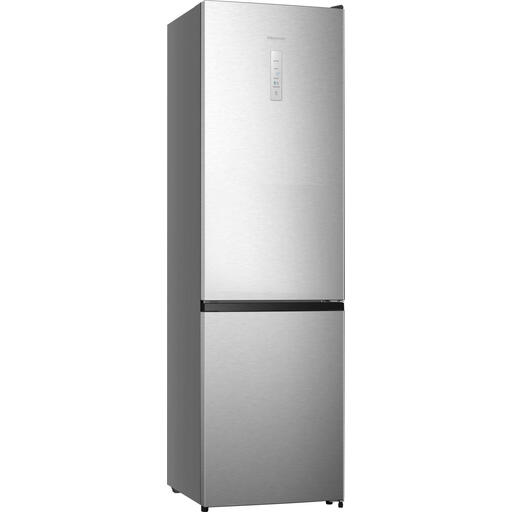
Hisense RB440N4CCB freestanding fridge-freezer

Hisense RB440N4CCB, 336 l

For storing fresh and frozen food in one appliance, the product details list a 238 l fridge capacity and a 98 l freezer capacity.

Total No Frost, energy rating B and stated annual energy consumption of 135 kWh. The product details also mention reversible doors and a 90° opening without protruding beyond the appliance.

View on Joybuy
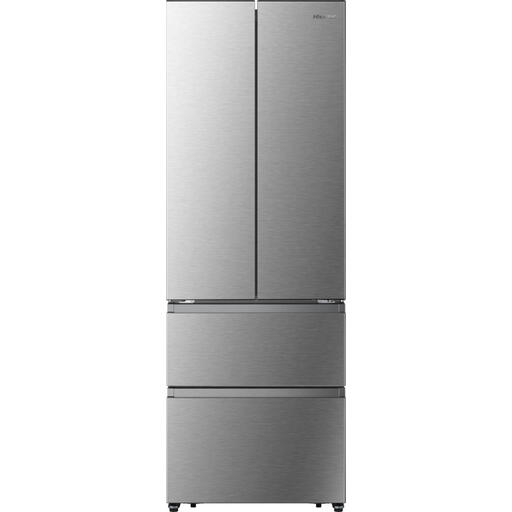
Hisense RF632N4BCE French door fridge-freezer

Hisense RF632N4BCE, 485 l

For storing more fresh and frozen food in one appliance, this model lists a 336 l fridge capacity and a 149 l freezer capacity.

Total No Frost, energy rating E and stated annual energy consumption of 295 kWh. The product details mention a water dispenser with a tank, so no fixed plumbing connection is needed.

The product details call for installation on a stable, level surface, with sufficient ventilation and enough clearance for the doors to open.

View on Joybuy
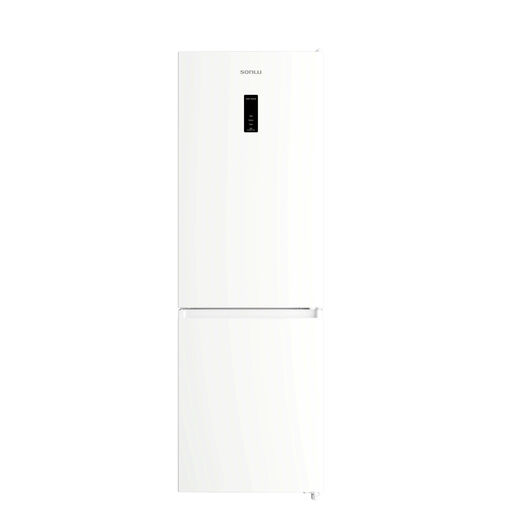
Sonlu CD-350RW freestanding fridge-freezer

Sonlu CD-350RW, 310 l

To divide your groceries between the two compartments, this fridge-freezer lists a 211 l fridge capacity and a 99 l freezer capacity.

The product details list a width of 60 cm, energy rating E, an inverter compressor and a reversible door. They also describe frost-free technology in both compartments.

View on Joybuy
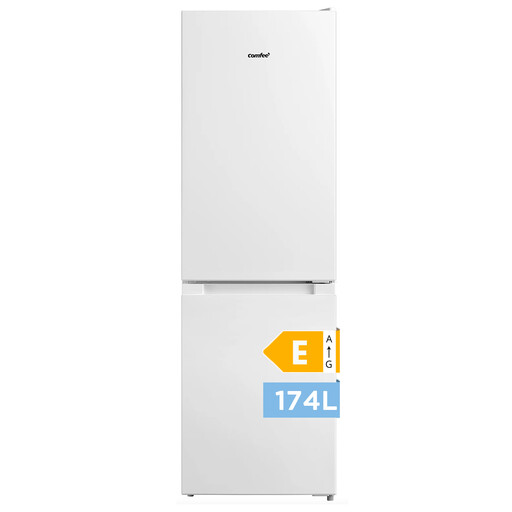
Comfee RCB169WH2(E) freestanding fridge-freezer

Comfee RCB169WH2(E), 174 l

For a moderate amount of built-in freezer space, this model lists a 115 l fridge capacity and a 59 l freezer capacity.

The product details list Low Frost, energy rating E, a four-star compartment, three freezer drawers and a reversible door.

View on Joybuy

Frequently asked questions

What temperature should you aim for to keep food fresh?

Anses recommends keeping the coldest part of your fridge between 0 °C and +4 °C. Check the temperature regularly, for example with a thermometer: buying a particular model won’t guarantee this temperature on its own.

How much space should you leave around a fridge?

Follow the manual for your chosen model, especially if it’s built in. As a general recommendation specific to Bosch, its support guidance advises leaving at least 5 cm at the sides and 10 cm at the back. These distances aren’t a universal rule for every brand and set-up.

What should you compare to assess energy consumption?

Compare the annual energy consumption in kWh of the models you’re considering, and include both appliances if you choose a separate fridge and freezer. ADEME points out that cooling appliances run continuously, so compare set-ups that meet the same storage needs.

Does the durability index apply to fridges?

The page published by the Ministry for Ecological Transition on 30 June 2025 describes the roll-out of the durability index for televisions and washing machines, not as a mandatory indicator for fridges. For household refrigeration appliances, the DGCCRF explains the energy labelling required under Delegated Regulation (EU) 2019/2016. To assess how easy a particular model is to repair, also check the information available on servicing and spare parts.

What rights do you have, and what should you know about appliance collection when buying?

For a purchase made by an individual from a professional seller, the legal guarantee of conformity applies under the conditions set out by the Ministry of the Economy. It covers new, second-hand and refurbished goods. The DGCCRF also explains the free ‘one-for-one’ take-back of an equivalent old appliance when you buy a new one. Check the practical arrangements with the seller.