To keep fresh and frozen food in one place, compare the usable capacity of each compartment in a fridge-freezer separately. If you mainly store fresh food, a fridge-only model could suit you. If you regularly run out of freezer space, consider a separate freezer, provided you have a suitable spot for it. If you opt for two appliances, add together their stated annual energy consumption: ADEME reminds us that fridges and freezers run continuously.
Who is this choice for ?
Household buying a mix of fresh and frozen food
You buy fresh and frozen food to last several days and want to store both in one appliance. UFC-Que Choisir highlights how shopping habits and the amount of space given to frozen food affect your choice. The European Commission lists the capacities of the fresh-food and frozen-food compartments separately on the energy label.
Household that stores lots of frozen food
You already have enough space for fresh food, but your freezer can’t fit all your frozen food or prepared portions. UFC-Que Choisir points out that both capacity and ease of use matter when choosing a freezer.
Household that mainly buys fresh food
You prioritise chilled food and need to work out whether you’d find a freezer compartment in the same appliance useful. UFC-Que Choisir recommends considering how often you shop; Beko describes its B3RMLNE444HXB as a fridge-only model with no freezer.
What should you compare ?
Fridge-freezer
Worth considering : you want to keep fresh and frozen food in one appliance for several days.
Check : the capacity in litres of each compartment. The total capacity alone won’t tell you whether there’s enough freezer space for you.
Fridge-only model
Worth considering : chilled storage is your priority and you already have another freezer that meets your needs, or don’t need one.
Bear in mind : a model without a freezer can’t store frozen food.
Separate freezer
Worth considering : your fridge meets your needs, but you regularly run out of space for frozen food.
Allow for : extra space and the appliance’s continuous energy consumption.
| What matters to you |
What to check |
Who it matters most to |
| Balance of fresh and frozen storage |
Compare the usable capacity of each compartment in litres. Check that the layout suits the packaging and portions you store regularly. |
I want to fit my fresh and frozen food in the same appliance for several days; around 37 % of consumers prioritise this balance. |
| Space for frozen food |
Work out how much freezer space you need based on your usual shopping and check that the drawers are easy to access. If you’re adding a separate appliance, measure the space available too. |
If my freezer compartment can’t fit my bulk shopping or prepared portions, I’m looking for extra capacity; around 27 % of consumers make space for frozen food their priority. |
| Positioning and ventilation |
Measure the access route and the space where the appliance will go, then check the instructions for the exact model for clearance requirements and door or drawer opening space. |
When space is tight, I want to be able to install the appliance and open its doors without obstruction; around 18 % of consumers prioritise a position that suits their home. |
| Annual energy consumption |
Once you’ve found capacities that meet your needs, compare the stated kWh/an. If you’re keeping two appliances running, add together their annual figures. |
I compare the energy consumption of appliances that will genuinely meet my needs, especially if I’ll be running two; around 18 % of consumers put continuous energy consumption first. |
Things to avoid
-
Choosing a fridge-freezer based on total capacity alone
A high total capacity can hide a freezer compartment that’s too small for your frozen food.
Compare the capacity of the fresh-food and freezer compartments separately with what you usually buy.
-
Comparing one appliance with a two-appliance setup
The overall energy consumption depends on which appliances you actually keep running. ADEME reminds us that fridges and freezers run continuously.
Once you’ve checked that the capacities meet your needs, add together the stated kWh/an for both appliances and compare the total with that of the fridge-freezer.
-
Measuring the alcove without checking clearances
An appliance might fit in the space but still obstruct doors or drawers, or fail to meet the specified ventilation requirements.
Check the instructions for the exact model, measure the delivery route and make sure the doors can open fully. Don’t apply the clearances specified by one manufacturer to a different brand.
Brands to consider by appliance type
Bosch
Freestanding fridge-freezers are worth considering if you want to combine chilled and frozen storage in one place.
- For the KGN39VLEB, Bosch states a capacity of 279 l for the fridge, 89 l for the freezer and a NoFrost function.
- Its stated dimensions are 2030 × 600 × 660 mm: check the instructions, available space and door clearance for this specific model.
Beko
The B3RMLNE444HXB is a fridge-only model with no freezer compartment, worth considering if you prioritise fresh food.
- Beko states that this model has a flush-fit door opening and a noise level below 34 dB(A).
- It can’t store frozen food, so you’ll need another solution if you buy any. Beko’s claims about keeping food fresh for longer are manufacturer claims, not the result of an independent comparison.
Liebherr
The brand’s separate upright freezers are worth comparing if the freezer compartment in a fridge-freezer isn’t big enough.
- Liebherr states that the FNe 5006 Pure NoFrost has a capacity of 238 l and can operate at an ambient temperature as low as −15 °C.
- Its stated dimensions are 165,5 × 59,7 × 67,5 cm. Check the instructions and available space; this operating range doesn’t apply to every model.
Whirlpool
The WHFF 6403 W4E upright freezer is worth a look if you’re after plenty of space for frozen food.
- Whirlpool states that this model has a capacity of 404 l, six drawers and energy consumption of 292 kWh/an.
- Its stated dimensions of 191,2 × 70 × 81,3 cm mean you’ll need plenty of space. These are manufacturer-stated specifications, not independent comparative measurements.
Fridge-freezers on Joybuy
This selection features freestanding fridge-freezers with stated fresh-food and freezer capacities, so you can compare options for storing both types of food in one appliance.
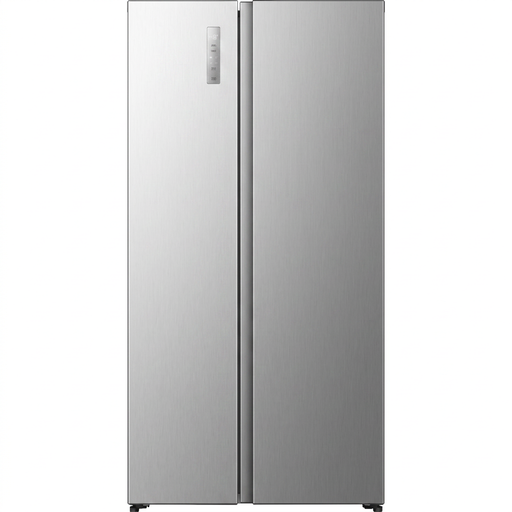 Image unavailable
Hisense RS3P558NEID, 544 L American-style fridge-freezer
To keep fresh and frozen food in the same appliance, compare the capacity of both compartments with your needs.
347 l for the fridge and 197 l for the freezer; stated energy consumption of 254 kWh/an. The title lists No Frost and a water dispenser.
View product on Joybuy
 Image unavailable
Haier HTW5618ENMG, 360 L 3-door fridge-freezer
This layout lets you compare the stated fresh-food and freezer capacities in one appliance.
235 l of fridge capacity and 125 l of freezer capacity; stated energy consumption of 271 kWh/an. The title lists Total No Frost, class E, Wi-Fi and My Zone.
View product on Joybuy
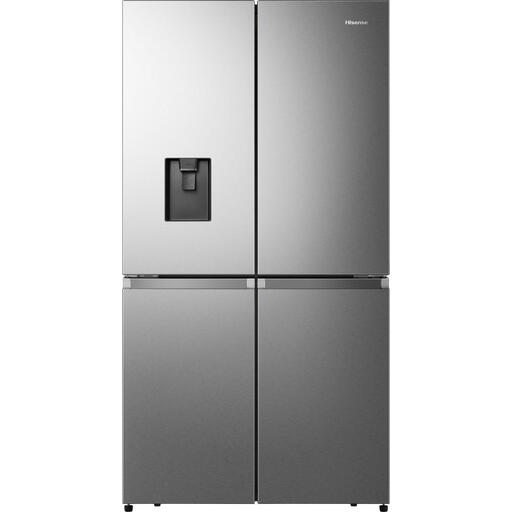 Image unavailable
Hisense RQ758N4SWSE, 606 L Cross Door fridge-freezer
Worth considering if you want to compare a large overall capacity and multiple temperature zones for your shopping.
390 l of fridge capacity; the description lists an adjustable My Fresh Choice zone of approximately −20 °C to +5 °C and stated energy consumption of 320 kWh/an. The title lists Total No Frost, Triple Zone and a water dispenser. The description states that the door is not reversible.
View product on Joybuy
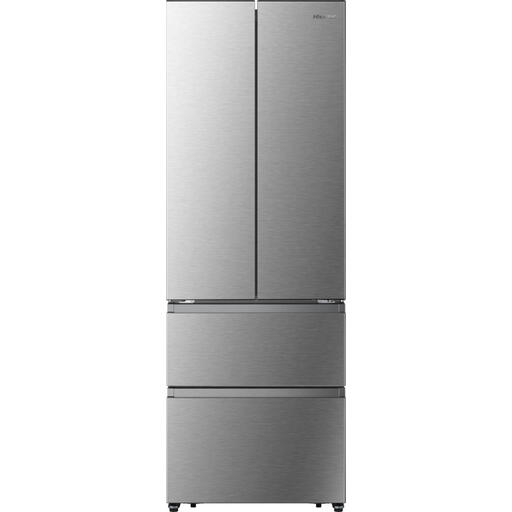 Image unavailable
Hisense RF632N4BCE, 485 L French Door fridge-freezer
If you’re choosing one appliance, check whether the stated capacities meet your fresh-food and freezer needs separately.
336 l for the fridge and 149 l for the freezer; stated energy consumption of 295 kWh/an. The title lists Total No Frost, Multi Air Flow, a water dispenser and class E.
View product on Joybuy
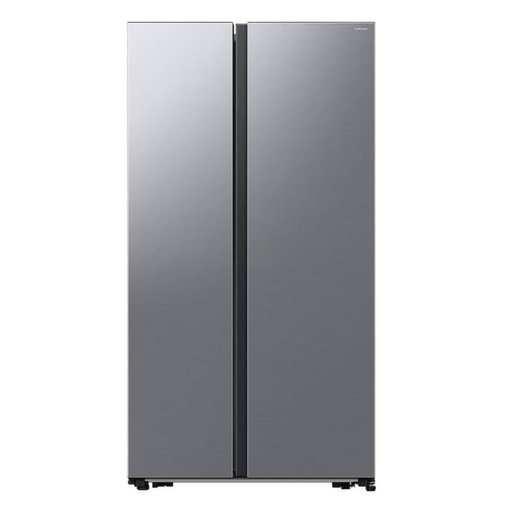 Image unavailable
Samsung RS57DG400EM9EF, 583 L American-style fridge-freezer
Compare its separate capacities with the space you need for fresh and frozen food.
Stated gross capacities of 375 l for the fridge and 208 l for the freezer. Stated dimensions: 91,2 × 178 × 65,4 cm; the title lists class E.
View product on Joybuy
Frequently asked questions
How do I compare the energy consumption of a fridge-freezer with two separate appliances ?
First choose appliances with capacities that meet the same needs, then compare their stated kWh/an. For two appliances, add together their stated annual energy consumption. The European Commission includes this figure on the energy label, but it won’t predict your exact household energy bill.
Can you place any fridge against a wall ?
No. Check the instructions for your chosen model and allow enough space for ventilation, doors and drawers. As examples of manufacturer-specific guidance, Beko recommends 5 cm at the sides and back in its general advice, while Samsung recommends 5 cm at the back and 10 cm above. These clearances aren’t universal.
Can you put a separate freezer in a cold garage ?
It depends on the ambient temperature range permitted for the model. Liebherr states that the FNe 5006 can operate down to −15 °C. Check the instructions for your model and don’t assume this specification applies to another freezer.
What consumer rights and take-back service should you expect when buying in France ?
When a private individual buys from a professional seller, the statutory guarantee of conformity applies; the French Ministry of the Economy states that you have two years to make a claim. When you buy a new appliance, the retailer must offer to take back your old appliance on a « one-for-one » basis, according to the French Ministry for Ecological Transition. Check the practical arrangements for delivery and take-back before you order.


