Households replacing an older appliance
Compare the new appliance’s stated annual energy use with the capacity you need. Averages published by ADEME give you a rough guide, not a guaranteed saving for your household.


If you mainly store fresh food, consider a larder fridge. If you regularly use both fresh and frozen food, compare the capacity of each compartment in a fridge-freezer. A separate freezer makes sense when you’ll genuinely use the extra freezing capacity. To assess energy use, add together the consumption of all the appliances you’ll continue to use. In each case, compare usable capacity with the kWh/year shown on the energy label, rather than focusing on the energy rating alone.
Compare the new appliance’s stated annual energy use with the capacity you need. Averages published by ADEME give you a rough guide, not a guaranteed saving for your household.
How you divide your storage between fresh and frozen food can help you decide whether a fridge-freezer will be enough or whether you need a separate freezer for regular storage.
As well as the energy rating, check the capacity of each compartment in litres, energy use in kWh/year, stated noise level and cooling system.
Consider one if: you mainly store fresh food and already have enough freezer capacity, or use very little freezer space.
Bear in mind: check whether it has a freezer compartment and how much space it offers before relying on it for frozen food.
Consider one if: you regularly store fresh and frozen food in separate compartments.
Bear in mind: the total capacity won’t tell you whether the space allocated to each type of food suits your needs.
Consider one if: your usual stock of frozen food regularly exceeds the capacity of a fridge-freezer that suits your household.
Bear in mind: this appliance will run alongside your existing fridge, so compare the annual energy use of both.
| What to consider | What to check | Your needs |
|---|---|---|
| Energy use | Compare the kWh/year of appliances that offer similar storage capacity. Check the A to G rating too, and estimate running costs using the price per kWh on your energy tariff. | I want to know how much energy the appliances I’ll keep plugged in will use, without estimating my bill from the label’s letter rating alone. |
| Usable capacity | Check fridge and freezer capacity separately. UFC-Que Choisir suggests 100 to 150 L for one person, then around 50 L for each additional person as a guide; adjust this to suit your habits. | There needs to be enough room for my fresh and frozen food in the compartments intended for each, rather than choosing based on total capacity alone. |
| Frost and maintenance | Check the cooling system in each compartment and how the model is defrosted. Don’t assume that a NoFrost label tells you its kWh/year. | If defrosting would be a hassle for me, I want to know which compartment has the advertised feature. |
| Noise and installation | Check the stated noise level, dimensions and clearance needed for ventilation. | Noise matters to me in a living area. The appliance and the required clearance also need to fit in the space available. |
The letter rating alone won’t tell you whether the fridge and freezer capacities suit your habits.
First decide on the type of appliance and the capacity you need, then compare the kWh/year of the models you’re considering.
ADEME’s figures show average energy use; the amount you pay depends in particular on the price per kWh on your tariff.
To estimate the variable running cost of an appliance, multiply its stated kWh/year by your price per kWh, taking your tariff option into account.
A separate freezer gives you more space, but its energy use is added to that of the fridge you continue to use.
Compare your usual stock of frozen food with the capacity of a fridge-freezer, then add together the kWh/year of the appliances you plan to keep plugged in.
Frost management and annual energy use are separate features. The label may also apply to just one compartment.
Check which compartments the feature applies to, then check the model’s kWh/year on its energy label.
These examples show why you should check the specifications of each model, rather than assuming they apply to an entire brand.
Bosch offers a range that includes larder fridges and fridge-freezers.
The range includes larder fridges and separate freezers.
The WHK22414XBR8EA is an example of a freestanding fridge-freezer from the brand.
These models combine fridge and freezer storage in one appliance. They’re worth considering if you store both fresh and frozen food. To choose between the three types of appliance, start by working out how much space you need.
 Image unavailable
Worth considering if you want to store fresh and frozen food in one appliance. Check the capacity of each compartment and the model’s energy label before comparing it with other fridge-freezers.
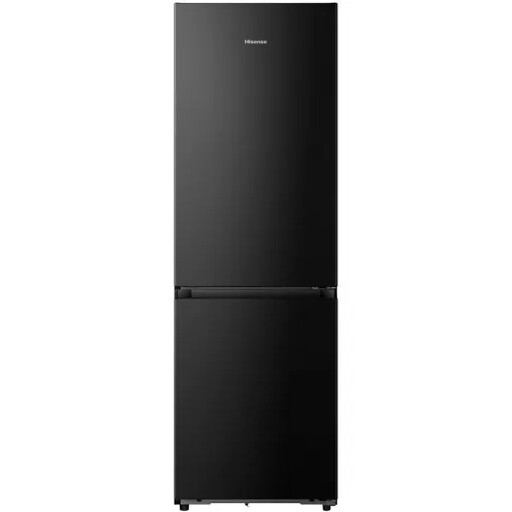 Image unavailable
If this total capacity suits your habits, check how much space is allocated to frozen food. Then compare the stated kWh/year and noise level for this model, as well as its dimensions against the space available.
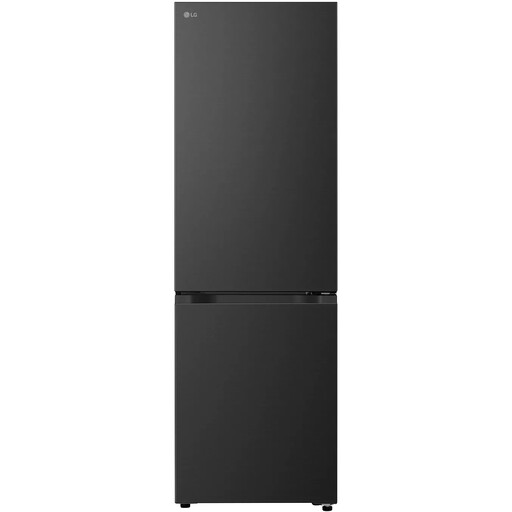 Image unavailable
The A rating and No Frost feature appear in the name of this black model. To decide whether it’s right for you, check how the 333 L is divided between compartments, its kWh/year and which compartment has No Frost.
 Image unavailable
Its three doors and 360 L total capacity are worth comparing with the space available and the amount you usually store. The name states Total No Frost and an E rating; also check the kWh/year and capacity of each compartment.
 Image unavailable
This black model is listed as 54 cm wide and 176 cm tall. Check the clearance needed, the capacity of each compartment and the defrosting requirements: Low Frost doesn’t mean you’ll never need to defrost it.
First compare the kWh/year and capacity of each compartment for appliances suited to the same use. The European Commission has an A to G energy rating scale for domestic fridges and freezers. Check the stated noise level too, rather than choosing based on the letter rating alone.
No. ADEME’s published average energy use figures are a guide, not a forecast for a specific appliance. To estimate its annual variable running cost, use the model’s stated kWh/year and the price per kWh on your tariff, including your tariff option.
No. First decide how much space you need for fresh and frozen food: these two types of appliance don’t offer the same freezer capacity. Then compare their capacity and stated annual energy use.
No. NoFrost refers to frost management and doesn’t, by itself, tell you the appliance’s annual energy use. Check which compartment it applies to, then compare the model’s kWh/year, capacity and noise level.